Germany and Japan Forge Green Hydrogen Alliance for a Sustainable Transport Future
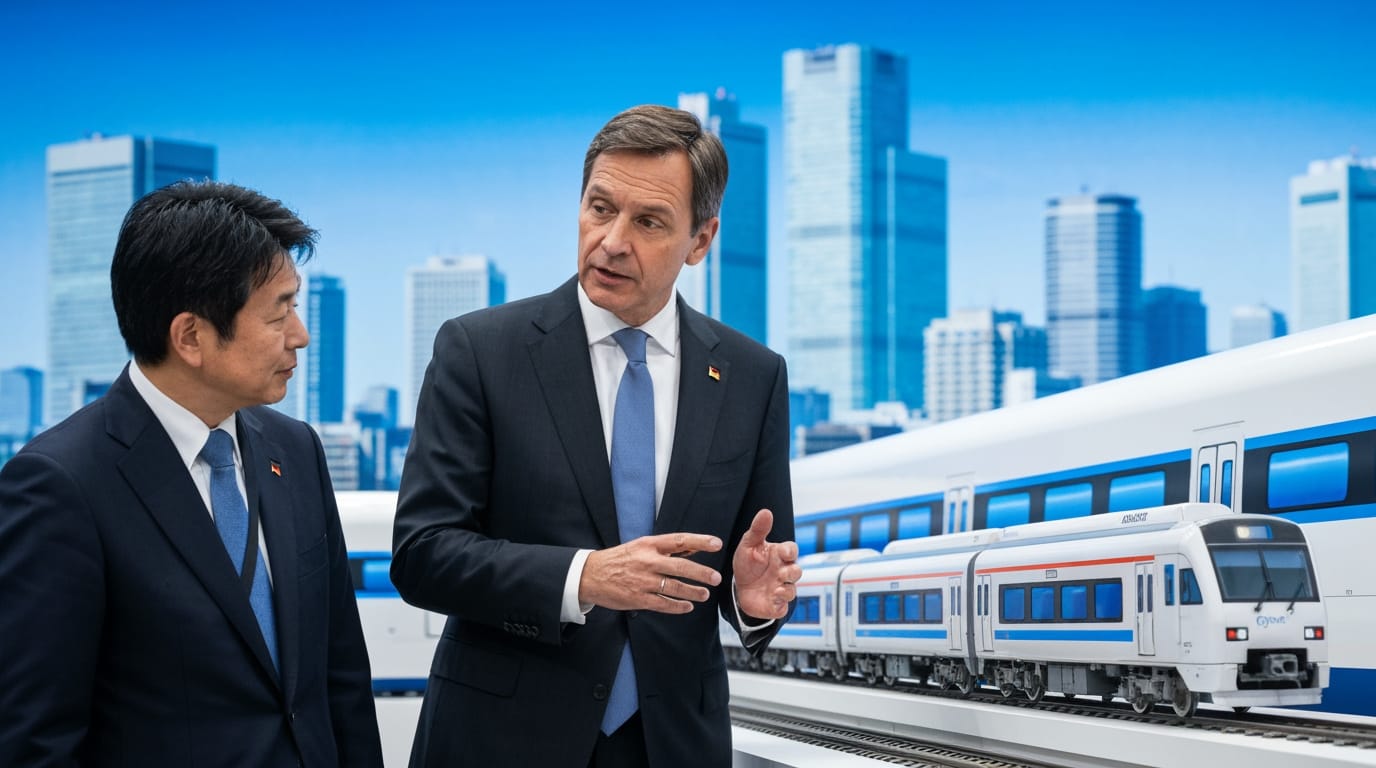
In a significant stride toward global decarbonization, Germany's Federal Minister for Digital Affairs and Transport, Volker Wissing, has been actively championing green hydrogen and e-fuels as cornerstones for a climate-neutral transportation sector, particularly deepening cooperation with Japan. His recent engagements underscore a shared strategic vision between the two industrial powerhouses to accelerate the development and adoption of these crucial energy carriers, aiming to build resilient supply chains and innovative solutions for future mobility across air, land, and sea. This concerted effort is critical as both nations navigate ambitious climate targets and seek to secure energy independence in a rapidly evolving global landscape.
A Unified Front for Sustainable Mobility
Minister Wissing recently spearheaded the "Berlin declaration" during the second International E-Fuels Dialogue on June 4, 2024. This pivotal agreement, signed alongside counterparts including Japan's Parliamentary Vice-Minister for Economy, Trade and Industry, Taku Ishii, and Lithuania's Minister for Transport and Communication, Marius Skuodis, signals a powerful commitment to technological openness, collaborative research, and the establishment of uniform standards for e-fuels. Wissing has consistently advocated for a diverse approach to decarbonizing transport, asserting that e-fuels, alongside battery-electric propulsion and hydrogen, are vital options for climate-smart transportation across all modes. This multi-faceted strategy acknowledges the varied energy demands and operational realities of different transport segments, from heavy-duty commercial vehicles and shipping to aviation. The German Ministry for Digital Affairs and Transport (BMDV) has already allocated 80 million euros to foster investments that integrate green hydrogen into mobility solutions, demonstrating a tangible commitment to this vision.
Germany's Ambitious Hydrogen Imperative
Germany's drive for green hydrogen is propelled by an ambitious climate agenda, aiming for greenhouse gas neutrality by 2045. The nation's updated National Hydrogen Strategy, revised in 2023, projects a substantial demand for hydrogen and its derivatives, estimating between 95 and 130 terawatt hours (TWh) by 2030. A significant portion of this demand, approximately 50 to 70 percent, is anticipated to be met through imports, highlighting the critical need for international partnerships and diversified supply routes. To bolster domestic capacity, Germany aims to establish 10 gigawatts (GW) of electrolyzer capacity for green hydrogen production by 2030, positioning itself as a global leader in hydrogen technologies.
The German government has implemented several key initiatives to realize these goals. An import strategy for hydrogen and its derivatives was introduced in July 2024, providing a reliable framework for securing necessary supplies. Financial mechanisms like the "H2Global" double auction model are designed to stimulate international investments in green hydrogen production facilities for import to Germany. Furthermore, extensive investments are being made in research and infrastructure, including flagship projects like H2Giga (for electrolyzer development), H2Mare (offshore hydrogen production), and TransHyDE (hydrogen transport technologies). Plans are also underway to build a "hydrogen start-up grid" with 1,800 kilometers of new and refurbished pipelines by 2027/2028 to facilitate domestic distribution. These efforts reflect a comprehensive strategy to establish a robust hydrogen economy, crucial for decarbonizing sectors such as heavy industry and aviation, and for transitioning away from fossil fuels in power generation.
Japan's Evolving "Hydrogen Society" Vision
Japan, a pioneer in national hydrogen strategies, first articulated its vision for a "Hydrogen Society" in 2017. This early leadership established an ambition to achieve cost parity for hydrogen with conventional fuels and to significantly decarbonize its transport, power, industrial, and residential sectors, while simultaneously enhancing energy security. The strategy underwent a significant revision in June 2023, setting an aggressive new mid-term target to increase hydrogen use six-fold to approximately 12 million tonnes per annum by 2040.
A distinctive aspect of Japan's updated strategy is its focus on subsidizing projects based on the "carbon intensity" of hydrogen rather than its "color" (a classification based on the energy source used for production). This approach allows for greater flexibility in sourcing hydrogen, provided it meets specific emissions thresholds. While Europe and Germany primarily emphasize "green" hydrogen from renewable electricity, Japan is developing a more holistic roadmap that extends to hydrogen use in households for electricity and heat, and the widespread adoption of fuel cell vehicles, where it holds more established experience. Japan is also strategically concentrating on hydrogen applications within the airport sector, actively expanding infrastructure for refueling stations and hydrogen-powered airport vehicles. This focus highlights Japan's pragmatic approach to integrating hydrogen across various facets of its economy and daily life. International cooperation is central to Japan's strategy, as it actively seeks partners to build supply chains, scale production, and drive down costs.
Forging a Path Through Bilateral Partnership
The collaborative efforts between Germany and Japan have intensified significantly since their agreement in early 2020 to strengthen their energy partnership, which includes a roadmap and two dedicated working groups. This bilateral cooperation spans critical areas such as renewable energies, energy efficiency, and the entire hydrogen value chain, from production to distribution and utilization. A landmark moment occurred in March 2023, when Japanese Prime Minister Fumio Kishida and German Chancellor Olaf Scholz co-chaired the first round of Inter-Governmental Consultations in Tokyo. During these discussions, both nations underscored their commitment to collaborate on crucial global supply chains, encompassing clean energy, hydrogen, and battery technologies.
This partnership aims to establish competitive hydrogen supply chains, with plans to develop shared production and shipping infrastructure to meet the combined demands of both countries. Evidence of this burgeoning collaboration is seen in the Memorandum of Understanding signed in September 2025 between major Japanese and German companies, including Kawasaki Heavy Industries, Toyota Motor Corporation, Daimler Truck AG, and Hamburger Hafen und Logistik AG, specifically for hydrogen supply chain development. These initiatives leverage Germany's extensive experience in integrating renewable energies and Japan's proficiency in hydrogen utilization and energy storage systems. Beyond national initiatives, regional partnerships, such as those between Hamburg and Fukushima, are also fostering innovation and exchange in hydrogen and renewable energy projects. These joint ventures and strategic alliances are poised to accelerate technological advancements and establish robust international frameworks for a hydrogen-powered future.
Conclusion: A Global Catalyst for Decarbonization
The concerted efforts of German Transport Minister Volker Wissing and his Japanese counterparts underscore a critical international alignment in the pursuit of sustainable energy solutions. By championing green hydrogen and e-fuels, both Germany and Japan are not only advancing their own ambitious decarbonization goals but also setting a precedent for global cooperation. The strategic partnership, characterized by shared research, diversified supply chain development, and significant investments, demonstrates a pragmatic approach to overcoming the technological and economic hurdles of the energy transition. As these nations continue to integrate hydrogen into their transport sectors and broader economies, their collaborative model offers a powerful catalyst for accelerating the shift towards a climate-neutral future worldwide, ensuring energy security and fostering economic growth through innovation.