Mario Draghi Honored with Charlemagne Prize for Steadfast European Leadership
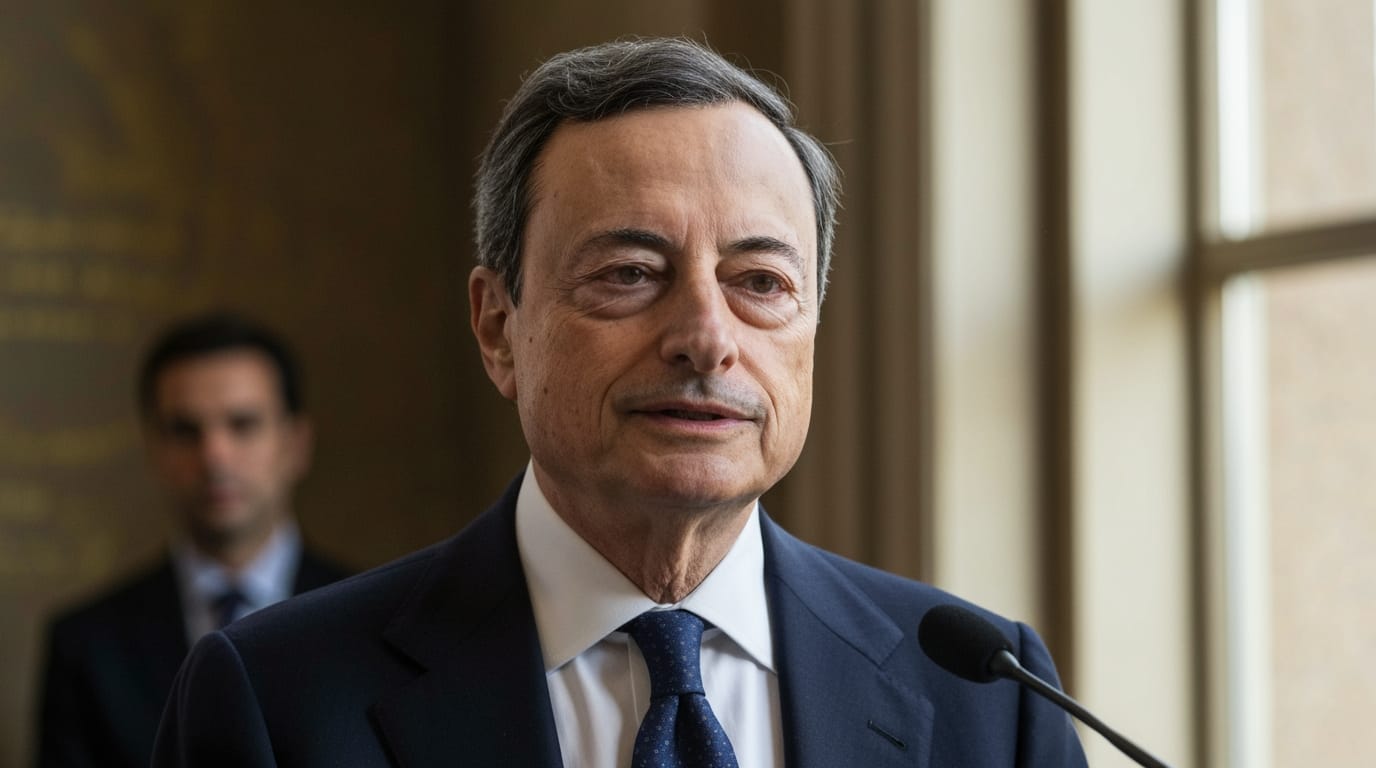
Aachen, Germany – Mario Draghi, the former President of the European Central Bank (ECB) and former Prime Minister of Italy, has been awarded this year's prestigious International Charlemagne Prize of Aachen, recognizing his profound contributions to European unity and his unwavering commitment to the continent's future. The announcement underscores his pivotal roles in navigating Europe through severe economic crises and in shaping a forward-looking agenda for its competitiveness and resilience.
The decision by the prize committee highlights Draghi's "exceptional achievements" and his instrumental role in stabilizing the European Economic and Monetary Union. The award is seen as a deliberate and timely signal for Europe to renew its economic strength and assert its position on the global stage amidst burgeoning challenges. The ceremony is set to take place in the Coronation Hall of Aachen Town Hall on May 14, 2026.
Europe's Enduring Symbol of Unity
The International Charlemagne Prize of Aachen, first awarded in 1950, stands as the oldest and most renowned accolade for individuals or institutions dedicated to European unification. Named after Charlemagne, the Frankish ruler who was the first to unify much of Western Europe, the prize symbolizes the ideals of peace, understanding, and cooperation among European nations. Instituted in the aftermath of World War II by the citizens of Aachen, its purpose was to honor those making significant contributions to peace, unity, and collaboration across the continent. Past laureates include founding figures of a United Europe, such as Konrad Adenauer and Jean Monnet, alongside modern leaders like Emmanuel Macron and Pope Francis, reflecting the prize's continuous recognition of efforts to build a stronger Europe.
The award is not merely a testament to past achievements but also an encouragement and an expression of hopes and expectations for the future. The committee emphasized that the prize aims to inspire a voluntary union of European peoples, enabling them to defend freedom, humanity, and peace, and to safeguard the future for generations to come. This year's choice of Mario Draghi directly ties into the urgent need for Europe to address current geopolitical and economic vulnerabilities.
The Architect of Stability: From Rome to Frankfurt
Mario Draghi's career has been marked by a series of high-profile roles that have consistently placed him at the forefront of economic and political leadership, both in Italy and across Europe. After earning a Ph.D. in economics from the Massachusetts Institute of Technology, Draghi embarked on a distinguished path that included working for the World Bank and serving as Director General of the Italian Treasury from 1991 to 2001. During his tenure at the Treasury, he played a crucial role in reducing Italy's public debt and stabilizing its finances, enabling the country to qualify for the European monetary union. He later served as Governor of the Bank of Italy before his historic appointment as President of the European Central Bank in 2011.
It was during his eight-year leadership of the ECB that Draghi cemented his legacy as a "saviour of the euro." Faced with the existential threat of the Eurozone debt crisis, he famously declared in 2012 that the ECB was prepared to do "whatever it takes to preserve the euro," a statement widely credited with calming financial markets and preventing the collapse of the single currency. His decisive monetary policies, including a €489 billion three-year loan program for EU banks, earned him the nickname "Super Mario" and led Nobel Prize winner Paul Krugman to describe him as "the greatest central banker of modern times." His actions during this critical period underscored his commitment to European economic integration and stability.
Steering Italy and Charting Europe's Future
Following his departure from the ECB in 2019, Draghi was called upon to lead Italy as Prime Minister from February 2021 to October 2022. Taking office amid the COVID-19 pandemic, he guided the country through its most severe health and economic crisis in decades. His technocratic administration secured over €191 billion in pandemic recovery funding from the EU and successfully accelerated Italy's vaccination campaign, boosting the nation's international influence. Draghi also proved a strong voice for European unity in response to Russia's invasion of Ukraine, advocating for sanctions against Moscow and pushing for a common European response to the energy crisis.
Beyond his direct governmental roles, Draghi continues to shape Europe's strategic direction. In 2024, he authored a comprehensive report on European competitiveness, known as the "Draghi Report." This nearly 400-page document outlined 383 recommendations aimed at reversing Europe's declining productivity and closing the competitiveness gap with global rivals like the United States and China. The report emphasizes the need for massive investments in infrastructure, green energy, and digitalization, while advocating for coordinated industrial policies and reduced bureaucracy. Draghi warned that without decisive action, the EU risks a "slow agony" and an inexorable loss of prosperity, equality, and security. Parts of his proposals have already been adopted by the European Commission, forming the basis for Europe's 'Competitiveness Compass'.
A Call for Renewed European Resolve
The awarding of the Charlemagne Prize to Mario Draghi in 2026 is a powerful statement about Europe's current predicament and the path forward. German MP and prize-committee head Armin Laschet noted the seriousness of the situation, stating that "Europe must not become a pawn of external powers in the face of overlapping geopolitical crises." He emphasized that without economic competitiveness, Europe would lack the financial, technological, and industrial basis to guarantee its security.
Draghi himself, in accepting the award, acknowledged the critical juncture Europe faces. "This decision comes at a time when Europe has perhaps never had as many enemies as it does now, both internal and external," he stated. He stressed the imperative for Europe to become "stronger, stronger militarily, stronger economically and stronger politically," urging deeper economic integration to effectively compete with the U.S. and China. The prize committee explicitly endorsed the recommendations of the "Draghi Report," calling on European leaders to implement its proposals urgently. This award therefore transcends a simple commendation; it serves as a rallying cry for concerted action and renewed commitment to European ideals.
Conclusion
Mario Draghi's receipt of the International Charlemagne Prize of Aachen is a recognition of a career dedicated to the stability and progress of Europe. From his crucial role in safeguarding the euro during its gravest crisis to his leadership in Italy's pandemic recovery and his ambitious vision for European competitiveness, Draghi has consistently demonstrated an unwavering commitment to the continent's unity and strength. As Europe grapples with complex economic and geopolitical challenges, the prize committee's decision serves as both an acknowledgment of his past triumphs and a powerful endorsement of his forward-looking agenda, urging European leaders to embrace the necessary reforms to secure a resilient and prosperous future for the Union. His legacy underscores the enduring importance of decisive leadership and collective action in the pursuit of a more integrated and competitive Europe.