BERLIN – Germany is embarking on an ambitious and costly endeavor, committing billions of euros to accelerate the development of nuclear fusion technology. This substantial investment marks a strategic pivot in the nation's energy policy, aiming to secure a carbon-neutral future independent of fossil fuels and traditional nuclear fission. The move positions Germany at the forefront of a global scientific and industrial race to harness the power of the sun on Earth, with the audacious goal of operating the world's first commercial fusion power plant within decades.
The 'Holy Grail' of Energy: Germany's Bold Vision
Following the closure of its last nuclear fission plants in 2023, Germany has redirected significant resources toward nuclear fusion, viewing it as a potential "game changer" in the global energy landscape. The German government recently unveiled a comprehensive "Fusion Action Plan," pledging more than 2 billion euros by 2029 to bolster research and foster pilot projects in this transformative field. This represents a dramatic increase from previous annual allocations of approximately 150 million euros, underscoring the urgency and strategic importance placed on fusion energy. The overarching objective is clear: to establish Germany as a leader in fusion technology and potentially host the world's first operational fusion reactor.
Research Minister Dorothee Bär articulated the government's perspective, characterizing fusion energy as "safe, environmental, climate friendly and affordable for all," and a crucial pillar for the nation's future energy security. This bold vision includes creating a vibrant "fusion ecosystem" that seamlessly integrates academic research with private industrial innovation, alongside the establishment of dedicated fusion hubs by the first quarter of 2026. A significant portion of the new funding, €755 million, is earmarked for advancing laser fusion infrastructure, indicating a broad-based approach to exploring various fusion pathways.
Pioneering Research and Industrial Innovation
Germany's foray into fusion is not starting from scratch; it builds upon decades of foundational research and significant experimental milestones. At the heart of German fusion science is the Max Planck Institute for Plasma Physics (IPP), a leading European research center with facilities in Garching and Greifswald. The IPP is instrumental in investigating the physical principles necessary for a fusion power plant.
Among its most notable achievements is the Wendelstein 7-X (W7-X) stellarator located in Greifswald. This colossal device, shaped like a metallic pretzel, represents a distinct approach to magnetic confinement fusion, differing from the more commonly pursued tokamak design. After nearly two decades of construction, W7-X generated its first plasma in 2015 and achieved a significant breakthrough in 2023 by sustaining plasma operation for a record eight minutes. This accomplishment not only validated the stellarator concept but also spurred renewed global interest in its potential for continuous, stable fusion. In Garching, IPP also operates the ASDEX Upgrade, Germany's largest tokamak experiment, showcasing the nation's commitment to exploring both major magnetic confinement concepts. The Karlsruhe Institute of Technology (KIT) further contributes by developing key technologies and materials, including those for the international ITER project and Wendelstein 7-X.
Beyond institutional research, Germany's fusion strategy actively cultivates a burgeoning private sector. Companies like Munich-based Marvel Fusion are emerging as key players, focusing on laser-driven inertial confinement fusion. Marvel Fusion recently secured an additional 113 million euros in funding from major investors and is backed by a 385 million euro commitment from Germany for its groundbreaking laser fusion technology. The company's approach, utilizing ultra-short laser pulses to bombard microscopic fuel pellets, aims for faster implementation than traditional magnetic confinement systems. Similarly, Proxima Fusion, a startup spun out of the Max Planck Institute, has attracted 185 million euros in funding to develop QI-HTS stellarators, leveraging European industrial expertise to scale manufacturing. These private ventures, alongside Focused Energy, are advocating for even greater government support, urging a 3 billion euro commitment by 2029 to build multiple demonstration plants.
Germany also plays a significant role in international collaboration, contributing to the International Thermonuclear Experimental Reactor (ITER) in France as part of the European Union. ITER, designed to prove the scientific and technical viability of fusion on a large scale, aims to produce 10 times more thermal output power than absorbed by its plasma. While ITER has faced delays, with first plasma now anticipated no earlier than 2033, Germany remains committed to its contractual obligations.
The Promise and Peril of a Fusion Future
The allure of nuclear fusion is its promise of a virtually limitless, clean energy source. By mimicking the process that powers the sun, fusion reactors aim to combine light atomic nuclei, typically isotopes of hydrogen, to release immense amounts of energy. Crucially, this process produces no carbon emissions, carries no risk of meltdown, and generates only minimal, short-lived radioactive waste, primarily helium. The fuel, abundant hydrogen isotopes found in water, ensures a sustainable supply. Furthermore, fusion power plants possess an inherent safety mechanism: if any malfunction occurs, the reaction simply ceases, preventing runaway events. This combination of environmental benefits and inherent safety makes fusion the "holy grail" for many energy experts. Its ability to provide stable, baseload power could also complement intermittent renewable sources, addressing a critical challenge in grid stability.
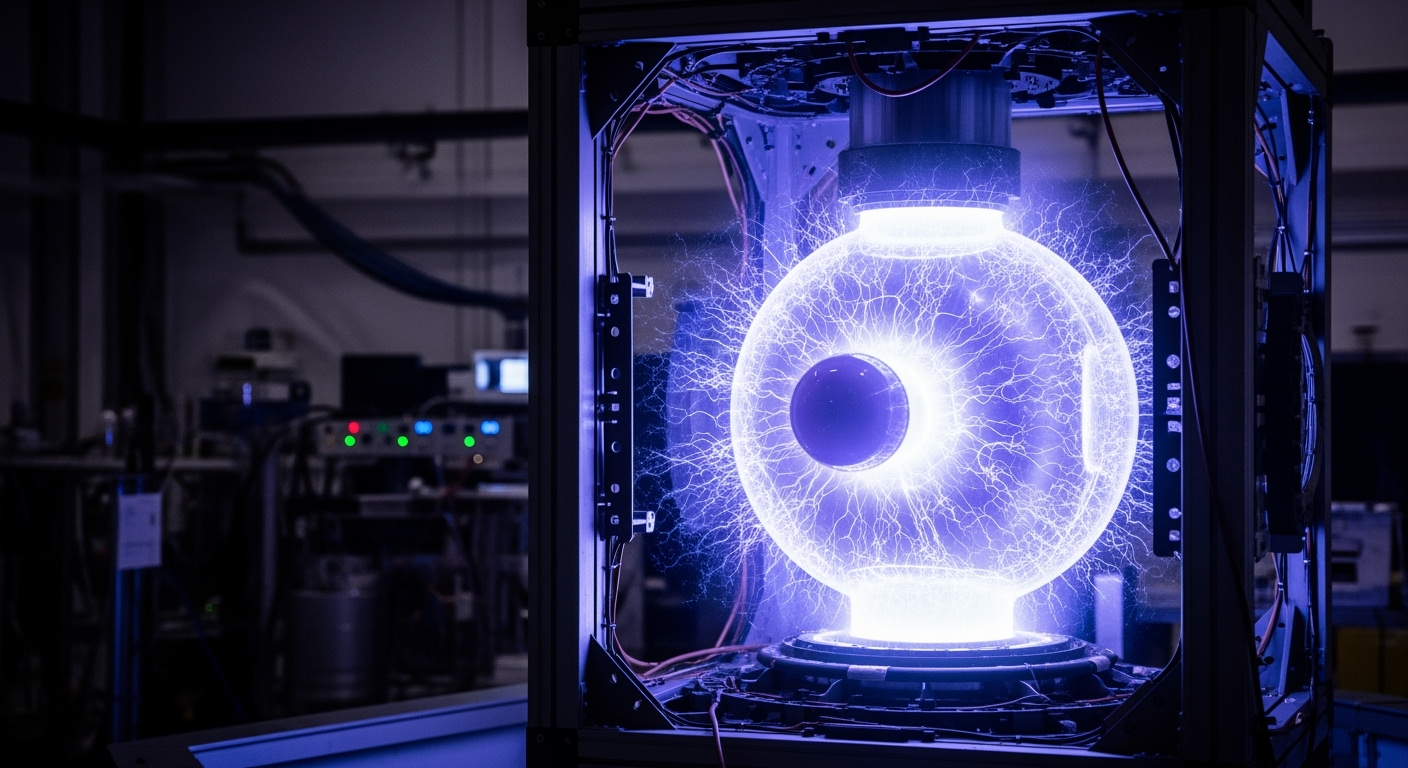
However, the path to commercial fusion remains fraught with significant scientific and engineering challenges. The primary hurdle is achieving sustained net energy gain – producing more energy from the fusion reaction than is required to initiate and maintain it. Containing plasma at temperatures exceeding 100 million degrees Celsius, hotter than the sun's core, demands advanced magnetic confinement or incredibly powerful laser systems. Materials science faces the immense task of developing components that can withstand extreme heat and intense neutron radiation over long periods, which is vital for reactor longevity. The precision engineering required for these complex systems, coupled with the high construction and operational costs, presents substantial economic and technical barriers.
German policymakers also recognize the need for a new regulatory framework tailored specifically for fusion energy, distinct from the stringent laws governing traditional nuclear fission. This would create a more innovation-friendly environment, essential for bridging the gap between experimental breakthroughs and commercial deployment.
A Global Race for Clean Power
Germany's intensified commitment to fusion is part of a broader global movement, with nations like the United States and China also pouring billions into the technology in a bid for leadership. The US Department of Energy recently released its Fusion Science and Technology Roadmap, aiming for commercial fusion power by the mid-2030s through public-private partnerships. This international competition underscores the strategic importance of fusion not just for energy security but also for technological sovereignty and export opportunities.
The German government's pledge to develop a "Fusion Energy Research and Innovation Roadmap (FIRE)" in 2026, building on its action plan, signals a long-term strategic commitment to navigate this complex landscape. By pursuing diverse technological approaches, investing heavily in both public research institutions and private startups, and fostering international collaborations, Germany aims to capitalize on its unique scientific and industrial strengths.
A Strategic Investment for the Future
Germany's multi-billion-euro bet on nuclear fusion represents more than just a scientific undertaking; it is a profound strategic investment in its future energy security, climate goals, and technological leadership. While the timelines remain ambitious and the challenges formidable, the potential rewards are immense: a virtually inexhaustible, clean, and safe energy source. The transformation from a nuclear phase-out nation to a fusion pioneer encapsulates Germany's determination to shape a sustainable energy future, not only for itself but potentially for the world. The coming years will be critical as researchers and engineers strive to turn this bold vision into a tangible reality, pushing the boundaries of human ingenuity to harness the power of the stars.