Germany Braces for Intensified Industrial Action Amid Economic Crosscurrents in 2026
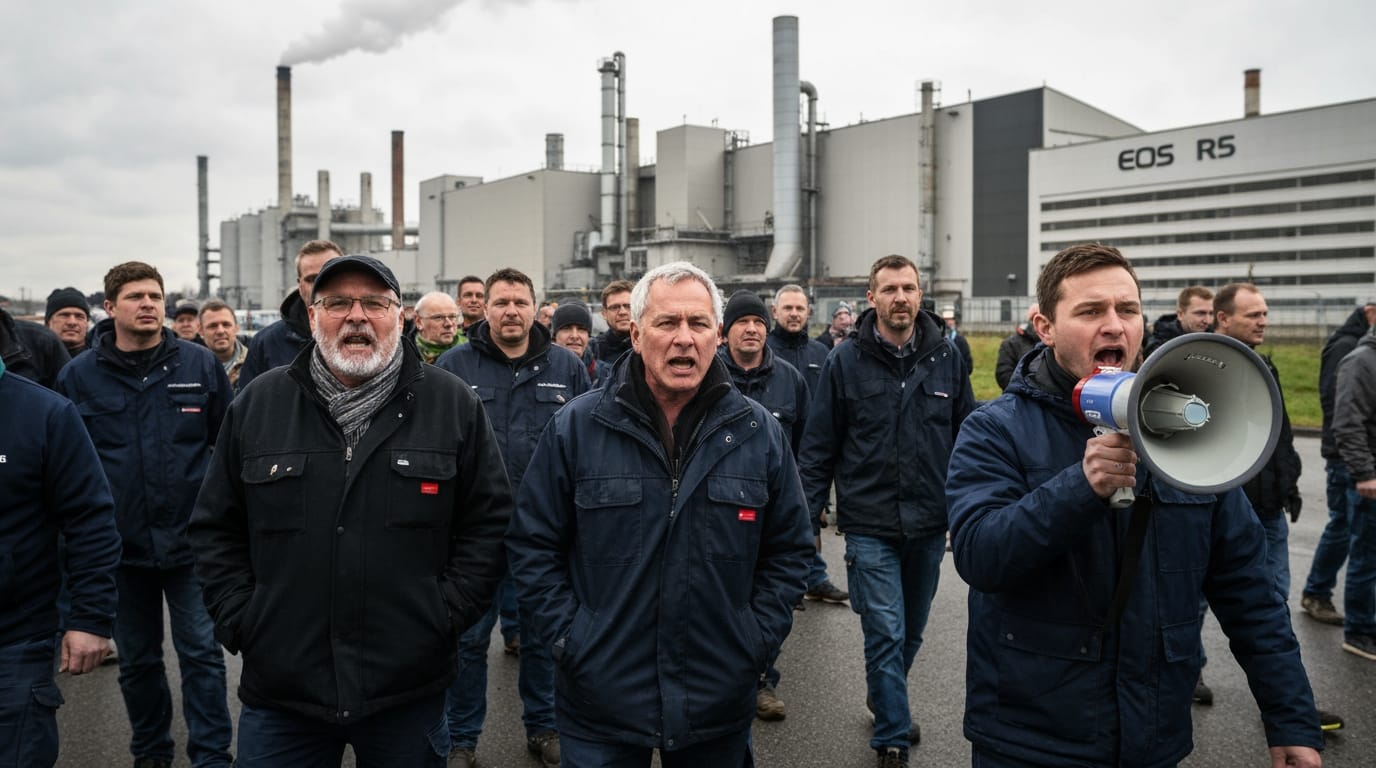
Germany is poised for a year marked by significant labor unrest in 2026, as workers across key sectors, driven by persistent inflation and demands for improved conditions, escalate calls for higher wages. Following a series of disruptive strikes in late 2025 and early 2026, particularly in public services and transportation, the nation faces the prospect of continued widespread walkouts that could further strain its economy. The confluence of unions pushing for substantial pay raises and an industrial sector grappling with economic headwinds sets the stage for a contentious period of negotiations and potential disruption.
Echoes of Discontent: A Year of Disruptions
The early months of 2026 have already seen Germany grappling with a wave of industrial action, indicating a turbulent year ahead for labor relations. Public sector employees, represented by powerful unions such as Ver.di, GEW, and the Civil Service Federation (Beamtenbund), have been at the forefront of these disputes. In January and February 2026, thousands of public sector workers staged warning strikes across various federal states, impacting essential services from hospitals and universities to schools, daycare centers, and government offices. These actions stemmed from stalled collective bargaining negotiations with the Collective Bargaining Association of German Federal States (TdL), where unions are demanding a 7 percent pay increase or a minimum of €300 more per month, along with an additional €200 for junior employees. The last collective agreement for the Länder expired in October 2025, leaving a gap that workers aim to bridge with significant real wage gains.
The transportation sector has also been a focal point of discontent. Lufthansa faced a nationwide pilot strike, organized by the Vereinigung Cockpit union, scheduled for February 12, 2026, primarily over disagreements concerning pension contributions. This action followed previous significant disruptions, including a pilot strike in September 2022 and coordinated strikes involving cabin crew and ground staff in April 2024 that resulted in substantial operational challenges and costs for the airline. Public transport workers, under the umbrella of Ver.di, also conducted warning strikes in early February 2026, pressing for improved working conditions. The ripple effect of these strikes has been felt by millions of travelers and commuters, underscoring the deep-seated grievances within the workforce.
The Economic Tightrope: Inflation, Wages, and Stagnation
The backdrop to these labor disputes is a complex economic environment characterized by persistent, albeit slowly moderating, inflation and a manufacturing sector struggling with stagnation. While inflation, as measured by the Harmonised Index of Consumer Prices (HICP), is projected to fall from an expected 2.3% in 2025 to 2.2% in 2026, this decline is slower than previously anticipated, partly attributed to continued high wage growth. The European Central Bank (ECB) forecasts inflation to hover around 1.9% through 2026, indicating that price stability remains a key concern for workers' purchasing power.
Economists predict a gradual economic recovery for Germany in 2026, with real gross domestic product (GDP) expected to rise by 0.6% to 1.5%. This follows a period of stagnation, with government spending and a resurgence in exports anticipated to drive growth, particularly from the second quarter of 2026. However, this moderate growth comes alongside significant challenges for Germany's industrial sector. A survey by the German Economic Institute (IW) revealed that a majority of German business associations anticipate job cuts in 2026, with industries such as automotive, paper, and textiles particularly affected by global protectionism, weak exports, and high domestic costs. This creates a delicate balance: workers demand higher wages to offset living costs, while some businesses face pressure to reduce workforces amidst an ongoing economic crisis. Despite these pressures, overall collective wage growth is forecast to be around 3.0% in 2026, with public sector workers potentially seeing higher gains.
Key Sectors and Contentious Demands
The demands driving industrial action in 2026 extend beyond simple pay raises, encompassing a broader push for improved working conditions and security. In the public sector, unions are not only seeking a significant percentage increase in wages but also a guaranteed minimum increase, reflecting a focus on supporting lower wage brackets. The long duration of proposed contracts, such as the 29-month term offered by the TdL versus the unions' demand for 12 months, is a critical point of contention, with unions wary of long-term agreements that might see real wages erode over time.
In aviation, the Lufthansa pilot strike highlights ongoing disagreements over pension contributions, a complex issue that speaks to long-term financial security for employees. The rail sector has seen unions like GDL previously demand reduced working weeks for shift workers without a corresponding pay cut, indicating a focus on work-life balance alongside remuneration. These multifaceted demands underscore workers' concerns about both immediate financial well-being and the quality of their employment in a changing economy.
Beyond Wages: Structural Shifts and Labor Law Debates
Adding another layer of complexity to Germany's labor landscape are ongoing debates surrounding structural reforms and the future of labor laws. Discussions are underway in 2026 regarding potential changes to working hour regulations, with proposals to replace the traditional eight-hour workday with a more flexible weekly cap. While some sectors, such as gastronomy, advocate for increased flexibility, unions express significant concerns that such reforms could worsen worker rights and work-life balance. The Federal Ministry of Labor is expected to propose balanced legislation by mid-2026, aiming to address both business flexibility and employee protections.
Furthermore, 2026 sees the implementation of new legislation and the coming into force of revised directives, such as the EU Pay Transparency Directive, which must be transposed into national law. Changes to social insurance calculation factors, an increase in the statutory minimum wage to €13.90 per hour, and the revision of the EU Directive on European Works Councils are also shaping the employment landscape. These legislative shifts, alongside the economic pressures, contribute to an environment where unions are strategically positioning themselves to protect and advance worker interests amidst broader societal and economic transformations.
A Volatile Path Ahead
As Germany navigates 2026, the prospect of sustained industrial action looms large. The tension between workers' demands for real wage increases and better conditions, against a backdrop of slowly moderating inflation and a struggling industrial sector, points to a challenging year for collective bargaining. While economic forecasts suggest a gradual recovery, the uneven impact across sectors and the ongoing debates over labor law reforms ensure that the labor market remains a key battleground. The capacity of unions, employers, and the government to find common ground will significantly influence Germany's economic stability and social cohesion throughout the year.