African Union Undertakes Critical Self-Assessment in Pursuit of Continental Security
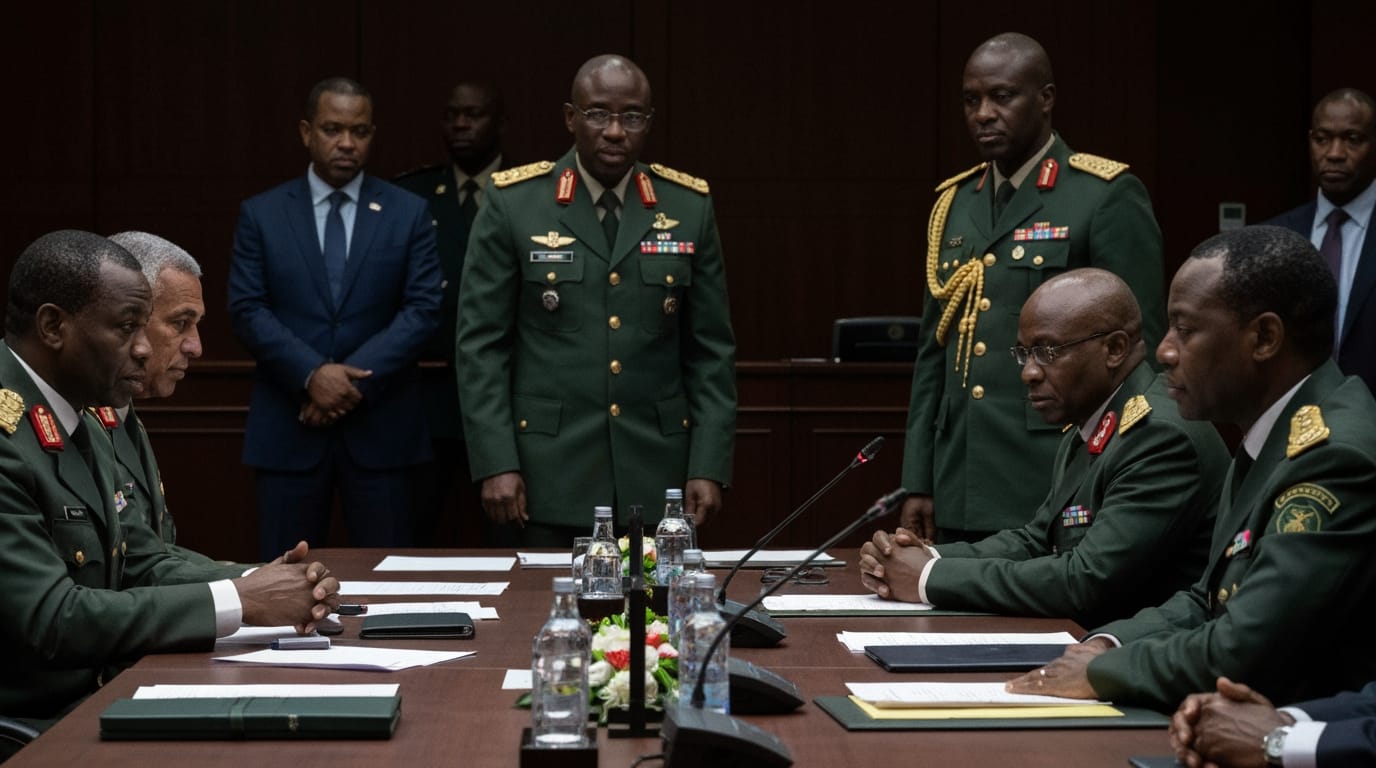
ADDIS ABABA, ETHIOPIA – The African Union (AU) is engaged in a profound period of introspection, meticulously examining its inherent power and operational capabilities to uphold peace and security across a continent grappling with escalating conflicts, resurgent coups, and pervasive humanitarian crises. This inward look comes as the pan-African body strives to strengthen its efficacy and deliver on its foundational mandate of fostering a stable and prosperous Africa.
The AU's commitment to continental peace and security is enshrined in its very establishment, evolving from the Organization of African Unity's (OAU) principle of non-interference to the AU's right to intervene in grave circumstances. Central to this mission is the Peace and Security Council (PSC), established in 2002 and operational since 2003-2004. The PSC serves as the AU's primary decision-making body for conflict prevention, management, and resolution. Its broad mandate includes anticipating and preventing disputes, undertaking peacemaking and peacebuilding, authorizing peace support missions, implementing sanctions against unconstitutional changes of government, combating terrorism, and championing democratic practices and human rights. Despite a comprehensive framework, Africa's security landscape remains complex and volatile, prompting the AU to critically evaluate its strategies and instruments.
A Continent Under Siege: Persistent Threats and Evolving Challenges
Africa currently faces a confluence of security challenges that are testing the AU's resolve and capacity. Conflicts continue to deepen across various regions, fueled by political instability, resource scarcity, ethnic tensions, and the escalating menace of terrorism and violent extremism. Groups like Boko Haram and Al-Shabaab pose significant threats, exploiting local grievances and weak governance to propagate violence and humanitarian crises.
A particularly troubling trend has been the resurgence of unconstitutional changes of government. Between 2019 and 2023, the PSC suspended seven member states in response to military coups, underscoring a persistent challenge to democratic norms. The ambitious "Silencing the Guns in Africa" initiative, initially aiming for a conflict-free continent by 2020, has seen its deadline extended to 2030, reflecting the intractable nature of these security dilemmas. The human toll of these conflicts is immense, with millions displaced and severe humanitarian emergencies unfolding in areas like Sudan and the Sahel, leading to widespread food insecurity and disruption of livelihoods.
The Pillars of Security: Architecture and Aspiration
The AU's approach to continental security is structured around the African Peace and Security Architecture (APSA), a comprehensive framework designed to promote peace, security, and stability. Key components of APSA, alongside the PSC, include:
- The African Standby Force (ASF): Envisioned as the continent's primary mechanism for peace support operations and crisis intervention, the ASF was declared fully operational in 2015, comprising five regional brigades. However, its readiness and deployment capabilities face significant hurdles, including political coordination issues, logistical challenges, and financial constraints. Despite over two decades of development, the ASF has yet to be deployed in a full mission, highlighting internal debates over authority between regional economic communities (RECs) and the AU regarding deployment.
- The Continental Early Warning System (CEWS): This system is designed to anticipate and prevent conflicts by collecting and analyzing data to facilitate timely responses.
- The Panel of the Wise: Composed of respected African personalities, this body provides advice and support for conflict prevention and resolution efforts.
- The Peace Fund: Established in 1993, the Peace Fund is intended to finance AU peace and security activities. The AU has made efforts to revitalize this fund and reduce dependence on external donors, with a goal of member states contributing 25% of the peace operations budget. As of 2025, however, only 12% of the AU's budget is member-funded, signaling ongoing financial reliance.
The Internal Audit: Strengths, Weaknesses, and the Path Forward
The AU's internal assessment reveals a mixed record in its security endeavors. While a 2018 evaluation by the European Union found that the APSA framework addressed 42% of violent conflicts through various interventions, with 75% of these achieving at least partial success, significant limitations persist. A critical observation is the PSC's frequent reactive approach to conflicts, engaging in crisis management only after situations have escalated, rather than proactively preventing them, despite the normative emphasis on prevention.
Challenges in implementation also hinder the AU's effectiveness. While decisions are made, follow-through remains an area for improvement. Competing national interests among member states and a lack of seamless coordination between the AU and RECs further complicate efforts, particularly regarding the deployment of the ASF. The perennial issue of funding shortfalls continues to undermine the AU's autonomy, forcing reliance on external donors whose agendas may not always align with African priorities. Moreover, capacity gaps within the PSC Secretariat, including limited staffing, and the ASF's doctrinal struggles to adapt to new threats like hybrid warfare and terrorism, necessitate urgent attention. The AU is currently undertaking institutional reforms, including a strategic plan for 2024-2028, to address these structural and operational deficiencies.
Forging Partnerships and Confronting Realities
Recognizing the multifaceted nature of Africa's security challenges, the AU understands the imperative of robust external partnerships. The collaboration with the United Nations is particularly critical, formalized by the Joint UN-AU Framework for an Enhanced Partnership in Peace and Security signed in 2017. This partnership is vital, especially given that over 70% of the UN Security Council's agenda relates to Africa.
A significant breakthrough in this partnership occurred in December 2023 with the adoption of UN Security Council Resolution 2719. This resolution provides a framework for AU-led peace operations to access UN funding through assessed contributions, potentially offering a more predictable, sustainable, and adequate financing mechanism. This development, the culmination of over 15 years of negotiations, aims to enhance African leadership in managing peace operations while addressing perennial funding gaps. The AU's commitment to self-finance 25% of its peace operations, with the potential for the UN to cover up to 75%, marks a crucial step towards greater self-reliance, though concerns about burden-sharing and compliance with international standards persist. Beyond the UN, partnerships with the European Union and bilateral entities also play a key role in supporting the AU's security agenda.
The AU's internal assessment highlights the human dimension of conflict. Ongoing conflicts exacerbate humanitarian crises, leading to widespread displacement and food insecurity for millions. The PSC has expressed deep concern over these situations, consistently advocating for civilian protection and unimpeded humanitarian access. These realities underscore the urgent need for more effective and timely interventions, not just for state stability, but for the very survival and well-being of African citizens.
In conclusion, the African Union's candid self-assessment of its power to ensure security in Africa marks a critical juncture. While a robust architectural framework exists, and notable successes in de-escalation and diplomatic engagement have been recorded, the continent's deepening security crises demand more agile, proactive, and adequately resourced responses. The journey towards a peaceful and secure Africa, articulated through initiatives like "Silencing the Guns," requires sustained political will, enhanced operational capacities, greater financial independence, and effective coordination among all stakeholders. This period of introspection is vital for the AU to adapt its strategies, overcome its enduring challenges, and ultimately realize its vision of "African solutions to African problems."


