Germany Embarks on Historic Military Spending Spree
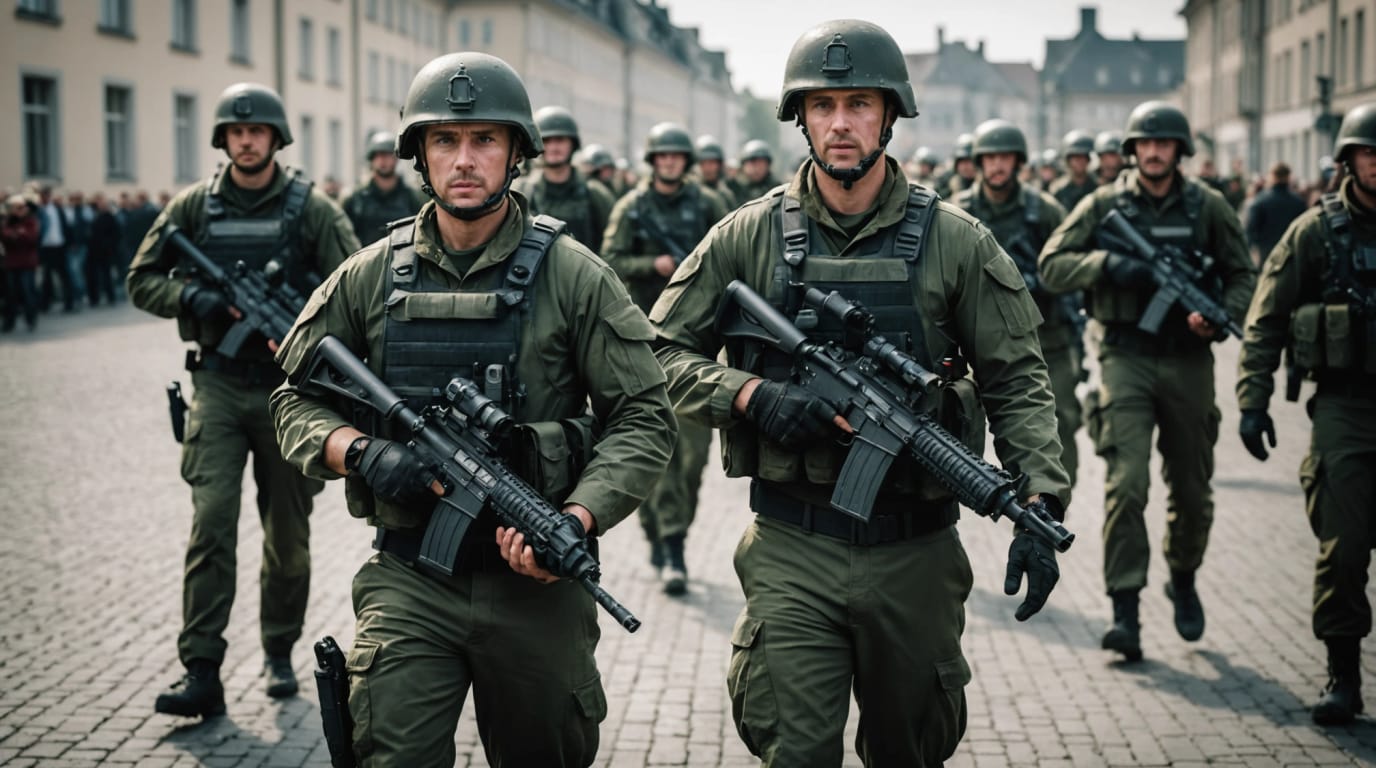
Germany is poised to undertake its most significant defense spending initiative since World War II, signaling a dramatic shift in its post-war security policy. Lawmakers have approved a massive injection of funds into the Bundeswehr, driven by growing concerns over European security and a desire to meet NATO obligations.
The move comes as Friedrich Merz prepares to assume the chancellorship, having successfully championed a plan to drastically increase the country's military budget. The decision reflects a fundamental reimagining of Germany's role in European and global security, moving away from a traditionally cautious approach to defense.
Trillion-Euro Package Breaks Debt Barrier
The Bundesrat, the upper house of Germany's parliament, recently approved a landmark one trillion euro spending package. This effectively lifts the "debt brake," a constitutional measure that has limited military spending to less than 1% of the nation's GDP for decades. The legislation includes provisions for a 500 billion euro investment in infrastructure over a 12-year period, aimed at bolstering the country's economy. Crucially, the package exempts all spending on defense and security, including aid to Ukraine, exceeding 1% of GDP from national debt rules.
This decision marks a turning point after years of underinvestment in the Bundeswehr, which has struggled with equipment shortages and readiness issues. The increased funding is intended to address these deficiencies and equip the German military to meet the challenges of a rapidly changing security landscape.
Modernization and Procurement Plans
The massive financial boost will fuel a wide range of modernization and procurement projects across all branches of the German armed forces. Key areas of focus include:
- Air Force: Replacing aging Tornado combat aircraft with F-35 multirole fighters, developing the Eurodrone in collaboration with France, Italy, and Spain, and enhancing ground-based air defense capabilities.
- Army: Procuring rocket artillery systems, reactive armor for Puma infantry fighting vehicles, and digitizing land-based operations. Modernizing and equipping three divisions to meet NATO requirements, including upgrading Leopard tanks to the Leopard 2A7V standard.
- Navy: Acquiring additional U212CD submarines and Class 127 frigates, and developing sea-to-air guided missiles.
- Cybersecurity: Expanding data center capacities and cloud-based infrastructure to enhance cyber defense capabilities.
- General Support: Procuring additional protected and unprotected vehicles, interchangeable loading systems, and modular medical equipment.
The Bundestag's Budget Committee has already approved several procurement projects worth over 2.5 billion euros, including self-propelled mortars, future soldier systems, communication networks, remote-controlled weapon stations, and anti-tank grenade launchers.
Impact on NATO and European Security
Germany's increased defense spending is expected to significantly bolster NATO's deterrence capacity, particularly in Eastern Europe, where Russia's actions have heightened security concerns among member nations. Germany has already committed a substantial number of troops, ships, and aircraft to NATO's new force model, and the additional funding could further enhance these contributions.
The move also aligns with a broader trend of increased defense spending among European nations, driven by the war in Ukraine and a growing recognition of the need for greater European self-reliance in security matters. Goldman Sachs analysts predict that France, Italy, and Spain will also increase their defense spending in the coming years, contributing to a stronger and more capable European defense posture.
Economic Implications and Challenges
While the increased defense spending is widely seen as necessary for national and European security, it also presents economic challenges for Germany. Christian Lindner, the nation's former finance minister, has warned that the spending plan could lead to a trillion euros in higher debt without strengthening the economy.
However, proponents argue that the investment in the domestic defense industry will create jobs and stimulate economic growth. Ernst and Young suggest that increased defense spending could boost employment by more than half a million in Europe and by 100,000 in Germany. The German domestic defense industry is relatively large, with some €30 billion in annual revenues, producing a wide range of military equipment.
The German government will need to carefully manage the economic implications of the increased defense spending, ensuring that it does not undermine fiscal stability or crowd out other important priorities.
A Zeitenwende in German Security Policy
The decision to significantly increase defense spending represents a "Zeitenwende," or turning point, in German security policy. For decades, Germany has been reluctant to embrace a more assertive military role, constrained by its post-World War II history and a strong pacifist sentiment within its population.
However, the changing geopolitical landscape, particularly the rise of Russia and the war in Ukraine, has forced a reassessment of Germany's security priorities. The increased defense spending reflects a growing recognition that Germany must take greater responsibility for its own security and contribute more to the collective defense of Europe.
The success of this ambitious undertaking will depend on Germany's ability to effectively manage the economic challenges, overcome bureaucratic hurdles, and maintain public support for a stronger military role. If successful, it could mark a new era in German security policy and a more robust and capable European defense.


