Germany Faces Critical Winter as Gas Reserves Dwindle to Alarming Lows
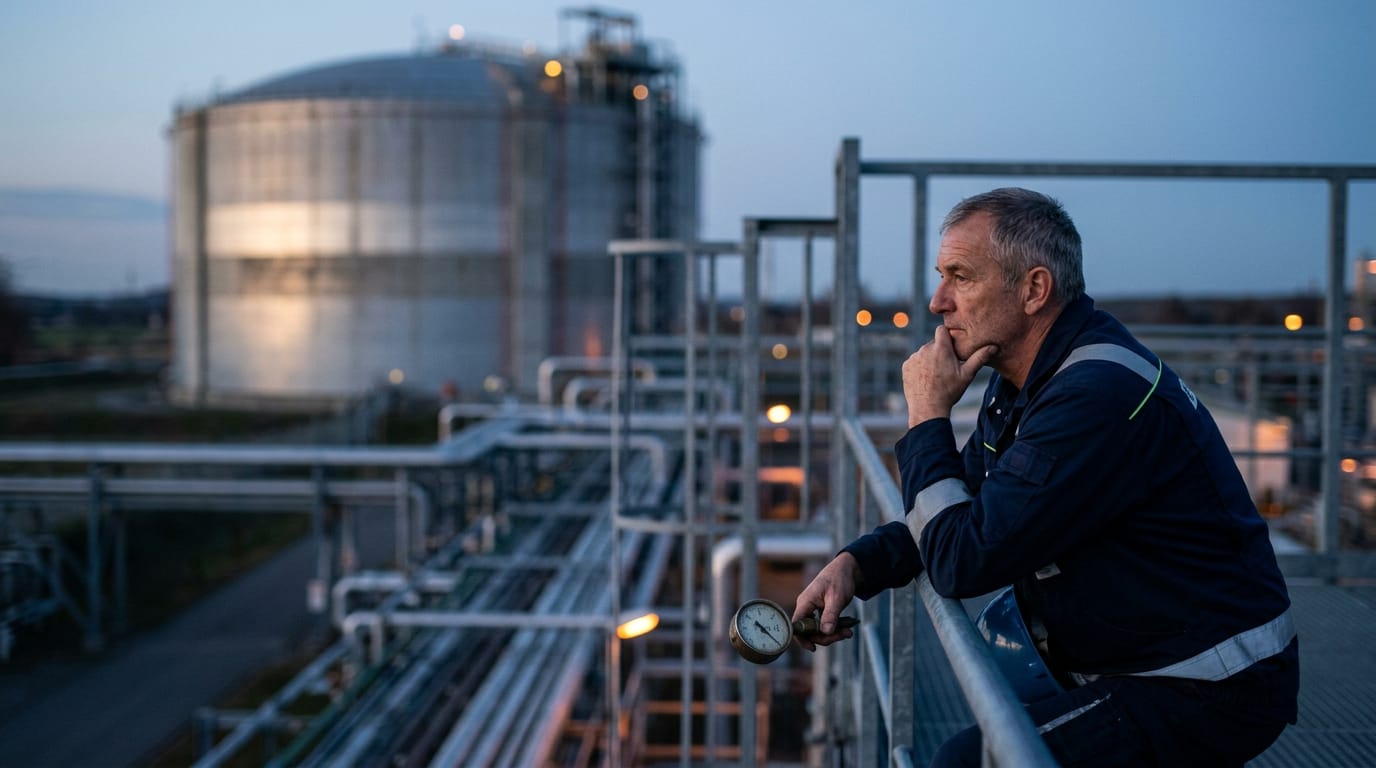
BERLIN – Germany, the European Union's economic powerhouse and largest natural gas storage operator, is confronting a precarious energy outlook as its gas storage facilities remain at unusually low levels, raising significant concerns about supply security for the upcoming winter. With storage facilities hovering around 44-50% capacity, the nation faces its lowest reserves for this time of year since 2021, prompting warnings from analysts and industry experts about potential shortfalls and broader European instability. The situation underscores a complex interplay of geopolitical events, market dynamics, and the lingering effects of past energy policies.
The Alarming Reality of Depleted Reserves
As the heating season approaches, Germany's natural gas reserves are critically low, a stark contrast to previous years. Data indicates that facilities are only around 44-50% full, significantly below the approximately 83% recorded in 2024 and 52% in 2025 at the same point in the year. This shortfall places Germany in a vulnerable position, especially given the official target of reaching 80% capacity by November 1, with an overall average of 70% across all facilities. Klaus Müller, president of the Bundesnetzagentur, the energy regulator, described the current level as "unsatisfactory," noting that gas storage reached 50% capacity 50 days later than the previous year. The nation's gas storage association, INES, has cautioned that achieving the 70% target by November 1 is now "virtually unachievable" at current injection rates. This precarious state leaves little margin for error, particularly if a harsh winter leads to unexpectedly high demand.
The Economic and Geopolitical Undercurrents
Several factors contribute to Germany's current predicament. A cold winter earlier this year significantly depleted reserves, requiring substantial withdrawals. However, the primary challenge in replenishing these stocks lies in persistently high natural gas prices. The ongoing conflict in Iran has fueled turmoil in international fossil fuel markets, driving prices upwards and making it economically unappealing for traders and energy suppliers to purchase gas for storage. Traditionally, traders buy gas in the summer months when prices are lower, storing it to sell at a profit during the winter when demand and prices typically rise. This year, however, a "negative summer-winter spread"—where the price difference between summer and winter gas is insufficient to cover storage costs—has removed the incentive for market participants to inject gas into facilities.
Adding to these economic disincentives, historical events continue to cast a long shadow. In 2021, Russian gas company Gazprom, which operated large storage capacities in Germany, allowed them to run low even before the full-scale invasion of Ukraine, contributing to an already tight market. Furthermore, unforeseen logistical challenges, such as the Rhine drought impacting industrial transport and a previous instance of an LNG terminal becoming inoperable due to ice, highlight the fragility of supply chains and the potential for disruptions. These combined pressures have driven household gas prices to a three-year high, increasing the cost for new gas customers by 23% since the start of the Iran conflict in February 2026.
Ripple Effects Across Europe
Germany possesses the largest natural gas storage capacities within the European Union, making its storage levels a critical determinant of wider European energy security. Analysts warn that Germany's low reserves pose a significant supply security risk not only for the country itself but also for neighboring nations such as Austria, the Czech Republic, and Switzerland, which historically import substantial amounts of gas via Germany. Ira Joseph, a gas market expert at Columbia University's Center on Global Energy Policy, describes Germany as a "weak link" in the European energy chain, especially in a scenario where exceptionally low temperatures drive up demand.
The interconnectedness of the European gas market means that a shortfall in Germany could reduce the overall flexibility of the system and jeopardize security of supply in other member states. Moreover, if Germany is forced to become an aggressive buyer of gas to meet its winter needs, it could drive wholesale gas prices even higher across the continent, further exacerbating energy inflation and impacting already fragile European economic growth. This could also lead to Germany effectively "elbowing out" other European buyers in the competitive global market for liquefied natural gas (LNG) supplies, despite its own limitations in regasification capacity.
Germany's Response and Future Outlook
In response to the escalating concerns, the German government has unveiled plans to bolster its energy security. Last week, the German economy ministry revealed intentions to establish a state-owned strategic gas reserve for emergencies, though initial filling is not expected to commence before next summer. The government aims to allocate €1.5 billion ($1.7 billion) for this initiative, targeting a capacity of approximately 2.3 billion cubic meters, which accounts for about 10% of Germany's total underground gas storage. The cabinet is expected to make a decision on these plans by mid-August, with parliamentary consideration potentially following in late September.
Furthermore, the government has moved to abolish the existing gas storage levy, previously paid by consumers, intending to finance future storage filling through state funds from the Climate and Transformation Fund (CTF). This measure aims to relieve energy costs for consumers, although some critics argue it creates "false incentives" by favoring fossil gas over electricity and potentially undermining climate targets. Industry groups, including the gas grid operator association FNB Gas and INES, have urgently called for an overhaul of existing storage filling incentives and the implementation of a new two-part strategic gas storage model that combines market mechanisms with regulatory protection. These calls highlight a recognition that the current market-driven approach is insufficient to ensure adequate reserves in the face of ongoing volatility.
Conclusion
Germany's struggle to replenish its natural gas storage facilities presents a significant challenge for the nation and the broader European energy landscape. The confluence of high global gas prices, geopolitical tensions, and insufficient market incentives has created a scenario where Germany faces the prospect of entering winter with dangerously low reserves. While the government has initiated plans for a strategic reserve and adjustments to funding mechanisms, the effectiveness and timeliness of these measures remain critical. The coming months will be a crucial test of Germany's resilience and its ability to navigate a volatile energy market, with implications for household budgets, industrial stability, and the energy security of an entire continent. Ensuring a secure and affordable energy supply will require a delicate balance of market forces, strategic intervention, and continued international cooperation.