Germany Grapples With Military Readiness Amidst Rising Geopolitical Tensions
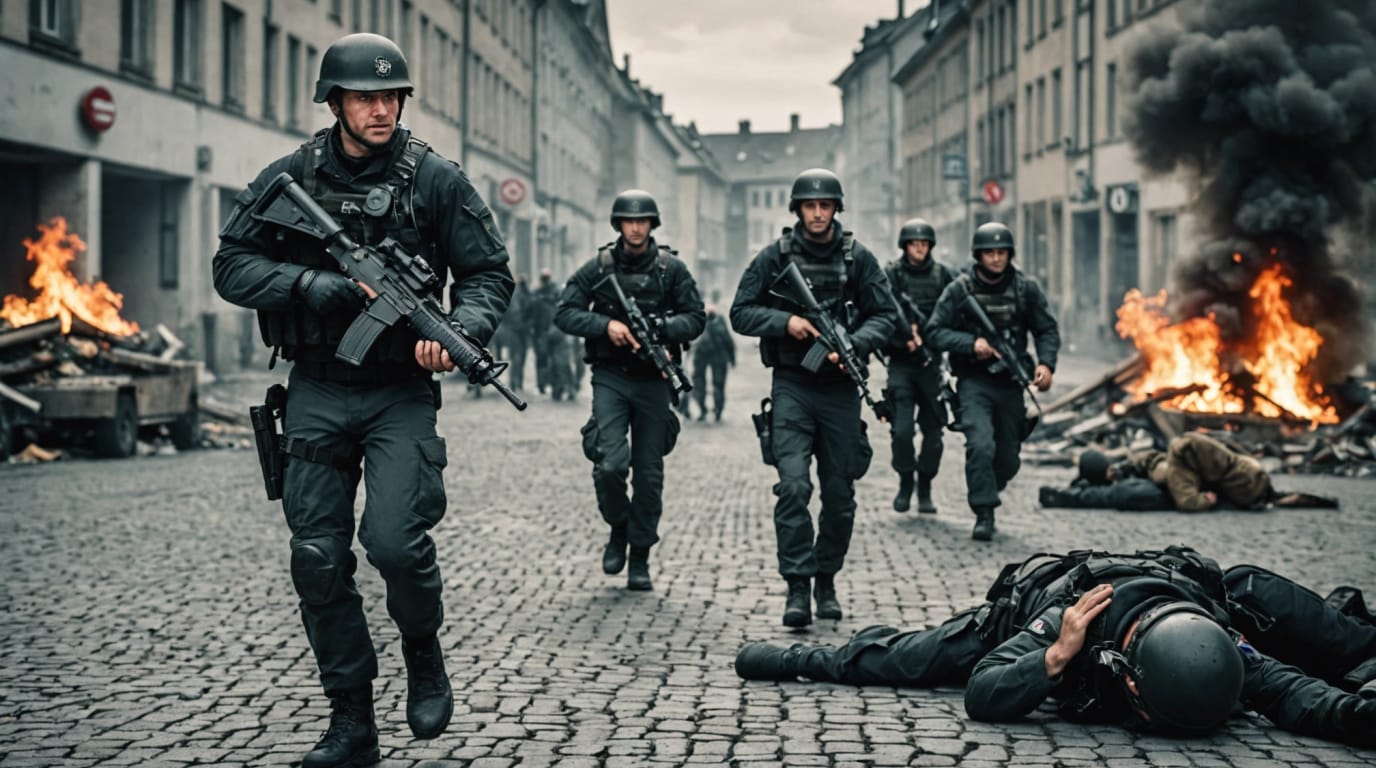
Germany faces increasing pressure to bolster its military preparedness as concerns mount over European security in a world shadowed by the war in Ukraine and uncertainty surrounding the United States' commitment to NATO. Despite increased defense spending and a declared commitment to strengthening its armed forces, the Bundeswehr continues to struggle with critical equipment shortages, personnel gaps, and aging infrastructure, raising questions about Germany's ability to fulfill its role as a key player in European defense.
The State of the Bundeswehr: A Force in Need of Repair
A recent annual report on the state of Germany's armed forces paints a concerning picture. Despite a significant increase in defense spending following Russia's full-scale invasion of Ukraine in 2022, the Bundeswehr is shrinking, aging, and still lacks essential equipment. Eva Högl, the parliamentary commissioner for the armed forces, described the situation as "serious," stating that Germany is "still not where we need to be."
The report highlights a persistent inability to grow the force, with troop numbers falling by 340 to 181,174 at the end of 2024, falling far short of the goal of 203,000 troops by 2031. A lack of young recruits is also causing the force to age, with the average age of soldiers rising to 34. Outdated equipment and a lack of munitions further impede the Bundeswehr's combat ability, despite a special €100 billion fund established to address these shortcomings.
Financial Commitments and the "Debt Brake"
Germany has made strides in increasing its defense budget, reaching NATO's target of spending 2% of gross domestic product (GDP) on defense in 2024 for the first time since 1991. However, maintaining this level of spending and addressing the Bundeswehr's deep-seated issues requires sustained financial commitment.
The German government faces a significant challenge in balancing its defense needs with its constitutionally enshrined "debt brake," which limits the government's ability to borrow money. Center-right election winner Friedrich Merz, who is in talks to form a coalition government with the center-left Social Democrats, has proposed exempting defense spending above 1% of GDP from these restrictions. This proposal, along with a €500 billion fund for infrastructure projects, aims to stimulate the economy and address the growing need for defense investment.
However, securing the necessary two-thirds majority in parliament to amend the constitution and pass these measures remains a hurdle. While there is growing consensus on the need for increased defense spending, disagreements persist on how to finance it without sacrificing other essential social programs.
Germany's Role in NATO and European Security
Germany's military weakness poses challenges to its role in reinforcing NATO's eastern flank, including its planned deployment of a 4,800-strong brigade in Lithuania. Högl has called this deployment a "major effort" that stretches Germany's already thin military resources.
As a major European power and NATO member, Germany is expected to play a leading role in maintaining security and stability in the Euro-Atlantic area. The country's commitment to collective defense is enshrined in its National Security Strategy, which identifies Russia as a threat to Germany and its allies. Germany is also a key provider of military aid to Ukraine, and is taking steps to strengthen its military presence on allied territory.
However, Germany's ability to fulfill these commitments is contingent on its ability to modernize and strengthen its armed forces. This requires not only increased financial investment but also addressing structural issues such as personnel shortages, bureaucratic inefficiencies, and a lack of coordination between different branches of the military.
Public Opinion and Political Will
Public opinion in Germany has shifted in favor of increased defense spending in recent years, driven by concerns about Russia's aggression and the perceived inadequacy of the Bundeswehr. A recent poll showed that a majority of Germans support significant increases in defense spending, with some even advocating for exceeding the 3-3.5% of GDP target proposed by the defense minister.
However, this support is not unconditional. Many Germans are unwilling to sacrifice social program spending for higher defense budgets, highlighting the need for a balanced approach that addresses both security concerns and social needs.
Political will remains a key factor in determining Germany's future defense posture. While there is growing consensus on the need to invest in the Bundeswehr, disagreements persist on how to finance these investments and how to balance them with other priorities. Strong political leadership is needed to overcome these challenges and ensure that Germany can meet its defense commitments.
A Turning Point for German Defense?
Germany stands at a critical juncture in its defense policy. The war in Ukraine and growing geopolitical instability have exposed the vulnerabilities of the Bundeswehr and underscored the need for a significant shift in approach. While increased defense spending and ambitious modernization plans offer hope for the future, the challenges are significant and require sustained commitment and strong leadership.
Whether Germany can overcome these challenges and transform its armed forces into a credible and effective force remains to be seen. The coming years will be crucial in determining whether Germany can truly step up and fulfill its role as a key pillar of European security.


