Germany Grapples With 'Missing Magic' as DW Podcast Unpacks Economic Malaise
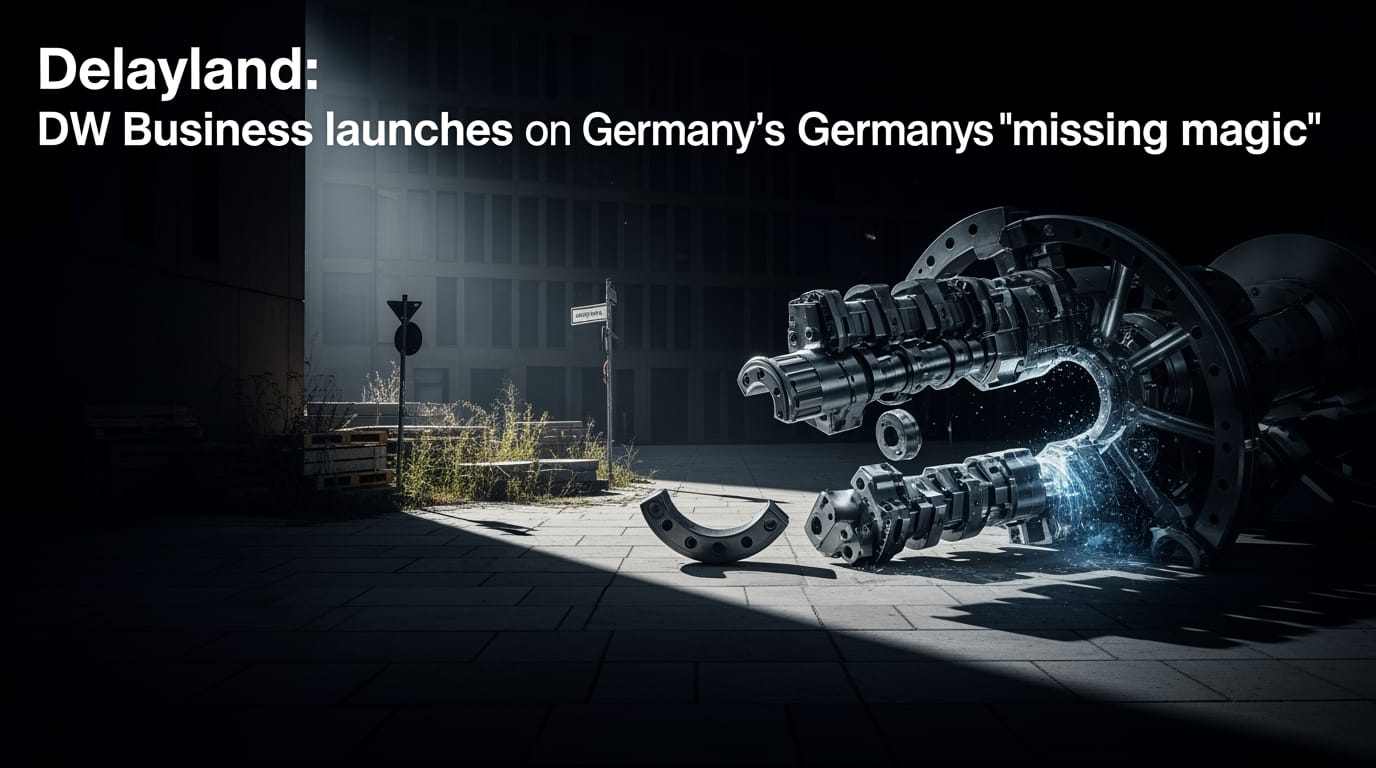
Berlin, Germany – Once revered as an exemplar of industrial prowess, precision engineering, and economic stability, Germany finds itself under increasing scrutiny as a new podcast series from DW Business, "Delayland: Germany and the Missing Magic," delves into the nation's growing struggles with inefficiency and economic stagnation. The series arrives at a pivotal moment, with Europe's largest economy battling persistent challenges that have led some to question if the country is losing its famed "magic."
The "Delayland" podcast explores the tangible manifestations of this decline, from notoriously late trains and crumbling infrastructure to stifling bureaucratic red tape and a once-dominant automotive industry facing unprecedented global competition. Far from its image of seamless efficiency, Germany is now confronting a reality where progress is often bogged down by outdated systems, including a surprising reliance on fax machines. The series aims to uncover the root causes of these issues and seek insights from other nations on how Germany might regain its former dynamism.
The Erosion of an Economic Powerhouse
Germany's economic landscape has undergone a dramatic shift in recent years. After a period of robust growth and a "labor market miracle" from 2005 to 2019, the nation has seen its fortunes reverse. In 2023, Germany registered as the worst-performing major economy globally, experiencing a recession and contracting by 0.3% in its fourth quarter, and is projected to lag behind most OECD member states in growth through 2024 and 2025. This downturn has prompted warnings from economists and business leaders that Germany risks reclaiming its unflattering 1990s moniker, "the sick man of Europe." The Handelsblatt Research Institute has even declared it the country's "greatest crisis in post-war history," projecting a third consecutive year of recession in 2025.
Multiple factors have contributed to this concerning trajectory, painting a complex picture of internal structural weaknesses compounded by external shocks. The podcast, through its narrative exploration, brings these abstract economic realities to a human level, illustrating how these challenges impact daily life and business operations across the country.
Energy Crisis and Deindustrialization Fears
A primary driver of Germany's current economic woes can be traced back to the energy crisis ignited by the Russian invasion of Ukraine. For years, Germany's industrial might was fueled by a reliance on cheap Russian natural gas. The subsequent sanctions and supply disruptions led to a dramatic surge in energy prices, significantly impacting energy-intensive industries. While wholesale gas prices have since returned to 2018 levels, the initial shock exposed a vulnerability in Germany's energy strategy.
The slow pace of Germany's transition to renewable energy sources, coupled with its decision to phase out nuclear power, further aggravated the situation. Industrial electricity prices in Germany are now substantially higher than in competitor nations like the United States and China, posing a considerable disadvantage for manufacturers. This disparity has fueled concerns about "creeping deindustrialization," with some key producers of essential industrial components considering relocating if high energy costs persist, threatening to unravel entire value chains.
The Weight of Red Tape and Digital Lag
Beyond energy, Germany grapples with systemic inefficiencies, notably its pervasive bureaucracy and slow embrace of digitalization. The "Delayland" podcast highlights instances where endless administrative hurdles impede progress, from complex permitting processes for renewable energy projects to delays in basic infrastructure development. Experts describe Germany as an "analogue country in a digital world," a characterization underscored by its slow adoption of digital technologies in comparison to other advanced economies.
This bureaucratic inertia is not merely an inconvenience; it represents a significant drag on innovation, investment, and overall productivity. The lack of robust public investment in infrastructure, both physical and digital, exacerbates the problem, with Germany's public investment as a percentage of GDP falling below the EU average. Efforts to streamline government agencies and implement digital solutions are underway, but the impact of these reforms remains to be fully seen.
Shifting Global Dynamics and Labor Shortages
Germany's export-oriented economy, long a pillar of its success, is also facing new headwinds. Global shifts in demand and intensifying international competition, particularly from China, are challenging traditional German industries. The automotive sector, a cornerstone of German manufacturing, has seen its global dominance wane, with German car exports dropping significantly while Chinese exports surged.
Adding to these external pressures are internal demographic challenges. Germany is contending with a growing shortage of skilled workers, driven by an aging population, low participation rates among women in the workforce, and a slowdown in immigration. These labor market constraints further strain productivity and economic growth, making it harder for industries to adapt and expand.
Navigating Political Uncertainty and Budgetary Constraints
The political landscape has also contributed to the prevailing uncertainty. Internal disputes within the governing coalition and a constitutional court ruling in November 2023 that deemed a €60 billion climate fund unconstitutional have created budgetary crises and hampered economic stimuli. This political instability, coupled with ongoing debates over economic policy, has created an environment of heightened uncertainty for businesses and investors.
Despite these challenges, some analysts point to Germany's solid public finances and continued export surpluses as indicators of underlying strength. However, the prevailing sentiment suggests a need for ambitious reforms to overcome these structural obstacles.
Charting a Course for Renewal
The "Delayland" podcast series, by asking "How did Germany lose its magic?" and "Who's got it now?", seeks to highlight not just the problems but also potential pathways to recovery. By examining successful approaches in other countries, the podcast aims to inspire fresh thinking on how Germany can foster innovation, accelerate digitalization, cut red tape, alleviate labor market constraints, and strategically re-evaluate its energy and investment policies.
As Germany grapples with an unprecedented period of economic uncertainty, the conversation sparked by "Delayland" underscores a critical moment for the nation. The future of Europe's traditional economic engine hinges on its ability to confront these complex challenges head-on and adapt to a rapidly evolving global landscape, lest its storied "magic" remains perpetually missed.