Poland's Economic Ascent Reshapes European Landscape
Once viewed as Europe's periphery, Poland has dramatically transformed into a formidable economic powerhouse, increasingly flexing its muscle across Western Europe. Propelled by decades of sustained growth, strategic integration into the European Union, and a dynamic manufacturing sector, the nation has shed its post-communist past to emerge as a critical player in regional trade, investment, and supply chains. Its remarkable trajectory challenges traditional perceptions and positions Poland as a vital economic partner and a testament to successful market-oriented reforms.
The Polish Economic Ascent: A Decades-Long Transformation
Poland's economic narrative is one of Europe's most compelling success stories, marked by consistent and impressive growth since the fall of communism in 1989 and accelerated by its accession to the European Union in 2004. Since 1992, Poland has increased its GDP per capita (PPP) by 3.5 times, becoming the fastest-growing upper-middle and high-income economy globally over the past three decades. This sustained expansion saw Poland's economy reach an estimated $1 trillion in 2025, placing it among the top 20 world economies. Furthermore, Poland was notably the only EU country to avoid recession during the 2008 global financial crisis, demonstrating exceptional resilience.
This economic miracle is largely attributed to a blend of comprehensive reforms, including deep market liberalization, structural adjustments in the mid-1990s, and a significant boom in education. EU membership solidified these gains by providing access to open markets, fostering competition, and instilling institutional discipline, which made reforms credible and durable. The country's GDP per capita has risen from approximately 50% to roughly 80% of the EU average since joining the bloc, showcasing a robust convergence process. With its service sector now accounting for 62.3% of the economy and industry for 34.2%, Poland has successfully diversified its economic base.
Deepening Trade and Investment Ties with Western Europe
Poland's economic integration with Western Europe is perhaps best exemplified by its strong relationship with Germany, which remains Poland's leading trading partner for both exports and imports. In the first half of 2025, Polish-German trade reached a record €90 billion, representing a 5.4% increase over the previous year. Poland has steadily climbed the ranks, becoming Germany's fifth most important trading partner in terms of total turnover, surpassing Italy and China, and ranking as the fourth-largest recipient of German exports. This highlights a symbiotic relationship where Poland serves as a crucial market for German goods and an increasingly significant supplier.
Polish exports to Germany reached €40.6 billion in the first half of 2025, a 5.2% increase, affirming the strong position of Polish companies within German supply chains. Key export goods to the wider European market include machinery, electronic equipment, vehicles, furniture, and plastics, with automotive items and batteries standing out.
Foreign Direct Investment (FDI) has also been a cornerstone of Poland's economic expansion. Since the beginning of its transformation, Poland has attracted approximately USD 390 billion in FDI, with nearly half of this capital reinvested, signaling long-term investor confidence. In 2023, FDI inflows reached USD 28.6 billion, making Poland the 14th largest recipient worldwide. Major investors include the Netherlands, Germany, the United States, Spain, and France, with investments predominantly directed towards manufacturing, wholesale and retail, financial services, and IT. Poland's strategic location and EU membership have made it a natural location for manufacturing and service projects catering to the entire EU market.
Poland: A Strategic Hub in European Supply Chains and Advanced Manufacturing
Poland's role in the European economy extends beyond traditional trade figures; it has become a strategic anchor in continental supply chains, particularly amidst global shifts towards nearshoring and friendshoring. The country has emerged as a robust alternative to distant Asian suppliers, offering European companies faster, cheaper, and less risky manufacturing and distribution channels.
This is particularly evident in high-value manufacturing. Poland now accounts for approximately 60% of Europe's lithium-ion battery output and is the world's second-largest battery exporter. The automotive sector is another strong example, with major manufacturers like Volkswagen, Mercedes-Benz, and Stellantis expanding operations in Poland, making it the sixth-largest car producer in the EU. Poland is also a leading pharmaceutical manufacturing hub, playing a vital role in securing Europe's medical supply chains.
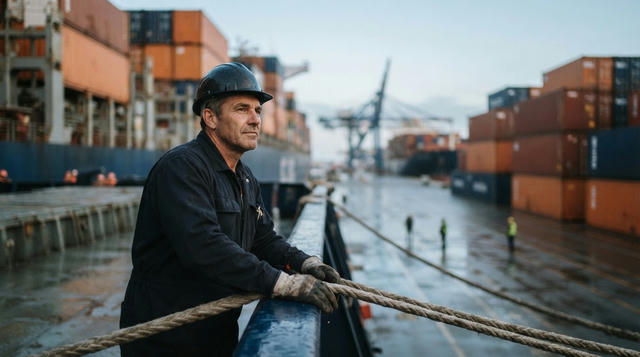
The country's geographical position at the crossroads of major European trade routes, coupled with its modern and expanding infrastructure of highways, rail systems, and seaports (such as Gdańsk and Gdynia), solidifies its status as a key logistics and transportation hub. This integrated capability allows Poland to contribute significantly to the German economy, with roughly 5% of Polish exports representing German value-added, indicating deep intertwining within regional production networks.
Human Capital and Emerging Sectors Drive Innovation
Poland's economic dynamism is underpinned by a highly skilled and educated workforce. The country's booming education sector, which saw university student enrollment quintuple to 1.6 million by 2000, has created a steady supply of skilled labor. Today, Poland boasts a large talent pool, particularly in STEM fields, with over 39,800 engineering graduates in 2023. This human capital, combined with competitive labor costs and high English proficiency, has made Poland an attractive destination for IT outsourcing and nearshoring. The Polish IT services market is projected for significant annual growth, attracting tech companies from the US, UK, Germany, and Italy.
Beyond manufacturing, Poland's economy is diversified across several key sectors. It is the largest chemical exporter in Central and Eastern Europe, with a robust advanced manufacturing industry contributing significantly to its GDP. The ICT, defense, and environmental technologies sectors are also experiencing rapid growth and attracting investment. Moreover, Poland is witnessing a "quiet reversal" in migration trends, with Poles increasingly returning home, drawn by rising wages and improving opportunities, further bolstering the domestic labor force.
Navigating Challenges and Charting the Future
Despite its impressive economic track record, Poland faces several challenges that could impact its future growth trajectory. Stagnant investment rates have been a concern, fluctuating between 16% and 20% of GDP over the past decade, below the European average. The country is also grappling with a rising public debt and a budget deficit projected to reach 6.8% of GDP in 2025, exceeding the EU's 3% benchmark. Demographic shifts, including an aging population and potential brain drain, pose long-term risks to the labor market and productivity. Higher labor costs, while a sign of economic progress, also present a challenge to maintaining competitiveness.
Political developments, particularly regarding the rule of law, have at times strained relations with the European Union, impacting the timely disbursement of crucial recovery funds. However, recent efforts to repair these ties have seen the unfreezing of significant EU funds, providing much-needed fiscal breathing room and supporting public investments.
To sustain its economic momentum, Poland must continue to prioritize investment in innovation, research and development, and sustainable development. Diversifying trade and logistics partners beyond traditional strongholds will also be key to building resilience. By strategically addressing these hurdles and leveraging its inherent strengths, Poland is poised to solidify its position as a central and influential economic force within Europe.
Conclusion
Poland's journey from a centrally planned economy to an undeniable economic power in Europe is a testament to its strategic reforms, deep integration into the EU, and a resilient, adaptable workforce. Its burgeoning trade relationships, particularly with Western European giants like Germany, coupled with its emergence as a pivotal manufacturing and logistics hub, underscore its growing influence. While challenges such as investment shortfalls and fiscal pressures remain, Poland's proactive engagement with these issues, combined with its dynamic human capital and strategic location, suggests a future where its economic muscle will continue to reshape and invigorate the broader European landscape. The "European tiger on Germany's doorstep" is not just catching up; it is increasingly setting the pace for a more interconnected and robust continent.