Germany Grapples with Record Heat as Climate Action Resolve Wanes
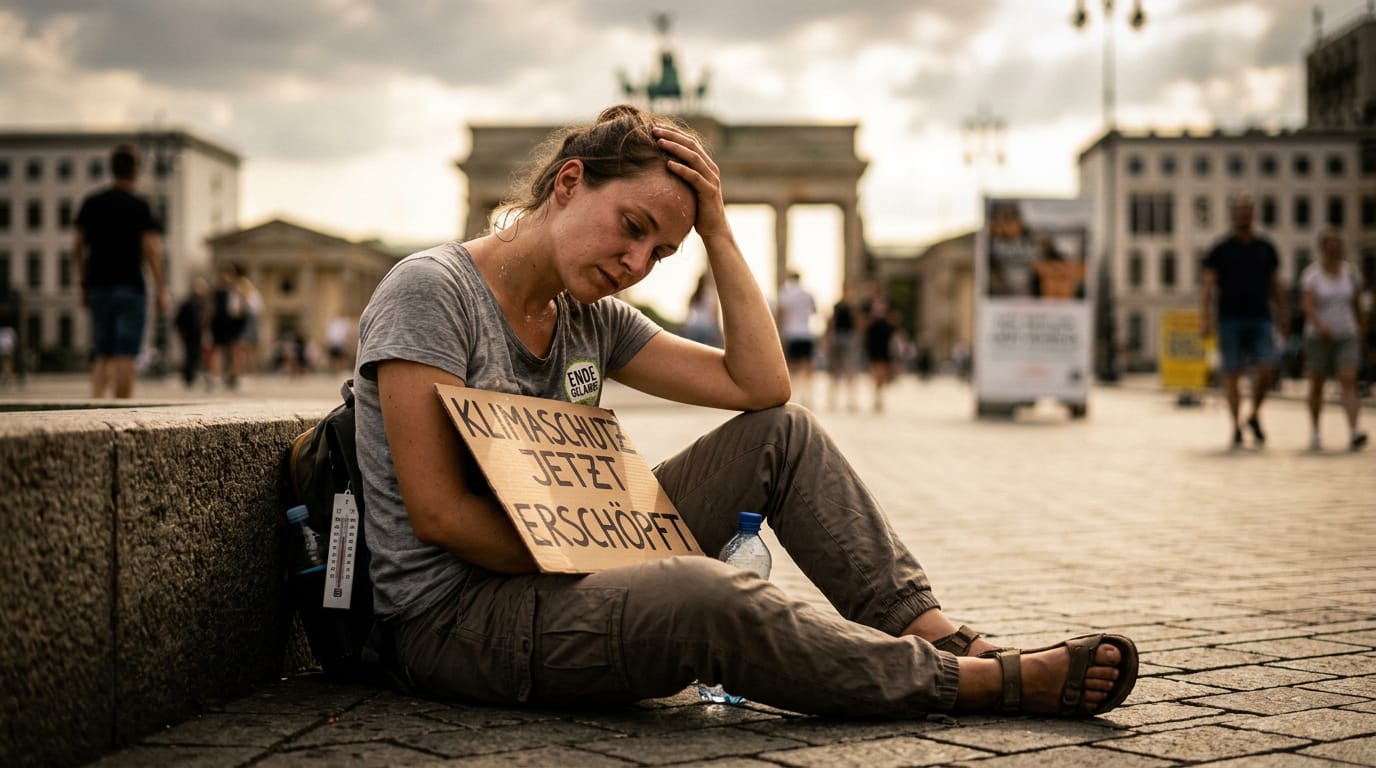
BERLIN — Germany is experiencing a summer of unprecedented heat, with record-breaking temperatures scorching the nation and exacting a heavy human and economic toll. Yet, even as the mercury rises and climate impacts intensify, a discernible shift in public and political sentiment suggests a growing "climate action fatigue" that could impede the country's ambitious environmental goals. The paradox of an urgent climate reality clashing with waning resolve presents a critical challenge for Europe's largest economy.
The Summer's Scorch: Unprecedented Heat and Devastating Costs
The summer of 2026 has etched itself into Germany's meteorological records, marking a "watershed" moment for climate adaptation, according to the German Meteorological Service (DWD). In late June, vast swathes of the country, along with much of Western and Central Europe, endured a severe heatwave that saw temperatures consistently exceed 40 degrees Celsius. On June 27, Germany recorded its highest-ever temperature of 41.5 degrees Celsius in Drewitz, Saxony-Anhalt, shattering the previous national record of 41.2 degrees Celsius set in 2019. Just a day prior, Saarbruecken had reported 41.3 degrees Celsius.
The human cost of this extreme weather has been stark. Approximately 12,500 heat-related deaths have been reported in Germany so far this year, marking the highest annual toll since records began in 2016. A significant portion of these fatalities, around 9,600, occurred in the single week between June 22 and June 28, when temperatures regularly surpassed 40 degrees Celsius across many regions. The elderly have been disproportionately affected, underscoring the vulnerability of certain demographic groups to extreme heat.
Beyond the tragic loss of life, the economic ramifications are substantial. The late June heatwave alone cost the German economy an estimated 6.3 billion euros in lost productivity. Analysis indicates that if Germany experiences three to four similar heatwaves annually, productivity losses could exceed 20 billion euros per year. Key sectors such as manufacturing, healthcare, retail, construction, and energy have reported significant impacts. Compounding these challenges, drought conditions exacerbated by heat have led to critically low water levels in vital waterways like the Rhine River. This has severely disrupted shipping and is projected to reduce Germany's Gross Domestic Product (GDP) by 0.3 to 0.4 percentage points. Insurer Allianz Trade warns that extreme heat is evolving from a short-term weather event into a structural economic shock, potentially shrinking German GDP by up to 3 percent, or $131 billion, by 2030 due to heatwaves.
The Fading Green Consensus: Signs of Climate Action Fatigue
Despite the undeniable and escalating evidence of climate change, public enthusiasm and political momentum for aggressive climate action appear to be waning in Germany. Once lauded globally for its strong environmental consciousness, the nation is now contending with what researchers term "climate fatigue."
Recent polling data reveals a concerning trend. While a large majority of Germans (80 percent) remain concerned about the consequences of climate change, the perceived urgency of environmental protection has diminished. In autumn 2024, 54 percent of respondents considered environmental protection "very important," a noticeable drop from 65 percent in 2020. Support for the energy transition, a cornerstone of Germany's climate strategy, has also declined, falling from 69 percent five years ago to 60 percent today.
Several factors contribute to this erosion of public resolve. Economic concerns weigh heavily, with 53 percent of the population worrying about the financial impact of climate policies on their households and 39 percent fearing broader economic prosperity losses. Many citizens feel they cannot transition to climate-friendly technologies without substantial government support, yet trust in the government's ability to effectively implement climate policies is low. The public's focus has broadened to include other pressing issues like domestic security, social security, migration, and economic growth, which have outranked environmental concerns in recent snap elections. This confluence of economic anxieties and shifting priorities has created fertile ground for a retreat from the once-unwavering commitment to climate leadership.
Policy Crossroads: Government's Stalled Momentum
Against this backdrop of mounting climate impacts and flagging public support, Germany's climate policy finds itself at a critical juncture. The current government is widely criticized for "decelerating rather than accelerating climate action," drifting further off track from its legally binding emissions reduction targets for 2030 and 2045.
Germany has committed to reducing greenhouse gas emissions by 65 percent from 1990 levels by 2030 and achieving climate neutrality by 2045. However, current projections suggest that without additional fast-acting measures, the country will fall well short of its 2030 targets. The Climate Action Tracker, an independent scientific analysis, rates Germany's climate action as "Insufficient," noting that policy decisions risk slowing the expansion of renewable energy and that existing policies are not robust enough to meet future goals.
Experts point to inadequate action in critical sectors, with the building sector missing its target for the second consecutive year in 2021, and similar shortfalls anticipated for other sectors in 2022 and 2023. The energy sector, despite past progress, is particularly sobering, with carbon emissions having risen in 2021 and the rollout of wind energy at a decade low. This policy inertia and the perceived weakening of climate ambition by the government risk not only the country's environmental future but also potential legal action and financial liabilities from the European Union.
A Nation at a Crossroads: Adaptation vs. Prevention
The escalating severity of heatwaves and their direct impacts have prompted a growing emphasis on adaptation measures within Germany. The German Weather Service has highlighted that the country must now prepare for heat stress situations previously common only in Mediterranean countries, necessitating broader health protection and urban planning adjustments. Indeed, 85 percent of Germans believe more needs to be done to protect the public from extreme heat events. Cities are increasingly seeking funding for climate adaptation initiatives to implement short- and long-term measures.
However, this focus on adapting to the inevitable consequences of climate change runs parallel to a struggle with primary prevention – the fundamental reduction of greenhouse gas emissions. The current trajectory suggests a nation grappling with the immediate effects of a warming planet while its long-term strategy for mitigating that warming faces significant headwinds. This dual challenge underscores a broader societal negotiation: how to protect citizens and the economy from present dangers while simultaneously fulfilling commitments to prevent future, more catastrophic impacts.
Conclusion
Germany stands at a critical juncture, caught between the scorching reality of a rapidly changing climate and a palpable exhaustion with the demands of climate action. The record heatwaves of 2026 have delivered a stark, undeniable message about the escalating consequences of global warming, manifested in thousands of deaths and billions in economic losses. Yet, this visceral experience has not uniformly translated into renewed urgency for stringent climate policies. Instead, economic anxieties, political complexities, and a declining belief in the efficacy of current governmental approaches have fostered a climate of fatigue. The challenge for Germany, and indeed for many developed nations, is to bridge this growing chasm between the urgent reality of climate change and the public and political will required for decisive, sustained action. The path forward will demand not only innovative policy solutions but also a renewed commitment to foster a societal consensus that acknowledges both the costs of action and the far greater costs of inaction.


