Germany Grapples with Record Heat as Divisive Reforms Intensify Public Strain
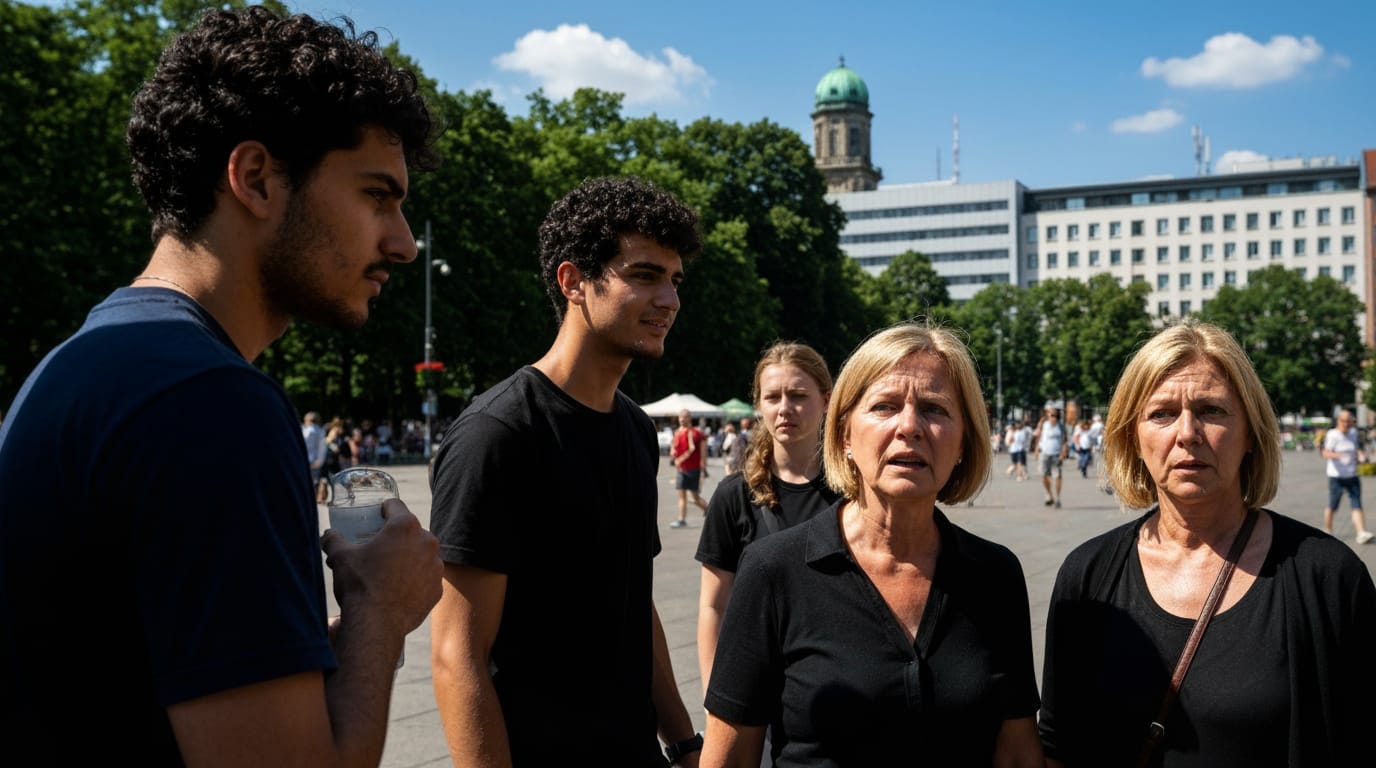
BERLIN, Germany – An unprecedented heatwave is gripping Germany, pushing temperatures past 40 degrees Celsius and shattering historical records for June, while simultaneously exposing deep societal rifts over the government's ambitious but contentious reform agenda. The dual pressures of a scorching climate and politically charged policy changes are testing the nation's resilience, fueling public frustration and highlighting the urgent need for effective governance in a rapidly changing world.
Germany, along with much of Europe, is experiencing its worst recorded heatwave, with red alerts issued across the country and a new national record of 41.3 degrees Celsius reported near Saarbrücken on Friday. This extended period of extreme heat marks the longest June heatwave ever documented, starkly illustrating the accelerating impacts of climate change. Scientists are unequivocal in attributing the intensity of this heat to human-caused climate change, noting that such conditions would have been "virtually impossible" just fifty years ago, as Europe warms faster than any other continent.
A Nation Under Heat Stress: Health and Economic Toll
The human cost of the escalating heat is profound. High temperatures are now recognized as Germany's most significant health risk stemming from climate change. The past two summers alone saw approximately 3,000 heat-related deaths annually, with vulnerable populations, particularly the elderly and those with pre-existing medical conditions, bearing the brunt of the crisis. Urban centers face exacerbated risks due to the "urban heat island effect," where artificial surfaces and reduced vegetation amplify temperatures. The lack of respite during tropical nights, where temperatures remain above 20 degrees Celsius, prevents the body from recovering, significantly increasing health hazards.
Beyond human health, the economic ramifications are substantial and growing. Extreme heat is no longer merely a transient weather event but a structural economic shock. A study by Allianz estimates that Germany could face cumulative economic losses of up to $131 billion (€120 billion) between 2026 and 2030 if current hot weather patterns persist. Productivity measurably declines as temperatures rise, dropping 3 percent for every degree above 30 degrees Celsius, while energy costs simultaneously climb by 1.2 percent per degree. This also translates into increased sick leave, which rises by an estimated 3.5 percent on days exceeding 30 degrees Celsius and can surge up to 6 percent during prolonged heatwaves. Infrastructure, much of it not designed for such extreme conditions, is buckling under the strain, leading to disruptions in rail travel and concerns about road and track integrity. Deutsche Bahn, the national rail operator, has even offered free cancellations for long-distance bookings to mitigate the impact on its strained network. Despite these clear and present dangers, Germany remains largely unprepared for extreme heat as a crisis, with effective cooling solutions present in only 6 percent of private households, highlighting a critical gap in adaptation strategies. Experts are calling for heat protection to be fully integrated into disaster response, urban planning, and infrastructure development, proposing measures like tax incentives for heat-resilient buildings.
The Reform Agenda: A Tightrope Walk
Amidst the climate emergency, Chancellor Friedrich Merz's coalition government is striving to push through a series of "sweeping economic and social reforms" aimed at revitalizing Germany's sluggish economy and addressing long-term demographic shifts. A central plank of this agenda is comprehensive pension reform, which proposes gradually raising the retirement age to around 70 by the early 2090s, linking it directly to increasing life expectancy. Another proposal seeks to eliminate the option for individuals with 45 years of contributions to retire at 63 without pension reductions, a move critics contend would disproportionately penalize those in physically demanding professions.
The government's reform efforts extend beyond pensions, encompassing areas such as financial crime legislation, electoral reform, and a "self-determination law" aimed at streamlining gender and name changes. While the necessity of these reforms is widely acknowledged, their implementation is proving to be a political minefield. A significant majority of Germans, while desiring reforms (71 percent), are reportedly unwilling to make the "significant sacrifices" often required for such changes, with 55 percent expressing this sentiment. This public reluctance, coupled with a perceived "credibility problem" within the government, is contributing to a sense of political paralysis and making consensus-building exceedingly difficult.
Public Opinion: A Fractured Consensus
The public discourse surrounding both climate policy and broader government reforms reveals a deeply fractured landscape of opinion. While a clear majority of Germans (77 percent) view climate change as humanity's biggest challenge and 72 percent feel its daily impact, confidence in the government's ability to tackle it effectively is remarkably low. Surveys indicate that many Germans (51 to 62 percent) believe the federal government is doing too little or that its climate protection measures are haphazard, ineffective, and unjust. There is a widespread concern that proposed climate policies focus too heavily on perceived losses and that the public is not adequately prepared for the changes demanded.
This sentiment of distrust is not isolated to climate policy but extends to the federal government generally, with overall trust in both institutions and the media being low. Economic anxieties, particularly concerns over the rising cost of living and overall economic stability, are significant factors shaping public receptiveness to government initiatives. These concerns are further exploited by the rising popularity of the far-right Alternative for Germany (AfD), which has capitalized on public dissatisfaction and fears related to economic transformation and high prices. The AfD's increasing influence, even positioning itself as the "party of the workers," adds another layer of complexity to the government's efforts to implement vital reforms and adapt to a changing climate.
Navigating a Scorching and Fractured Future
Germany stands at a critical juncture, confronted by the undeniable reality of an accelerating climate crisis and the complex political challenge of enacting necessary but unpopular reforms. The current heatwave serves as a visceral reminder of the urgency of climate action, yet public skepticism about the government's approach threatens to undermine these efforts. The economic strain imposed by extreme weather events further complicates the reform agenda, as citizens become more resistant to changes perceived as costly during times of financial insecurity.
For Germany to navigate this scorching and fractured future successfully, the government faces the arduous task of rebuilding public trust, demonstrating competence in crisis management, and forging a credible path forward that addresses both immediate climate impacts and long-term societal needs. The interplay between record-breaking heat and a populace divided over the sacrifices required for reform will define Germany's trajectory in the years to come, demanding leadership that can unite rather than further polarize a nation under pressure.


