Germany Leads Revolt Against Proposed EU Budget, Demanding Deep Cuts
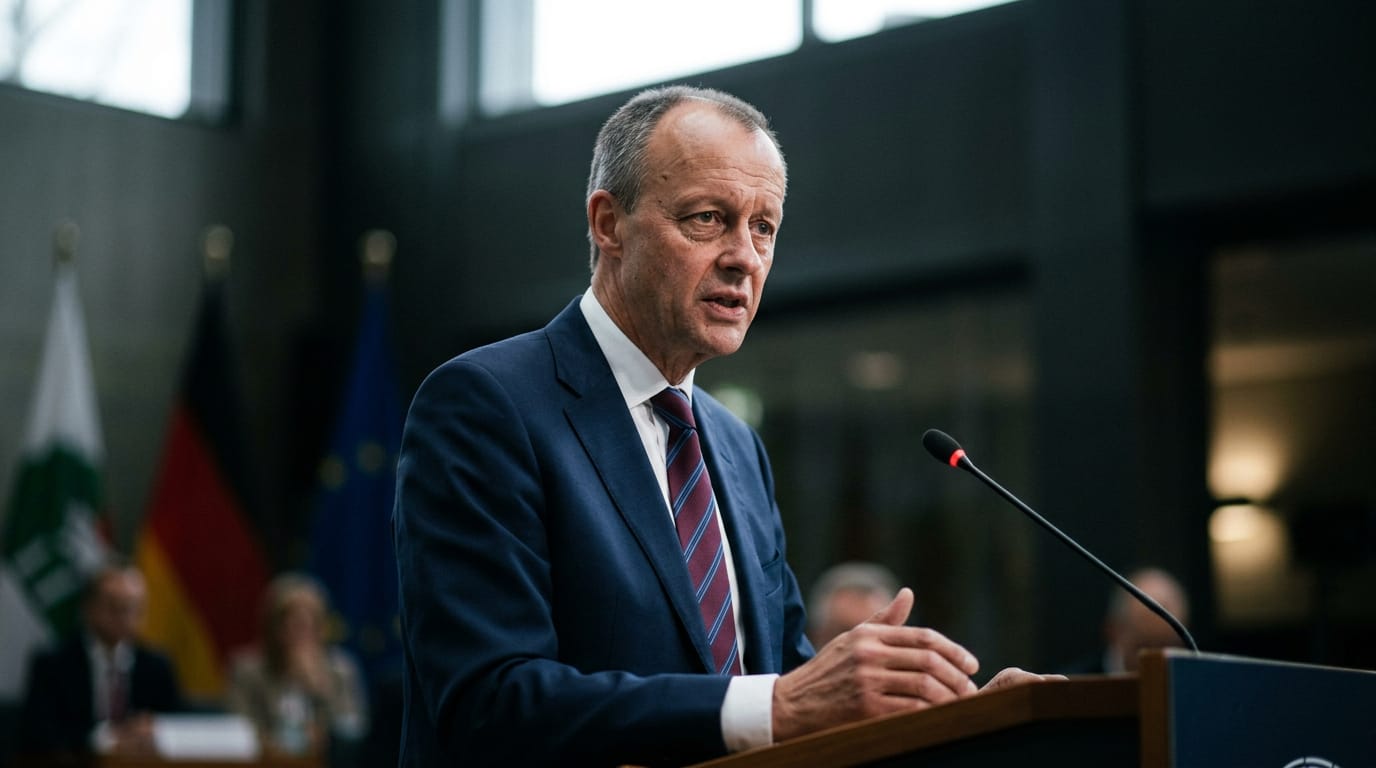
BERLIN — A fierce battle over the European Union's long-term financial future reached a boiling point Tuesday as German Chancellor Friedrich Merz and five allied leaders threatened to block the bloc's upcoming seven-year budget unless Brussels slashes hundreds of billions of euros from its planned spending.
The revolt by the EU’s largest financial contributor highlights sharp divisions across the continent. As member states tighten their fiscal belts at home, Berlin argues that the European Commission's headline spending target of nearly €2 trillion for the 2028–2034 budget cycle is detached from current economic realities.
With all 27 EU member states required to give unanimous approval to the multi-year framework, the ultimatum threatens to stall negotiations ahead of a critical year-end deadline.
The Frugal Alliance Draws a Red Line
The pushback against the proposed spending plan has coalesced around a powerful coalition of net contributors. In a joint communication, leaders from Germany, the Netherlands, Sweden, Denmark, Austria, and Finland declared that the EU budget requires fundamental restructuring rather than unchecked growth.
Together, the six signatory nations finance approximately 40 percent of the bloc's total budget revenue. That financial weight gives the coalition significant leverage in Brussels. Representatives from these northern capitals have insisted that without massive, cross-cutting reductions to the European Commission's draft figures, no consensus will be reached before the end of the year.
The Commission's baseline proposal, which amounts to roughly €1.76 trillion when adjusted for inflation to 2025 prices, represents an increase of up to 60 percent compared to the previous multi-year period. The alliance has deemed this expansion politically unsustainable, especially as national governments face high borrowing costs, sluggish domestic growth, and strict internal fiscal constraints.
A Clash Over Priorities: Defense Versus Subsidies
Beyond the total cost, the dispute exposes an existential clash over what the European project should fund.
The German-led bloc wants to redirect scarce public funds away from historical spending pillars toward modern strategic threats. The coalition is calling for increased investment in joint European defense initiatives, border control, and technological innovation to help regional firms withstand aggressive industrial competition from the United States and China.
To pay for these new ambitions without swelling national contributions, the six nations argue that funding must be curbed in the two sectors that historically consume the lion’s share of EU money: agricultural subsidies and cohesion funding for poorer regions. Combined, these two traditional programs account for nearly two-thirds of the current EU budget.
This proposal has triggered fierce resistance across Southern and Central Europe. A opposing coalition of roughly 17 nations, including Spain and Italy, argues that slashing regional funds and farm aid would devastate rural communities, widen wealth disparities between member nations, and undermine food security. Several capitals in this camp have proposed that rather than enacting cuts, the EU should finance new security and tech priorities by expanding the overall budget and issuing joint debt, an option Berlin firmly rejects.
High Stakes for Everyday Citizens and European Growth
While the multi-billion-euro figures appear abstract, the outcome of the budget standoff directly impacts the economic fabric of ordinary lives across the continent.
For millions of European farmers, EU payments represent a vital buffer against volatile crop prices, surging fertilizer costs, and extreme weather. Any sudden reduction in direct subsidies could endanger the solvency of small-to-medium family farms across France, Poland, and Spain. Similarly, local municipalities rely heavily on EU cohesion funds to finance transportation networks, hospital expansions, and clean-energy infrastructure.
At the same time, failure to pivot toward industrial competitiveness could cost the continent high-paying jobs in advanced manufacturing, research, and semiconductor fabrication. University researchers and tech consortiums that depend on the EU's flagship research framework, Horizon Europe, also face acute uncertainty as budget-cutters look for savings across all line items.
A Tightening Political Clock
The timing of the standoff leaves little room for procedural delay. European leaders had previously set a target to finalize the budget framework before the end of the year, hoping to clear the hurdle before a wave of high-stakes national elections in countries like France and Spain complicates political compromises.
Ireland, which currently holds the rotating presidency of the Council of the EU, has been tasked with drafting a compromise proposal to bridge the gap. However, finding common ground between net contributors demanding fiscal conservatism and beneficiary states defending regional lifelines represents one of the steepest diplomatic challenges Brussels has faced in recent years.
If negotiations fracture and the budget is delayed, critical European programs scheduled to launch at the start of the 2028 cycle could be postponed, leaving local economies and cross-border initiatives stranded in fiscal limbo.
Navigating the Impasse
The confrontation ignited by Berlin signals that the era of routine budget expansions in Brussels has hit a wall of economic friction. As Europe seeks to define its role in an increasingly volatile global landscape, its member states remain divided between honoring longstanding internal safety nets and funding the external defenses of the future.
Whether European leaders can forge a consensus will depend on their ability to strike a delicate balance: satisfying the fiscal discipline demanded by Merz's coalition while preserving the fundamental solidarity that binds the union together.