Germany Mobilizes for Critical Strait of Hormuz Mission Amidst Global Energy Crisis
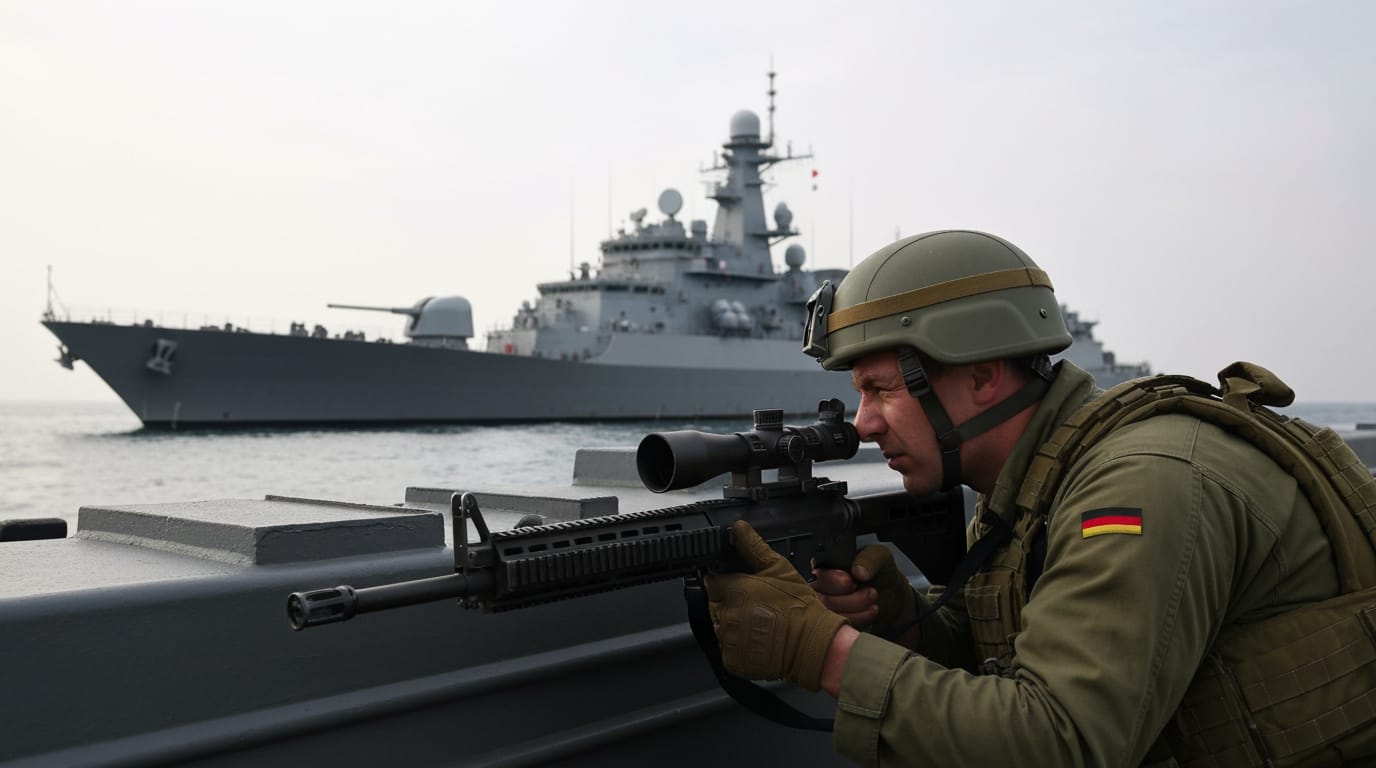
Berlin is advancing preparations for a potential military deployment to the Strait of Hormuz, a move signaling Europe's deepening commitment to stabilizing a maritime chokepoint vital for global energy supplies. The German Navy's minehunter Fulda and supply ship Mosel are currently transiting the Suez Canal, heading towards the Red Sea, positioning themselves for a possible mine-clearing operation aimed at restoring safe passage through the strait, which has been effectively blocked since late February. This strategic pre-deployment underscores the urgency of the situation following recent regional conflicts and subsequent disruptions to international shipping.
The World's Chokepoint in Crisis
The Strait of Hormuz stands as one of the most strategically significant waterways on the planet, a narrow maritime artery linking the oil-rich Persian Gulf with the Gulf of Oman and the Arabian Sea. Its importance cannot be overstated, as over 20% of the world's oil and liquefied natural gas exports, along with roughly 25% of the world's maritime oil trade, traverse its waters daily. In 2022 alone, an average of 21 million barrels of oil per day, representing about 21% of global petroleum liquids consumption, flowed through this critical passage. The strait's relatively narrow width, ranging from 35 to 60 miles, with a constricted point of approximately 30 miles, makes it particularly vulnerable to disruption, impacting not just energy but also general cargo and military movements.
The current crisis escalated dramatically on February 28, 2026, when Iran effectively blocked the strait in retaliation for U.S. and Israeli attacks against its territory. Reports indicate that Iran deployed sea mines and issued warnings forbidding passage, leading to a severe decline in maritime traffic, with some estimates suggesting a drop to "about zero." This blockade triggered significant global trade disruptions, causing energy prices to soar and stranding approximately 20,000 mariners and 2,000 ships. The reopening of the strait has since become a central point in ongoing international negotiations to de-escalate the broader regional conflict.
Germany's Measured Approach to a Volatile Region
In response to the deteriorating situation, Germany has initiated concrete steps towards potential involvement in securing the vital waterway. Defense Minister Boris Pistorius confirmed that the minehunter Fulda and the supply ship Mosel, carrying 140 German soldiers, including mine clearance divers and specialists for autonomous systems, are on their way. This movement is characterized as a "pre-deployment," a strategic positioning designed to reduce response times should a multinational mission be formally authorized. The vessels are currently contributing to situational awareness within the framework of the European Union's Operation Aspides, which addresses threats to commercial shipping in the Red Sea.
The German military's expertise in mine clearance is a key asset for any future mission in the Strait of Hormuz. However, Berlin's participation is contingent upon a rigorous set of political and legal conditions, reflecting Germany's cautious approach to military engagements. This careful preparation aims to ensure that any involvement is both effective and aligned with international law and diplomatic efforts.
Navigating Diplomatic Hurdles and Political Conditions
A full German deployment to the Strait of Hormuz is not a foregone conclusion and hinges on several critical preconditions. Foremost among these is securing parliamentary approval from the Bundestag, Germany's lower house of parliament. The Ministry of Defense has indicated its intention to present a resolution for parliamentary consideration before the summer recess, which begins on July 10. Beyond domestic political consent, Germany requires a robust international legal mandate and, crucially, the explicit consent of both Iran and Oman for any mine-clearing activities within the strait.
German Foreign Minister Johann Wadephul has emphasized that any mission must be "desired and peaceful," conducted in a "non-combat context," and receive the consent of all involved parties. Berlin is actively seeking clarity on the recent framework agreement signed between the U.S. and Iran, which aims to end the conflict and facilitate the reopening of the strait. This agreement reportedly includes provisions for Iran to undertake mine and obstacle removal. However, German officials stress the need for official details of this accord, not just media reports, to properly assess the operational feasibility and legal framework for their involvement. Germany's stance aligns with broader European efforts, led by France and Britain, to establish a multinational naval mission focused on maritime security in the strait.
The Complexities of Clearance and Regional Stability
The envisioned mission in the Strait of Hormuz is defined as "strictly defensive and independent," with its primary objectives being the reassurance of commercial shipping and the removal of explosive mines. Mine-clearing operations, however, are inherently complex, time-consuming, and risky. Experts warn that clearing the strait could take weeks, not days, even after a ceasefire or political settlement is announced. The ongoing presence or even suspicion of mines can prolong caution among insurers, shipowners, and energy traders, delaying the full resumption of normal traffic.
The potential for a German presence is part of a larger European effort to project security in a region critical to global economic stability. The implications of sustained disruption in the Strait of Hormuz extend far beyond regional politics, impacting energy markets, shipping costs, and European economic security. While the recent U.S.-Iran agreement offers a path toward de-escalation, past statements from Iran have indicated strong opposition to foreign military presence in the waterway, alongside suggestions of imposing transit fees on shipping, a red line for European powers. Therefore, diplomatic efforts remain paramount alongside military preparations to ensure a cooperative and sustainable resolution.
A Balancing Act for Berlin
Germany's preparations for a potential deployment to the Strait of Hormuz represent a significant commitment to international maritime security and a complex balancing act between national interests and global responsibilities. As a major European economy heavily reliant on global trade and stable energy supplies, ensuring freedom of navigation through critical chokepoints like the Strait of Hormuz is a strategic imperative for Berlin. The decision to pre-position naval assets demonstrates a readiness to act, yet the stringent conditions for full deployment reflect a deep understanding of the geopolitical sensitivities involved. The coming weeks will be crucial as Germany seeks the necessary political consensus domestically and diplomatic clarity internationally, hoping to contribute effectively to reopening one of the world's most vital waterways and stabilizing a volatile region.


