Germany Navigates Perilous Middle East Conflict, Opting for Non-Intervention Amidst Regional Escalation
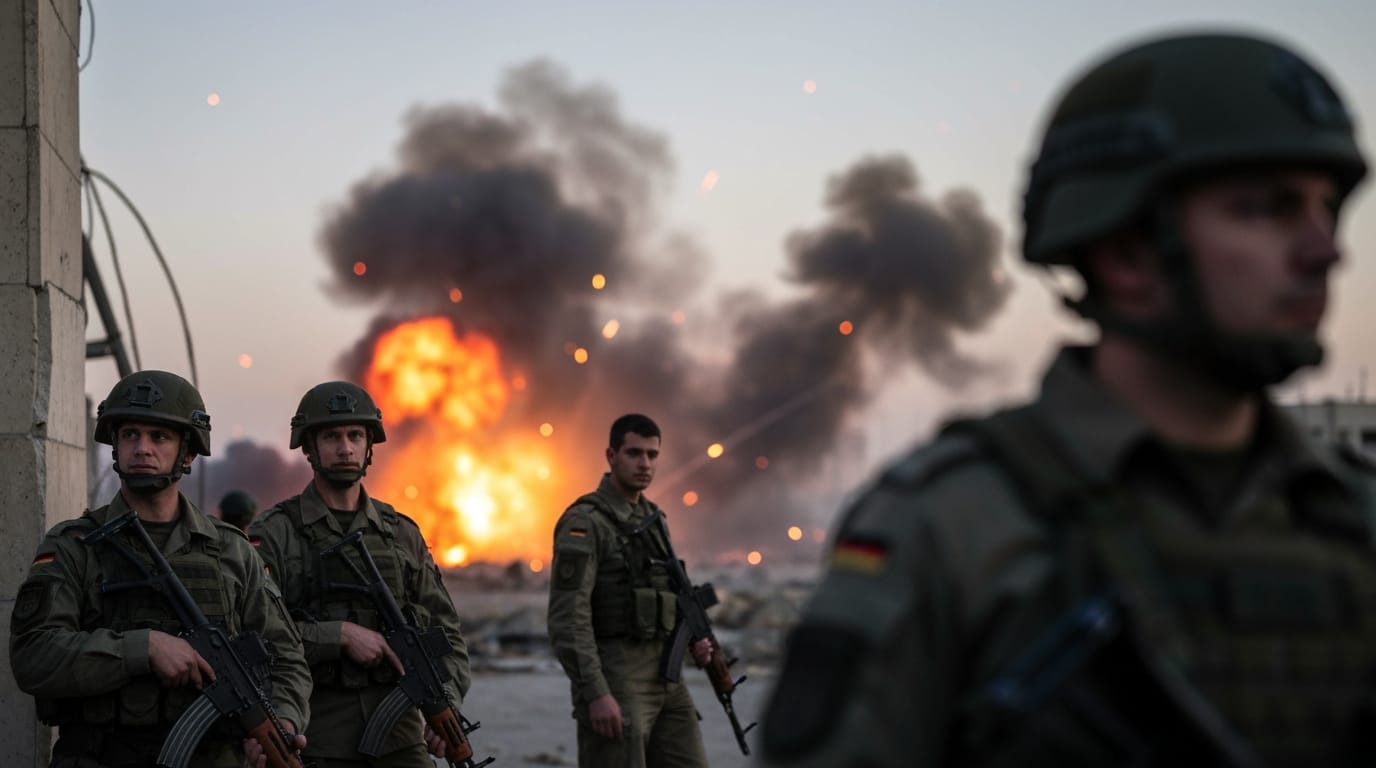
BERLIN – As the Middle East finds itself engulfed in a rapidly escalating conflict following recent US-Israeli military strikes on Iran and subsequent Iranian retaliations, Germany is charting a cautious course, firmly ruling out direct military involvement. Despite its closest European allies deploying naval assets to the Eastern Mediterranean and its own Chancellor defending the initial strikes, Berlin maintains that the Bundeswehr will not participate in the hostilities, prioritizing diplomatic solutions and its commitments to NATO's eastern flank. The war, which has already led to significant civilian casualties and soaring energy prices in Germany, underscores the delicate balance the nation seeks to strike between alliance solidarity and its post-World War II military doctrine.
Germany's Firm Stance on Non-Intervention
Germany has made its position unequivocally clear: its military will not join the ongoing conflict in the Middle East. Defense Minister Boris Pistorius articulated this stance in parliament, stating, "Germany is not a party in this war. The Bundeswehr is not taking part in this war." This declaration comes even as the conflict intensifies, marked by an independent United Nations fact-finding mission condemning the airstrikes by Israel and the United States, along with Iran's retaliatory attacks, as clear violations of the UN Charter, citing dire humanitarian implications for Iranian civilians.
German Foreign Minister Johann Wadephul reinforced this position, clarifying that Berlin has no intention of participating in military operations against Iran. He cited a lack of necessary resources and underscored that Germany would not support concrete measures aimed at regime change, emphasizing that any political transformation must originate from the Iranian people themselves. This principle aligns with Germany's long-standing post-war policy regarding military deployments, where the Bundeswehr operates as a "parliamentary army," requiring a parliamentary mandate for any mission, and whose constitutional role is described as "absolutely defensive only."
The German Defense Ministry further stated that there are no plans for additional military capabilities beyond existing contributions to international missions in the Middle East. While Germany maintains a naval presence in the UNIFIL peacekeeping operation in Lebanon, its primary military focus remains squarely on strengthening NATO operations in Eastern Europe. This strategic focus is underscored by the current deployment of a key German asset, the air defense frigate "Sachsen," which is actively engaged in NATO's "Cold Response" exercises in the Arctic, limiting its immediate operational capacity in the Mediterranean.
The Diplomatic Tightrope: Balancing Alliances and Principles
Germany's foreign policy in the face of the Iran conflict reflects a complex balancing act between its alliance obligations and its principled commitment to diplomatic solutions. While Chancellor Friedrich Merz, following a meeting with US President Donald Trump, defended the US-Israeli military strikes against Iran, citing Iran's proximity to nuclear weapons as "good reasons" for the actions, he simultaneously ruled out any German military involvement. This dual approach highlights Germany's solidarity with its allies on security concerns while maintaining an independent stance on military engagement.
Despite defending allied actions, Germany's defense minister emphasized that it is "illusory" to believe that conflicts in the Middle East can be resolved "by military force and unilateral action alone," a sentiment conveyed repeatedly to both American and Israeli partners. This nuanced position underscores a core tenet of German foreign policy, advocating for comprehensive political processes over military solutions in complex regional disputes.
Historically, relations between Germany and Iran have been strained, particularly since the 1979 Islamic Revolution. Concerns over Iran's human rights situation, its nuclear program, and regional policy have consistently shaped Germany's diplomatic engagement. Germany has actively championed international efforts to investigate human rights violations in Iran, supporting UN fact-finding missions and advocating for freedoms and an end to discrimination. While Berlin maintains contact with Iranian opposition groups, Foreign Minister Wadephul stressed that Germany cannot dictate Iran's political future, asserting that such change must come from within.
European Discord and Regional Deployments
The German decision to refrain from military deployment stands in contrast to the actions of several key European allies. Following a drone attack on a British military base in Cyprus, countries including Italy, Spain, France, and the Netherlands announced plans to dispatch naval assets to the Eastern Mediterranean to protect Cyprus. Britain is also bolstering its presence with a destroyer and anti-drone helicopters, collaborating with France and Greece to enhance Cyprus's air defenses. These coordinated deployments underscore a collective European effort by some nations to reinforce regional security and protect strategic interests in the wake of the escalating conflict.
Moreover, France, Italy, and Greece have agreed to coordinate military assets near Cyprus and the eastern Mediterranean, also committing to ensuring freedom of navigation in the Red Sea. This concerted action by a segment of European partners highlights a diverging approach within the European Union regarding direct military responses to the Middle East crisis. While these nations are increasing their presence, Germany's focus remains steadfast on its existing commitments, notably its strengthened role in NATO's collective defense, particularly on the alliance's eastern flank. The Bundeswehr's budget for 2026, at €108.2 billion, reflects a significant increase, positioning it as the fourth-highest funded military globally and enabling it to meet NATO's 2% GDP spending target for the first time in 2024. This investment is primarily directed towards enhancing Germany's defensive capabilities within Europe rather than projecting power into the Middle East conflict.
Economic Fallout and Humanitarian Concerns
The ramifications of the Middle East conflict are not confined to the region, with Germany already experiencing significant economic fallout. Notably, petrol and diesel prices in Germany surged by approximately 20% immediately following the commencement of the US-Israeli military assault on Iran. This sharp increase highlights the vulnerability of European economies to disruptions in global energy markets, particularly given the Middle East's critical role in oil and gas supplies and the potential threat to vital trade routes like the Strait of Hormuz.
Beyond economic impacts, humanitarian concerns are paramount. The UN's findings on the conflict emphasize the severe human cost, with Iranian civilians caught in the crossfire and a devastating strike on a girls' school resulting in over 150 fatalities. German officials have expressed concern for the thousands of German tourists and residents currently in the region, with the Foreign Ministry actively providing information and assistance. The conflict is broadly perceived as a "grave threat to international peace and security," further complicating an already volatile global landscape. Germany's emphasis on diplomatic resolution reflects a desire to mitigate further humanitarian catastrophe and stabilize a region that is vital for global stability and economic prosperity.
Conclusion
Germany's measured response to the escalating "Iran war" underscores a foreign policy grounded in caution, parliamentary oversight, and a strong belief in diplomatic solutions over military force. While acknowledging and, in some instances, defending the security concerns driving allied actions, Berlin has firmly committed to keeping the Bundeswehr out of the direct conflict, prioritizing its domestic constitutional mandate and its critical role within NATO's European defense structure. The economic repercussions, particularly the surge in energy prices, serve as a stark reminder of the global interconnectedness of such conflicts. As the Middle East remains volatile, Germany's strategy aims to balance its international responsibilities with a steadfast refusal to be drawn into a military quagmire, advocating instead for a de-escalation that protects civilian lives and regional stability.


