Germany Poised for Retreat from Overt Political Stances at 2026 World Cup
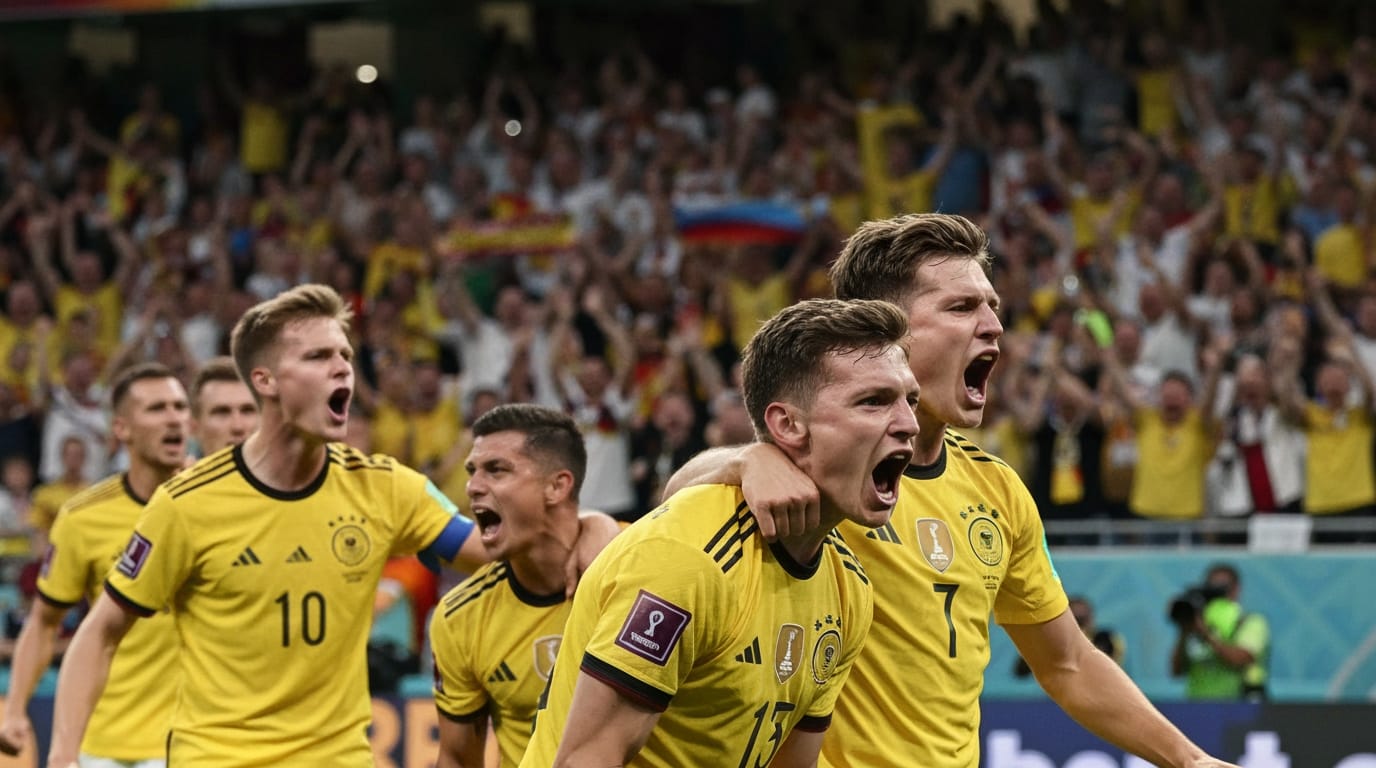
Germany's football landscape appears set for a significant shift in its approach to political engagement at the upcoming 2026 FIFA World Cup. Moving away from the overt protests seen in previous tournaments, this evolving stance is influenced by a confluence of factors, including reflection on past experiences, a renewed focus on sporting performance, and unprecedented geopolitical pressures that could even threaten Germany's participation itself. The German national team and its governing body, the DFB, seem inclined to prioritize footballing matters, signaling a potential era of reduced public political messaging on the global stage.
The Echoes of Qatar: A Recent History of Protest
At the 2022 FIFA World Cup in Qatar, the German national team garnered significant attention for its public gestures addressing human rights issues. Most notably, players collectively covered their mouths in a team photo before their opening match against Japan. This act was a direct protest against FIFA's ban on the "OneLove" armband, which had been intended to promote diversity and inclusion. The German Football Federation (DFB) affirmed that "human rights are not negotiable" and clarified that the gesture was not a political position but rather a statement on fundamental human rights, responding to what they perceived as FIFA's attempt to silence them. This followed earlier activism in March 2021, when German players wore "HUMAN RIGHTS" shirts during World Cup qualifiers, drawing attention to the plight of migrant workers in Qatar.
However, the team's early exit from the tournament, coupled with the focus on off-field matters, prompted a period of introspection. Coach Julian Nagelsmann later acknowledged that "too many political issues can harm a team," suggesting that these distractions contributed to their subpar performance. Similarly, captain Joshua Kimmich expressed regret, stating that the team's "very political" stance in Qatar "took a bit away from the joy of the tournament" and did not present an "overall good picture" for the team and country. He stressed that while players should stand for values, it is not their constant role to express themselves politically, advocating for experts to handle such matters.
Prioritizing Pitch Over Protests: DFB's Evolving Directive
The sentiment within the German camp has clearly shifted towards a more singular focus on football. Julian Nagelsmann, now at the helm, has articulated a clear directive for the 2026 World Cup: he expects his players to "concentrate on playing and to leave the political statements aside." This stance is rooted in the belief that the team learned valuable lessons from their experience in Qatar, where the extensive engagement with political topics was perceived to have negatively impacted team cohesion and performance.
Further illustrating this evolving approach, the DFB has indicated it will vote in favor of Saudi Arabia hosting the 2034 World Cup, despite ongoing criticism from human rights organizations regarding the kingdom's record. This decision, though made at the federation level, underscores a potential broader strategy to navigate complex international relations with an emphasis on sporting participation rather than overt political opposition. This internal recalibration suggests a desire to return the spotlight squarely to athletic achievement, with key figures like Kimmich emphasizing that players are "measured on results."
Geopolitical Storm Clouds: The Greenland Boycott Threat
Beyond internal shifts, Germany's potential participation in the 2026 World Cup faces an unprecedented external political challenge: a potential boycott stemming from U.S. President Donald Trump's stated intent to acquire Greenland. Jürgen Hardt, the foreign policy spokesman for the CDU/CSU parliamentary group and a close confidant of Chancellor Friedrich Merz, has publicly stated that a boycott of the tournament could be an "extreme measure" to compel the U.S. administration to abandon its claims on the Danish territory.
Reports indicate that President Trump has threatened to impose 10% tariffs on goods imported into the U.S. from several European nations, including Germany, if they do not cooperate with his plan for Greenland. This economic leverage introduces a significant foreign policy dimension to Germany's World Cup involvement, elevating the discussion from player gestures to national participation. FIFA has already cautioned that a match ticket does not guarantee entry into a host country, advising fans to check government entry requirements, particularly in light of U.S. travel bans impacting fans from certain nations. This geopolitical tension presents a dramatically different form of "getting political" than the team's previous human rights protests, one that could see the German state making a high-stakes decision on the global sporting stage.
The Delicacy of Diplomacy: FIFA's Stance and National Interests
FIFA's regulations have historically stipulated that basic compulsory equipment must not feature political, religious, or personal slogans, statements, or images. While the governing body's stance on broader political gestures has evolved over time, it has generally opposed explicit political protests during games. The threat of "sporting sanctions" for wearing unauthorized armbands at the 2022 World Cup demonstrated FIFA's willingness to enforce these rules.
For the DFB, this creates a delicate balancing act: adhering to FIFA's rules while also managing national expectations and upholding core values. The potential for a state-level boycott over Greenland highlights the intricate relationship between international sport and global politics. Should such a boycott materialize, it would mark a profound shift from players expressing social concerns to the German government employing sporting events as a tool of high-level diplomacy. This scenario would place the 2026 World Cup, hosted across the U.S., Canada, and Mexico, at the center of a significant international dispute.
Conclusion
As the 2026 FIFA World Cup approaches, Germany's football contingent appears poised to adopt a more reserved posture regarding overt political statements from its players and coaching staff. Lessons learned from the 2022 tournament, coupled with a desire to refocus on sporting excellence, suggest a deliberate move away from previous public activism. However, this internal shift is now overshadowed by a far greater external political challenge: the possibility of a national boycott due to escalating tensions over the U.S. President's geopolitical maneuvers concerning Greenland. The confluence of these factors indicates that Germany's presence and conduct at the 2026 World Cup will be shaped by a complex interplay of sporting ambition, strategic reflection, and the high-stakes demands of international diplomacy.