Germany Rebuffs Trump's Defense Criticisms Amidst Shifting Geopolitical Landscape
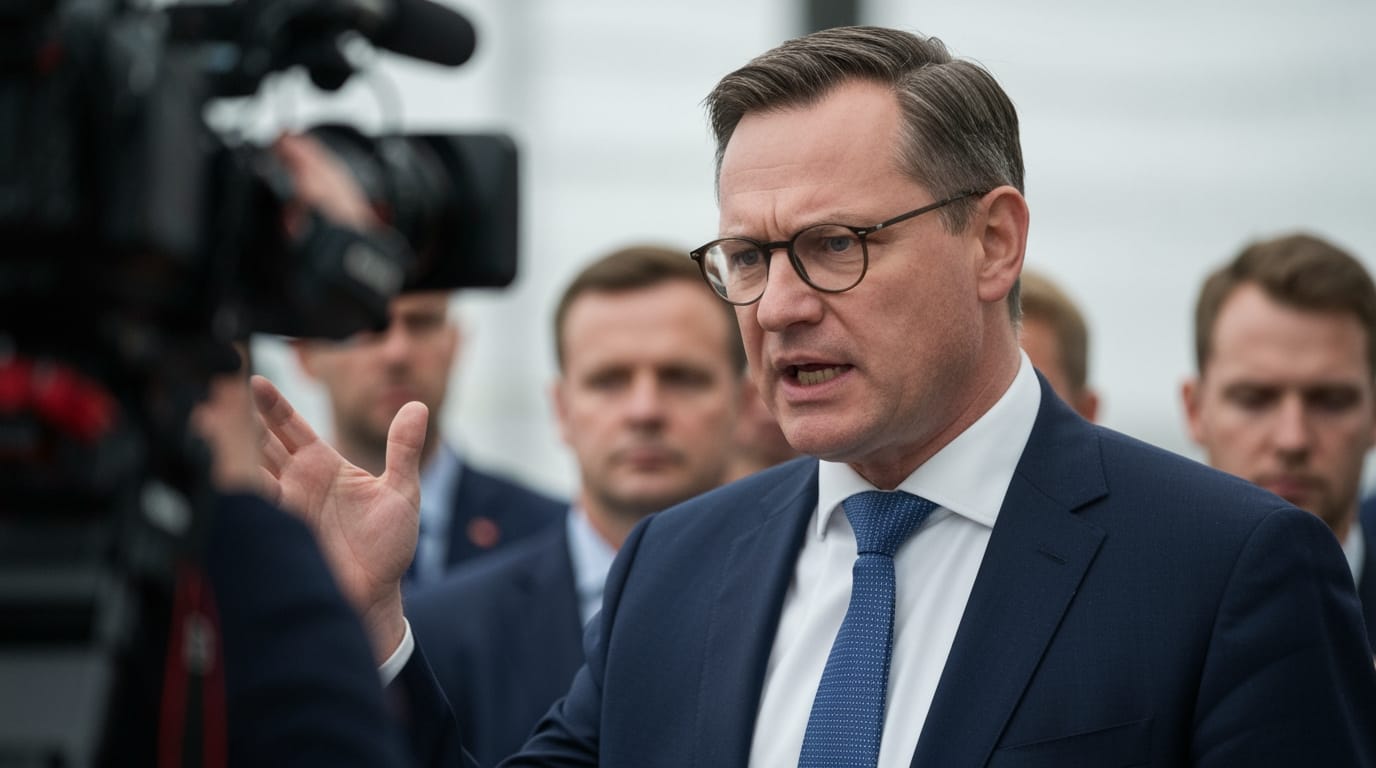
BERLIN, Germany – German Chancellor Friedrich Merz on Friday firmly countered recent criticisms from former U.S. President Donald Trump regarding Germany's defense spending, asserting that the nation is making unprecedented efforts to bolster its military capabilities. The robust defense of Germany's contributions to NATO comes just days before a pivotal alliance summit in Ankara, where burden-sharing and the future of transatlantic security are expected to dominate discussions. Merz's remarks, delivered at a news conference in Berlin while hosting leaders from the Baltic states, underscore a growing European resolve to strengthen its security posture amidst enduring geopolitical uncertainties and direct challenges from Moscow.
Trump's Renewed Scrutiny Ignites Transatlantic Debate
Donald Trump, a vocal critic of European defense spending during and after his presidency, reignited the contentious debate through posts on his Truth Social platform. He characterized the U.S. relationship with NATO as "ridiculous" and "one-sided," arguing that Washington shoulders a disproportionate share of the alliance's defense burden. Trump specifically singled out Germany, noting its defense spending between 2014 and 2025 was "much lower" than that of the U.S. and other allies, and claimed that European partners "were not there for us." These comments align with his long-standing demands for NATO members to significantly increase their military budgets, a sentiment that has often strained relations within the alliance.
Trump's renewed criticism emerges ahead of the upcoming NATO summit in Ankara, scheduled for July 7-8, where leaders from the alliance's 32 member states will convene. Defense spending and the alliance's future priorities, particularly in light of ongoing conflicts and shifting global power dynamics, are anticipated to be central themes. The former U.S. President has, at times, even called for NATO members to spend as much as 5% of their GDP on defense, a target currently unmet by any NATO country, including the United States.
Germany's Assertive Defense Posture
Chancellor Merz's response was unequivocal, emphasizing Germany's significant and accelerated commitment to defense. He declared that Germany is "doubling its defense budget within four years," marking this as "the greatest effort we have ever made to strengthen our defense capabilities." He firmly stated that Germany has "nothing to be ashamed of" and no reason "to back down from anyone" regarding its contributions.
This push comes after Germany met NATO's longstanding target of spending 2% of its Gross Domestic Product (GDP) on defense for the first time since the early 1990s in 2024. This milestone was largely driven by a substantial increase in military spending following Russia's full-scale invasion of Ukraine in 2022, prompting a "Zeitenwende" or "historic turning point" in German defense policy.
Furthermore, Merz highlighted Germany's proactive approach to new alliance objectives. NATO leaders, at their 2025 summit in The Hague, agreed upon a new benchmark: to spend 3.5% of GDP on core defense items by 2035. Merz proudly announced that Germany is on track to reach this more ambitious 3.5% target by 2029, six years ahead of the agreed deadline. This accelerated commitment includes plans to significantly increase core spending on defense and civil protection to nearly €170 billion by the end of the decade, a more than threefold increase from previous years.
Strengthening the European Pillar Amidst Baltic Concerns
The timing and setting of Merz's statements were particularly symbolic. Hosting his Baltic counterparts from Estonia, Latvia, and Lithuania in Berlin, Merz aimed to project a united European front ahead of the Ankara summit. The meeting served as a "signal from the European side of unity and strength," reflecting a desire to make NATO "more European" and reduce "one-sided transatlantic dependencies."
The discussions also touched upon critical regional security issues, notably Merz's defense of Lithuania's decision to re-evaluate its constitutional ban on nuclear weapons and foreign military bases. This move by Lithuania, a frontline NATO ally bordering Russia's Kaliningrad exclave and Belarus, underscores the heightened security concerns among Baltic nations in the current geopolitical climate. Merz acknowledged and supported Lithuania's sovereign choices, recognizing the deteriorating security environment.
Germany's intensified commitment is not solely about meeting spending targets but also about developing robust capabilities. Plans include an increase in the size of its armed forces, with a budget draft earmarking funds to hire an additional 11,000 military staff by the end of the year, including 10,000 soldiers. Defense Minister Boris Pistorius previously estimated that Germany's armed forces would need to grow by 60,000 troops to meet NATO's new capability targets. These efforts signal a comprehensive strategy to enhance military readiness and contribute more substantially to collective defense.
Navigating Future Transatlantic Relations
The exchange between Merz and Trump highlights the ongoing tension and evolution within the NATO alliance, particularly concerning transatlantic burden-sharing. While European nations, including Germany, have demonstrably increased their defense outlays in recent years, the specter of a potentially less engaged United States continues to drive calls for greater European autonomy and stronger internal defense capabilities.
Chancellor Merz's consistent argument emphasizes the necessity for Europe to strengthen its own defense capabilities while simultaneously preserving the transatlantic alliance. His government has actively supported discussions on enhancing European deterrence, underscoring a strategic shift where Europe aims to rapidly and decisively shoulder responsibility for its own freedom, security, and prosperity.
As the Ankara summit approaches, the focus will remain on how NATO can present a unified and resilient front. The push for increased defense spending, the development of combat-ready capabilities, and sustained support for Ukraine are critical components of the alliance's long-term strategy in a world facing persistent threats. Germany's accelerated efforts and robust defense of its contributions position it as a key player in shaping the future trajectory of European security and the transatlantic partnership.


