Germany Secures Tomahawk Missile Deal at NATO Summit, Bolstering European Defense
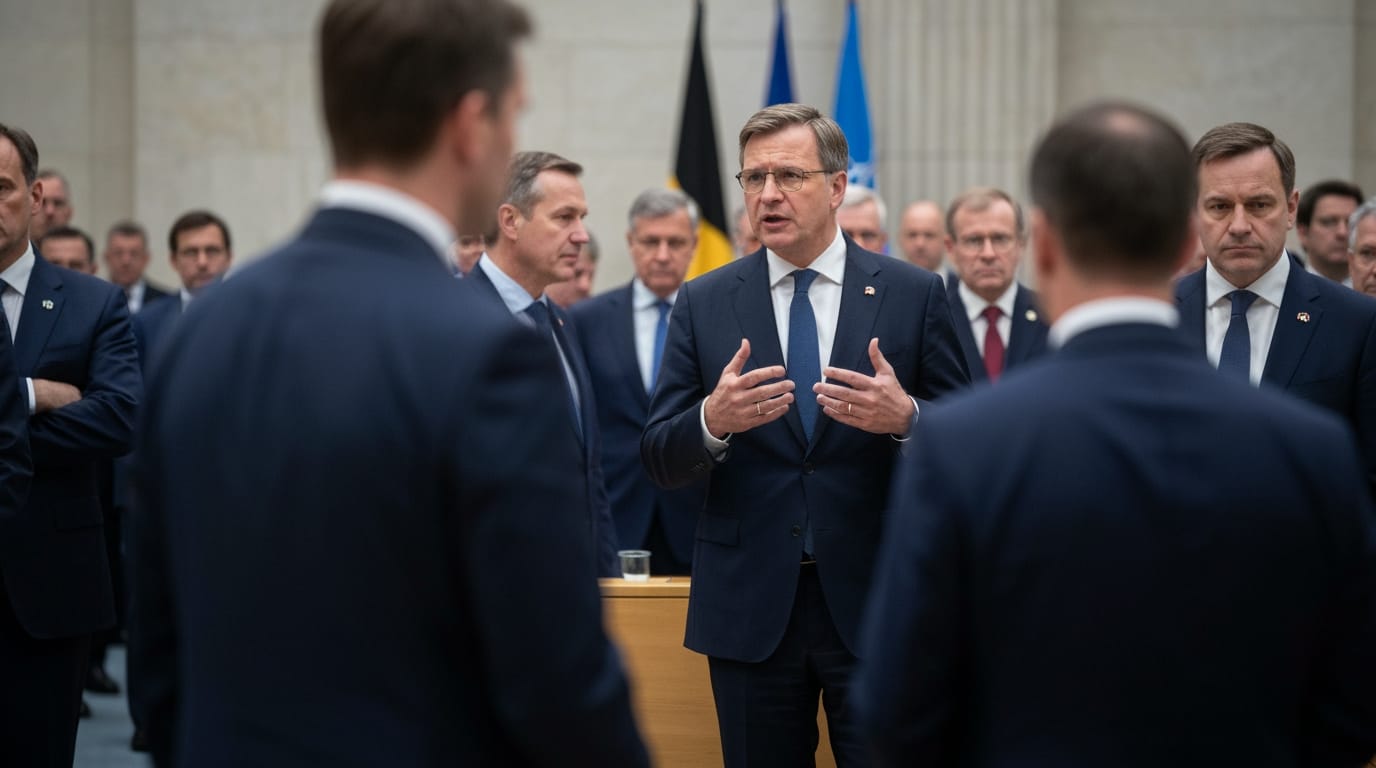
Ankara, Türkiye – July 9, 2026 – Germany has cemented a pivotal agreement to acquire and station U.S.-made Tomahawk cruise missiles on its soil, Chancellor Friedrich Merz announced today, marking a significant escalation in the nation's defense capabilities and a direct response to evolving geopolitical realities. The landmark deal, forged on the sidelines of the NATO summit in Ankara, aims to close a critical strategic defense gap, according to Merz, and underscores Germany's commitment to its "Zeitenwende" (turning point) in security policy.
The agreement signifies a strategic shift for Berlin, which has historically maintained a cautious approach to advanced offensive weaponry. This procurement is set to bolster Germany's long-range strike capabilities and enhance its contribution to NATO's collective deterrence, particularly amid ongoing conflicts and heightened tensions in Europe.
A New Chapter in German Defense
Chancellor Merz, addressing the Bundestag, confirmed that the United States approved the sale and stationing of the long-range Tomahawk missiles, which are primarily launched from naval vessels and submarines and boast a range exceeding 1,600 kilometers (1,000 miles). This announcement follows earlier doubts concerning the viability of such a deployment, largely attributed to depleted U.S. arsenals due to persistent global conflicts, particularly in Ukraine and Iran.
The acquisition aligns with Germany's "Zeitenwende" initiative, declared in 2022 by Chancellor Olaf Scholz, which committed a €100 billion special fund to modernize the Bundeswehr (German armed forces) following Russia's full-scale invasion of Ukraine. This policy pivot recognized the necessity for Germany to assume a more robust role in European security and collective defense. While the "Zeitenwende" initially focused on addressing decades of underinvestment across various military domains, including air and missile defense systems, the current Tomahawk deal highlights a strategic emphasis on long-range precision strike capabilities.
Strategic Implications and Capabilities
The Tomahawk cruise missile, developed by Raytheon Technologies, is renowned for its accuracy, versatility, and ability to engage high-value or heavily defended land targets. Its modular design allows for various warheads and employs advanced guidance systems, including GPS, inertial navigation, and terrain contour matching. Modern variants, such as Block IV and Block V, offer in-flight reprogramming capabilities and real-time battle damage assessment, providing significant tactical flexibility.
For Germany, integrating Tomahawk missiles into its arsenal would substantially enhance its military deterrence posture. The ability to conduct precision strikes at long distances would fill a critical gap identified by European allies, who have acknowledged a shortfall in such capabilities. This move is also seen as crucial for bolstering NATO's eastern flank and contributing more effectively to the alliance's overall strategic depth.
Overcoming Past Hurdles and Political Friction
The path to this agreement was not without its complexities. In May, Chancellor Merz himself had expressed skepticism about the immediate deployment of Tomahawk missiles in Germany, citing the U.S.'s own stock limitations. He had stated that the U.S. "doesn't have enough for themselves right now," suggesting that earlier promises made by former U.S. President Joe Biden in 2024 for a Tomahawk deployment might be delayed.
Adding to the political friction, a public spat between Merz and former President Donald Trump in April further complicated the diplomatic landscape. Merz's critical remarks regarding the U.S. strategy toward Iran had drawn sharp criticism from Trump, who subsequently questioned Merz's effectiveness as chancellor. Despite these public disagreements, the current agreement indicates a successful navigation of these political waters, prioritizing strategic military needs. Merz clarified that the current agreement was not tied to his past criticisms.
Broader European Defense Initiatives
The Ankara summit was a hotbed of defense-industrial activity for Europe. Parallel to the Tomahawk announcement, Lockheed Martin and Rheinmetall signed a memorandum of understanding to establish the first production facility outside the U.S. for ATACMS ballistic missiles in Germany. This joint venture aims to create a European "center of excellence" for manufacturing, integrating, and distributing ATACMS across NATO and allied forces, addressing immediate demand for locally produced munitions.
Merz emphasized that while Germany is procuring U.S. systems, it is simultaneously committed to advancing indigenous European defense capabilities. He indicated that efforts would also focus on developing and integrating European missile systems. This dual approach signals a desire to enhance immediate readiness while fostering long-term European strategic autonomy in defense manufacturing and technology. Such initiatives are vital as European nations seek to reduce reliance on external suppliers and strengthen their collective defense industrial base.
Conclusion: A Strengthened Germany in a Shifting Landscape
The agreement to acquire Tomahawk missiles marks a significant milestone in Germany's ongoing defense transformation. It reflects a nation grappling with its historical pacifist leanings while confronting the urgent need for robust deterrence in a more volatile world. By bridging a crucial strategic gap, Germany enhances its capacity to contribute to NATO's security and projects a stronger image of commitment to collective defense. The deal, alongside other burgeoning European defense initiatives, signals a clear trajectory toward a more capable and strategically self-reliant European security architecture, poised to address the complex challenges of the coming decades.


