Germany Secures UEFA Women's EURO 2029 Host Rights, Vowing Record-Breaking Tournament
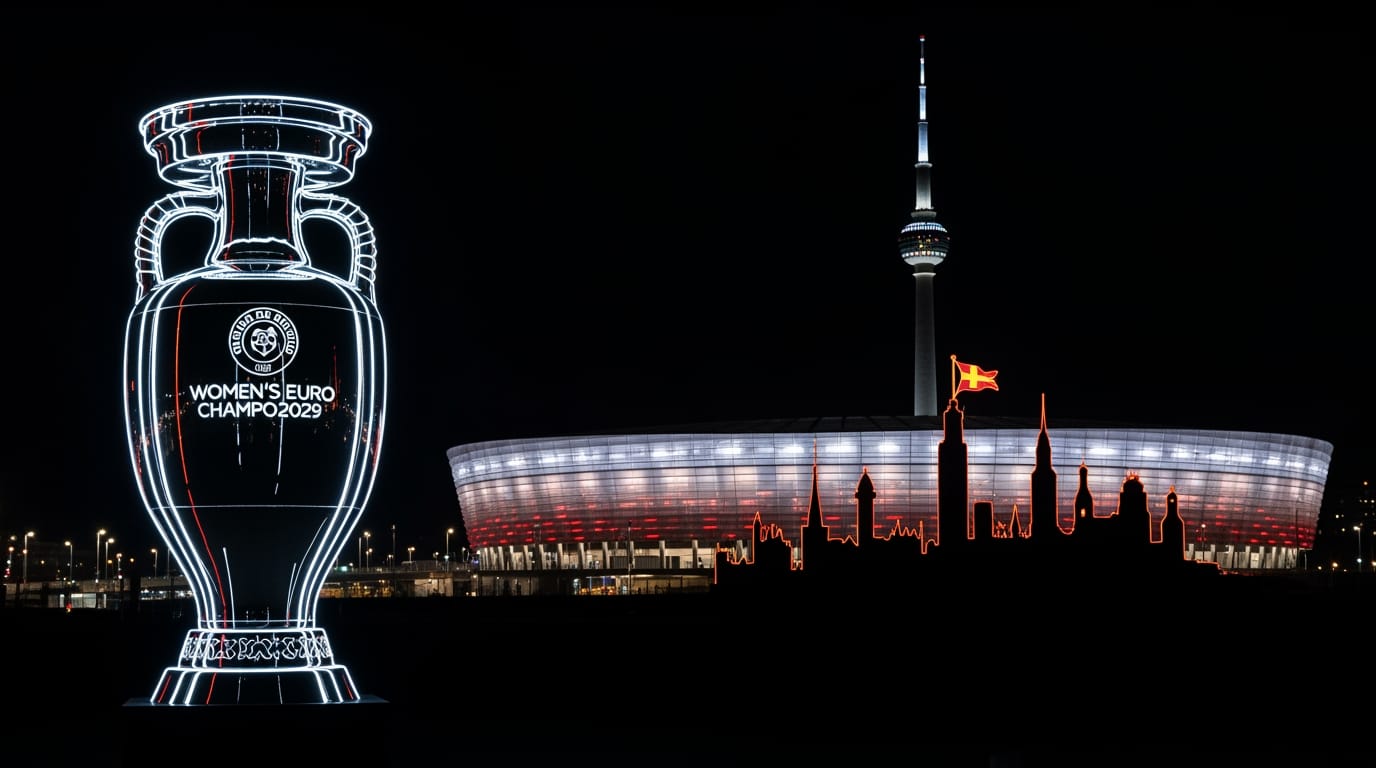
Germany has been selected to host the UEFA Women's European Championship in 2029, a decision that promises to further elevate the rapidly ascending profile of women's football across the continent. The German bid, backed by an ambitious pledge to shatter previous attendance records, received an overwhelming majority of votes from the UEFA Executive Committee on December 3, 2025, in Nyon, Switzerland. This marks a significant moment for the sport, as Germany prepares to welcome Europe's elite women's teams to eight state-of-the-art venues, aiming to draw over one million spectators and set new benchmarks for the tournament's scale and impact.
The Road to 2029: A Competitive Bidding Process
The selection of Germany as the host nation followed a rigorous and competitive bidding process that saw several nations vying for the prestigious event. Initially, four bids were submitted to UEFA by the August 28, 2025 deadline: a joint proposal from Denmark and Sweden, a standalone bid from Poland, and bids from Portugal and Germany. However, the field narrowed as Portugal withdrew its candidacy in November 2025, reportedly to focus on its co-hosting duties for the 2030 FIFA World Cup, alongside Morocco and Spain. Italy had also previously withdrawn its bid in August 2025.
The final decision, made after bid presentations and a vote by the UEFA Executive Committee, saw Germany emerge as the clear favorite. Out of 17 available votes, Germany secured 15, while the joint Denmark/Sweden bid received the remaining two. Poland did not receive any votes. This decisive victory underscores UEFA's confidence in Germany's capacity to deliver a world-class tournament and capitalize on the surging popularity of women's football. UEFA President Aleksander Čeferin acknowledged the quality of all bids, stating that each showcased vision and exceptional teamwork, making the choice a difficult one.
Germany's Ambitious Vision: Stadiums, Attendance, and Legacy
Germany's winning bid was built on a foundation of robust infrastructure and an ambitious vision for the tournament's scale. The German Football Association (DFB) committed to hosting the 16-team, 31-game championship across eight cities: Cologne, Dortmund, Düsseldorf, Frankfurt, Hanover, Leipzig, Munich, and Wolfsburg. These venues include some of Europe's most renowned stadiums, such as Munich's Allianz Arena, which boasts a capacity of 75,024. This venue alone is approximately double the size of the largest stadium used for the Euro 2025 tournament in Switzerland, St. Jakob-Park in Basel.
A key pillar of Germany's proposal is the goal of selling over one million tickets, significantly surpassing previous Women's Euro attendance figures. The 2022 edition in England set a record final attendance of 87,192 at Wembley Stadium, and the Euro 2025 in Switzerland saw total crowds exceed 650,000, averaging 21,000 per game. With seven of the proposed German venues having capacities of at least 45,000, and even the smallest, Wolfsburg's Volkswagen Arena, exceeding the size of most stadiums used in Switzerland, Germany is well-positioned to meet its ambitious target. The DFB's confidence stems from the remarkable growth and development of women's football in recent years, believing they can fill these larger stadiums.
Hosting such a prominent tournament for the third time (Germany previously hosted and won in 1989 and 2001, and also hosted the Women's World Cup in 2011) comes with both honor and significant responsibility. The DFB aims to "set new standards" for the event, promising a spectacularly organized competition that furthers the social progression of women's football. This commitment extends beyond mere logistics, seeking to inspire a new generation of players and fans.
The Growing Momentum of Women's Football
The decision to award the Women's Euro 2029 to Germany reflects the continuous upward trajectory of women's football globally and particularly in Europe. Recent tournaments have consistently broken attendance and viewership records, demonstrating a burgeoning appetite for the sport. The success of the 2022 Women's Euro in England, which saw the Lionesses triumph, and the anticipated impact of Euro 2025 in Switzerland, have set a high bar for future competitions. Germany's selection is poised to leverage this momentum, building on a foundation of increasing fan engagement and commercial interest.
The UEFA Women's Euro 2029 will be the 15th edition of the quadrennial championship and the fourth since its expansion to 16 teams. The tournament structure, featuring 16 teams playing 31 matches over approximately 25 days, aligns with recent editions. The host requirements stipulated by UEFA, including specific stadium capacities and natural grass playing surfaces, underscore the professionalization and increasing demands placed on host nations, reflecting the sport's enhanced status.
A New Chapter for European Women's Football
As Germany prepares to host the UEFA Women's EURO 2029, the anticipation is palpable. This decision is not merely about organizing a football tournament; it represents a commitment to advancing women's sports, fostering community, and inspiring future generations. With its proven track record in hosting major international football events, state-of-the-art infrastructure, and a passionate football culture, Germany is well-equipped to deliver an unforgettable spectacle. The ambition to achieve record-breaking attendances signals a clear intent to elevate the Women's Euro to unprecedented heights, further solidifying its place as a premier event in the global sporting calendar and creating a lasting legacy for women's football across Europe.