Germany Sees Unprecedented Surge in New Citizens in 2025 Amidst Sweeping Reforms
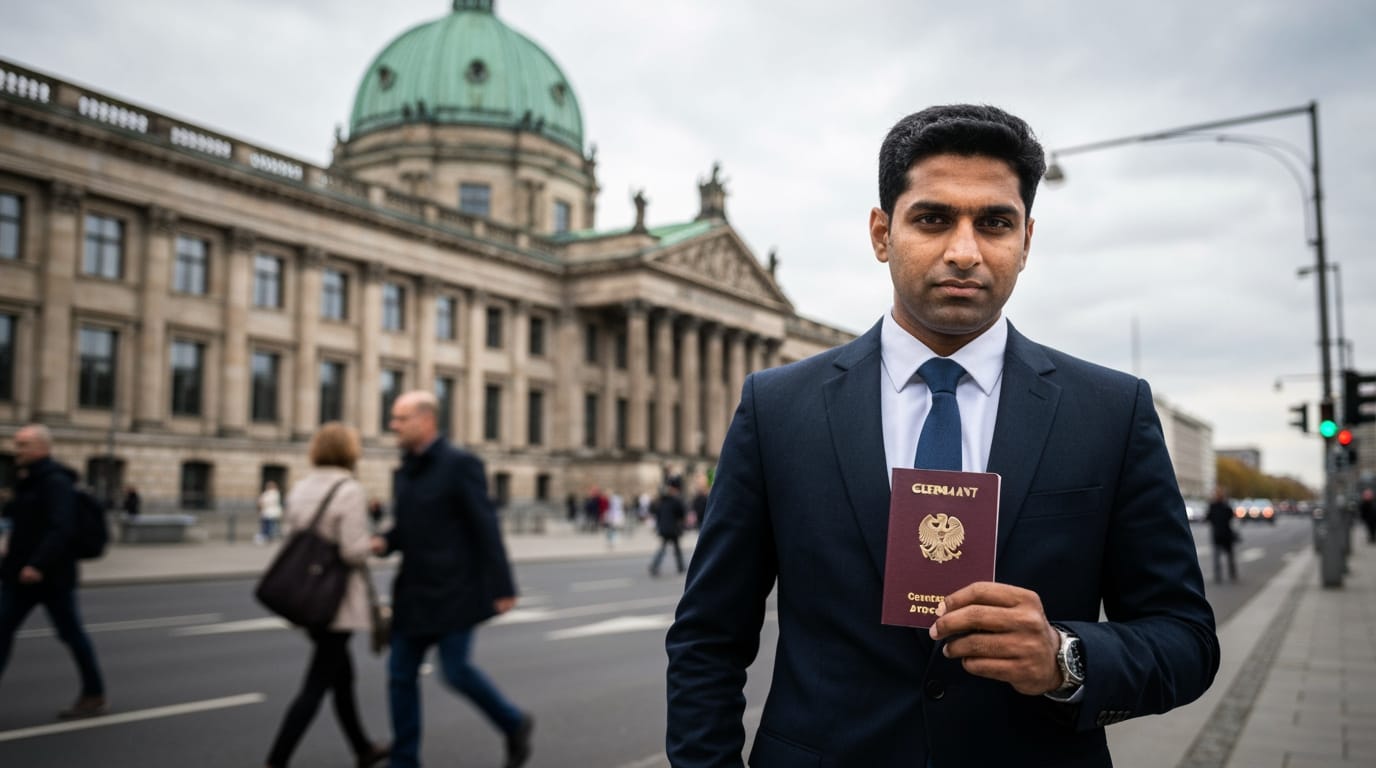
Germany is experiencing a historic wave of naturalizations in 2025, building on record-breaking figures from the previous year. This unprecedented surge is largely attributable to significant legislative reforms enacted in 2024, which streamlined the path to German citizenship, coupled with enhanced administrative efforts to process a burgeoning number of applications. The developments mark a pivotal moment for Germany, reflecting its evolving stance on immigration and integration, even as policy adjustments throughout 2025 sought to refine the criteria for full civic participation.
Germany's Citizenship Surge Continues into 2025
Throughout 2025, cities across Germany have reported a dramatic increase in the number of individuals acquiring German citizenship, signaling a robust continuation of a trend that saw 2024 set new national records. Berlin and Hamburg emerged as frontrunners in this naturalization boom. In Berlin, a remarkable 39,034 people were naturalized in 2025, nearly doubling the 21,811 new citizens recorded in 2024 and quadrupling the 2023 figure. Hamburg also witnessed a significant rise, with 11,532 individuals receiving German passports in 2025, up from 9,599 in the preceding year. Other major urban centers like Cologne and Munich also reported substantial, though less dramatic, increases in naturalizations, with Cologne seeing 7,000 new citizens and Munich 7,549 in 2025.
While comprehensive national statistics for 2025 are still pending from the Federal Statistical Office, preliminary data from local authorities strongly indicate that Germany is on track to surpass the historic naturalization figures of 2024. That year, a record 291,955 foreign nationals acquired German citizenship, representing a substantial 46 percent increase compared to 2023. This momentum, fueled by both legislative changes and administrative improvements, suggests an ongoing transformation in Germany's demographic and civic landscape.
Sweeping Reforms Reshape Naturalization Landscape
At the heart of this surge are the profound amendments to the German Citizenship Act, which largely took effect in June 2024. These reforms were designed to modernize the country's immigration policies and facilitate the integration of long-term residents. Two primary changes underpinned this legislative overhaul: the reduction of the minimum residency requirement and the official allowance of dual citizenship.
Previously, applicants generally needed to reside legally in Germany for eight years before being eligible for citizenship. The 2024 reforms lowered this period to five years under normal circumstances. For individuals demonstrating exceptional integration achievements—such as strong German language skills, outstanding professional or academic accomplishments, or significant civic engagement—the residency requirement was further reduced to just three years. This accelerated pathway aimed to reward and retain highly skilled individuals and those deeply embedded in German society.
Perhaps even more impactful was the historic decision to permit dual nationality for many categories of applicants. Historically, non-European Union citizens were often required to renounce their original citizenship to become German, a significant barrier that discouraged many from applying. The ability to retain one's original nationality while acquiring a German passport removed this major obstacle, particularly for communities with deep roots in Germany, such as Turkish nationals, many of whom or whose ancestors arrived as guest workers decades ago. This change not only grants new citizens greater freedom of movement and enhanced job opportunities within the EU but also reflects Germany's growing recognition of multiculturalism as a national strength. The reforms underscored Germany's evolving immigration goals, seeking to make naturalization faster, more inclusive, and more aligned with the needs of a diverse, modern society.
Administrative Overhaul Fuels Efficiency and Access
To manage the anticipated and actual surge in applications, German administrative bodies undertook significant modernization efforts throughout 2024 and 2025. Cities like Berlin, which faced substantial backlogs in previous years, centralized their naturalization services. The State Office for Immigration (LEA) in Berlin, for instance, took over responsibility from decentralized district offices at the beginning of 2024. This centralization was accompanied by a rapid digitization of procedures, converting tens of thousands of paper files into electronic formats and allowing for paperless processing from fee payments to document uploads.
Staffing levels were also significantly increased to handle the elevated workload. Berlin's LEA doubled its personnel and aimed to process between 3,300 and 3,500 applications per month, setting an ambitious target of 40,000 naturalizations for 2025. These administrative enhancements were crucial in reducing processing times, which had previously been a source of frustration for applicants, sometimes stretching to several years. The overall objective was to make the process more efficient and accessible, thereby enabling more eligible long-term residents to formalize their commitment to Germany.
Shifting Demographics and Evolving Policy Stance
The demographic profile of new German citizens in 2024 and 2025 reflects both long-standing migrant communities and more recent arrivals. In 2024, Syrian nationals constituted the largest group of new citizens, accounting for 28 percent of all naturalizations, or 83,150 people. This was largely due to many Syrian refugees who arrived in Germany during 2015 and 2016 becoming eligible under the previous eight-year residency rule. They were followed by Turkish (8%), Iraqi (5%), Russian (4%), and Afghan (3%) nationals. Notably, naturalizations among Russian citizens saw a remarkable 551 percent increase in 2024 compared to 2023, rising to nearly 13,000, a trend likely linked to the ongoing conflict in Ukraine and its geopolitical implications.
However, the policy landscape surrounding naturalization did not remain static throughout 2025. A notable development occurred in October 2025, when the German Bundestag passed legislation amending the Citizenship Act once again. This amendment rescinded the "fast-track" naturalization option, which had allowed exceptionally well-integrated individuals to apply after just three years of residency. The updated law, championed by a new federal government under Chancellor Friedrich Merz, restored the minimum residency requirement to five years for all applicants, except in very specific circumstances.
This reversal was framed as an effort to reinforce the link between naturalization and sustainable integration, emphasizing a more robust and proven commitment to German society. Officials highlighted the importance of sufficient German language skills, financial independence, and a clear declaration of commitment to Germany's free and democratic basic order as fundamental prerequisites. While the core reforms of dual citizenship and the general reduction to a five-year residency remained intact, the abolition of the three-year fast-track indicated a nuanced shift, balancing accessibility with a renewed focus on deeper integration.
A More Inclusive Yet Demanding Path to German Identity
The events of 2025 underscore a transformative period for Germany's approach to citizenship. The country has undeniably moved towards a more inclusive model, recognizing the contributions of its long-term residents and actively seeking to attract and integrate skilled professionals. This is evident in the record numbers of new citizens and the legislative framework that facilitates this process. The permission of dual citizenship, in particular, represents a fundamental shift in how Germany views national identity in a globalized world, acknowledging the complex ties many individuals maintain with their countries of origin.
Yet, the policy adjustments observed in late 2025 also highlight an ongoing societal debate about the expectations associated with becoming a German citizen. The abolition of the fastest naturalization track, even if it had been utilized by relatively few individuals, signals a governmental emphasis on a sustained, demonstrable integration process. This evolving framework seeks to strike a balance: making citizenship more accessible to foster civic participation and harness diverse talents, while simultaneously upholding stringent standards for linguistic, cultural, economic, and social commitment.
As Germany navigates these changes, the growing number of naturalized citizens will undoubtedly reshape its social, economic, and political fabric. With approximately 13 million people of migrant background already holding German passports out of 25.2 million individuals with migrant backgrounds in 2025, the country is becoming increasingly diverse. The integration of these new citizens, representing a wider array of backgrounds and experiences, will be a defining feature of Germany's future, reinforcing its identity as a nation built on both tradition and continuous evolution.


