Germany Sounding Alarm: Iran Conflict Risks Unprecedented Economic Catastrophe
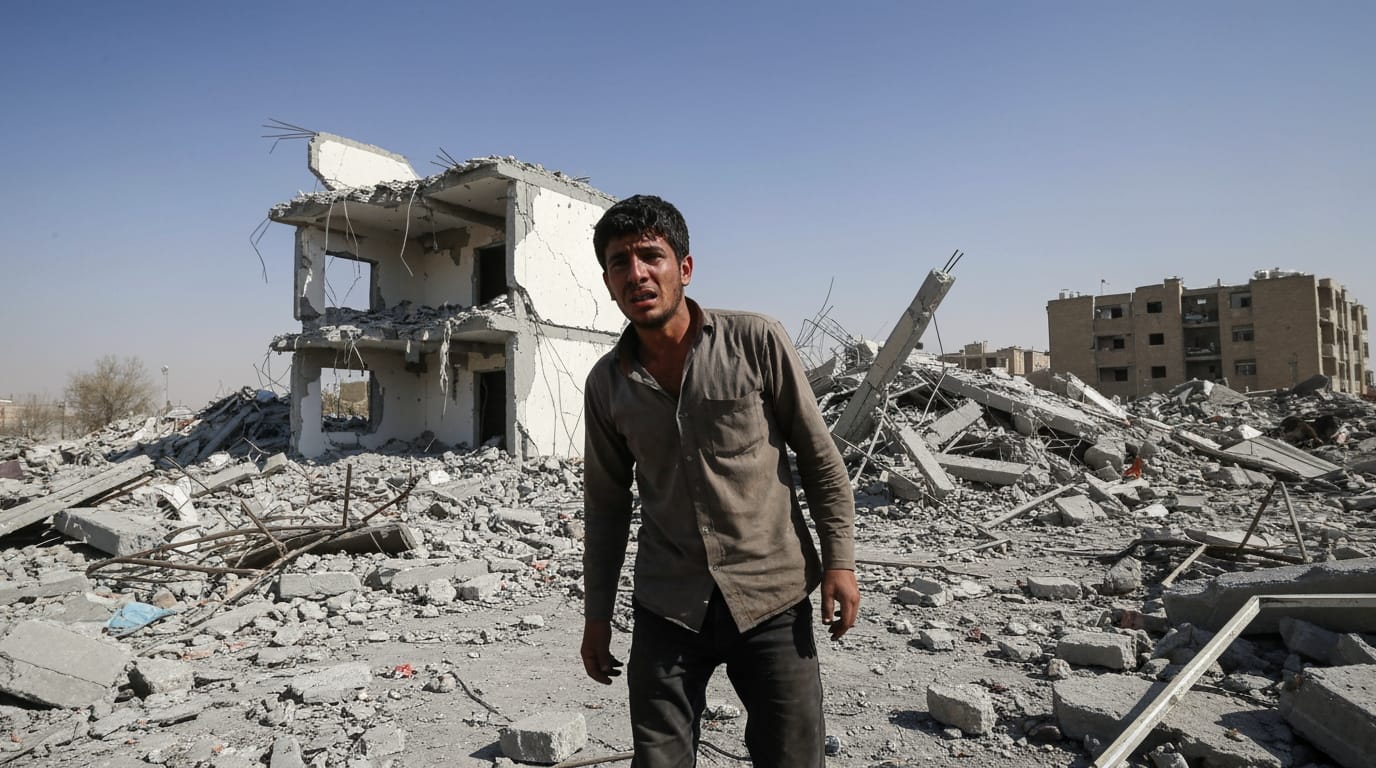
Berlin, Germany – Germany is issuing urgent and dire warnings about the escalating conflict in Iran, with top officials across the government describing the situation as an "economic catastrophe" that threatens to destabilize Europe's largest economy and reverberate across global markets. As oil prices surge and vital shipping lanes face disruption, Berlin is stressing the imperative for an immediate ceasefire and diplomatic resolution, underscoring its reluctance to be drawn into a military confrontation it views as a grave strategic misstep.
The stark warnings come as the conflict enters its fourth week, triggering significant volatility in global energy markets and raising fears of widespread economic fallout. German officials, from the Defense Minister to the Economy Minister and President, have articulated a unified concern over the profound economic damage and geopolitical instability emanating from the region. Their pronouncements highlight Germany's vulnerability as an energy-dependent industrial powerhouse and its firm stance against military entanglement in the Middle East.
Economic Hurricane on the Horizon for Germany
Germany's economy, already navigating a fragile recovery after several years of sluggish growth, stands particularly exposed to the repercussions of the Iran conflict. Economy Minister Katherina Reiche has cited estimates from economic institutes projecting damages of approximately 34.5 billion euros (around $40 billion) to Europe's leading economy if the war persists, primarily driven by soaring energy prices and inflation. Should Brent crude oil prices escalate to $150 per barrel, some analyses suggest the economic hit to Germany could exceed 80 billion euros over two years, potentially reducing the nation's GDP by 0.5% in 2026 and 1.3% in 2027.
The immediate and most palpable threat is the dramatic surge in oil and natural gas prices. Brent crude has already climbed to nearly $120 per barrel, approaching its record high of $147 set in July 2008. This spike is largely attributed to the near-total blockage of the Strait of Hormuz, a critical maritime chokepoint through which roughly one-fifth of the world's oil and liquefied natural gas (LNG) supplies typically transit. Experts warn that continued disruption of this vital waterway would keep energy prices elevated, with significant implications for industries and consumers worldwide. Germany, heavily reliant on fossil fuel imports, is now bracing for potential fuel shortages as early as April or May. The International Energy Agency (IEA) has labeled the current situation as the "greatest global energy security challenge in history," noting that the oil supply shock is now three times larger than those experienced during the 1970s energy crises.
Diplomatic Urgency Amidst Geopolitical Tensions
Beyond the economic impact, German leaders have voiced strong disapproval of the military actions that precipitated the crisis. President Frank-Walter Steinmeier publicly criticized the US and Israel's attack on Iran as a "breach of international law" and a "politically disastrous mistake," emphasizing that such a conflict was "truly avoidable and unnecessary." While Chancellor Friedrich Merz has been critical of Iran's leadership, he acknowledged that Berlin "would have advised against" the war had it been consulted. This nuanced position underscores Germany's commitment to international law and diplomatic solutions, even as it navigates complex alliances.
Germany's Defense Minister Boris Pistorius explicitly stated that the conflict was "not Germany's to fight," highlighting the nation's desire to avoid military involvement. Instead, Berlin is advocating strenuously for a ceasefire and expressing its readiness to contribute to peace efforts. This push for diplomacy aligns with a broader European consensus, with EU leaders stressing "maximum restraint," civilian protection, and respect for international law, while largely agreeing to remain militarily uninvolved.
A Fragile Global Landscape
The broader geopolitical implications extend beyond immediate economic concerns. The conflict casts a shadow over Europe's unity and its strategic priorities, particularly concerning the ongoing support for Ukraine. Germany fears that a prolonged and expanded Middle East conflict could divert crucial US attention and resources away from supporting Kyiv.
Meanwhile, international diplomatic efforts are underway to de-escalate the situation. A 15-point American ceasefire plan, transmitted to Tehran via Pakistan, has been reported to address critical issues such as sanctions relief, a rollback of Iran's nuclear program, missile limitations, and the reopening of the Strait of Hormuz. However, Iran has publicly dismissed this proposal, indicating the arduous path ahead for peace negotiations. Mediators from countries like Turkey and Egypt are also actively engaged in trying to facilitate dialogue.
The Path Forward: De-escalation and Resilience
The German government finds itself in a precarious position, grappling with the immediate economic threats while attempting to steer the international community toward de-escalation. Efforts to bolster Germany's energy resilience are now more critical than ever, with calls to expand power generation and explore new sources for gas and oil. The fragile economic recovery, which had been anticipated to see 1% growth in 2026 after three years in the doldrums, is now under severe threat from the surge in energy costs.
The warnings from Berlin are a stark reminder of the interconnectedness of the global economy and the far-reaching consequences of regional conflicts. As the conflict in Iran continues, Germany's clear message is that further escalation carries an unacceptable price tag, not only for the region but for global economic stability. The urgency for diplomacy and a sustained ceasefire has never been more pronounced.


