Germany Summons Russian Ambassador Amid Escalating Hybrid Attack Concerns
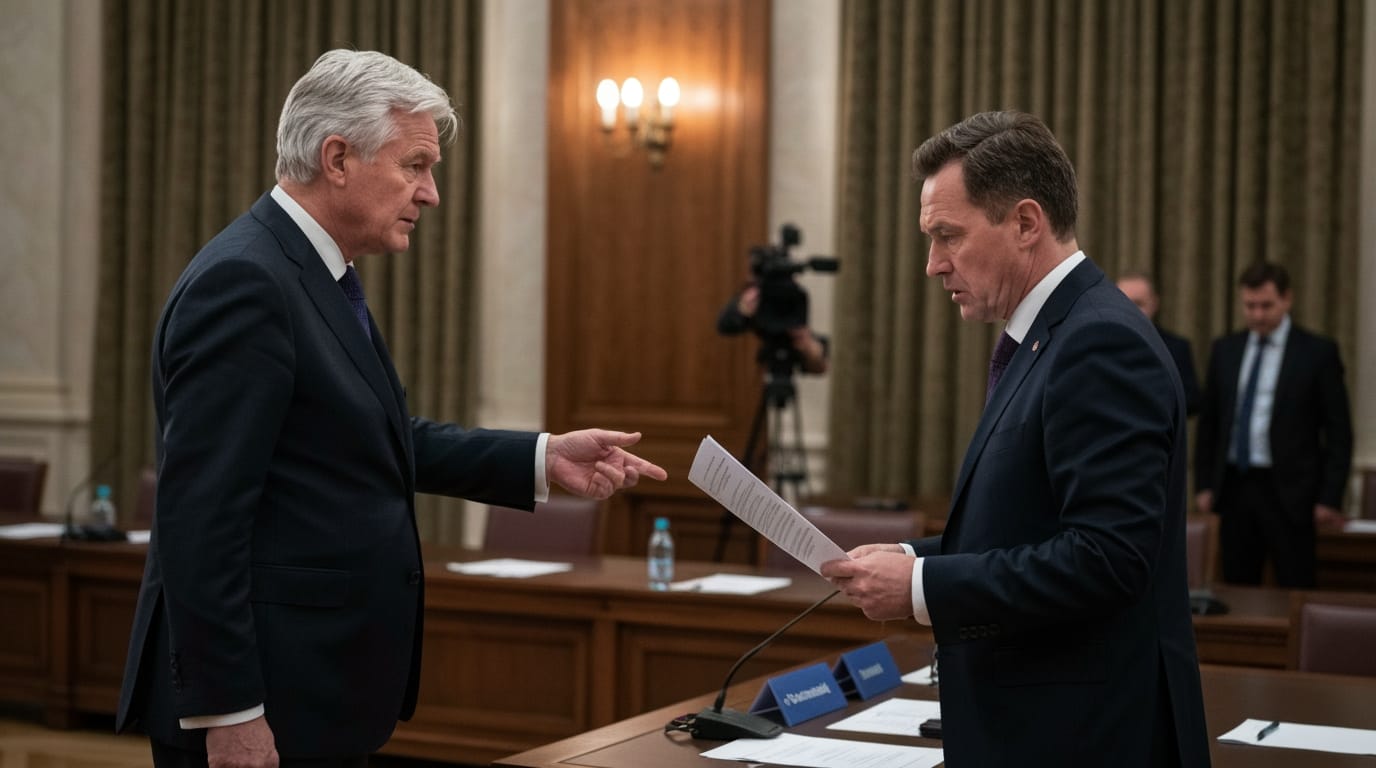
Berlin, Germany – Germany has again summoned Russia's ambassador following a sharp increase in alleged "hybrid activities" targeting critical national infrastructure and democratic processes. The diplomatic move comes as German officials attribute recent cyberattacks on air traffic control systems and attempts to influence a federal election to Russian state-backed actors, signaling a deepening rift in already strained relations.
The latest accusations highlight Germany's growing apprehension over a persistent pattern of digital and informational warfare, which officials assert seeks to destabilize the nation. The German Foreign Ministry made clear its intent to address Russia's aggressive behavior in cyberspace, emphasizing that such actions are intolerable and will lead to consequences in coordination with European allies.
New Wave of Accusations Stokes Tensions
The most recent diplomatic rebuke on December 12, 2025, addresses two significant incidents: a cyberattack against German air safety systems in August 2024 and a campaign to influence the February 2025 federal election. German authorities have specifically linked the air safety incident to the Russian hacker collective APT28, also known as Fancy Bear. Furthermore, a separate Russian network, identified as "Storm 1516," is believed to be responsible for efforts aimed at destabilizing the recent federal election through foreign information manipulation and interference.
A spokesperson for the German Foreign Ministry indicated a "significant increase in Russian hybrid activities" and asserted that a Russian campaign explicitly aims to destabilize Germany. This incident underscores a persistent and evolving threat landscape, where digital incursions and disinformation campaigns are increasingly intertwined with geopolitical tensions. The German government affirmed it is closely monitoring Russia's actions and plans to take decisive measures.
A Troubling Pattern: Past Cyber Incursions
The current allegations are not isolated incidents but rather fit into a documented history of Russian state-sponsored cyber operations against Germany and its allies. Just months prior, on May 3, 2024, Germany had also summoned a top Russian envoy following a newly concluded government investigation that attributed a series of 2023 cyberattacks to a group known as APT28, controlled by Russia's military intelligence service (GRU).
These earlier attacks primarily targeted members of the governing Social Democratic Party (SPD), including individuals associated with Chancellor Olaf Scholz's party, as well as crucial sectors such as logistics, defense, aerospace, and information technology. The hackers exploited a previously unknown vulnerability in the Microsoft Outlook email service to compromise accounts, demonstrating a sophisticated capability for cyber espionage. The campaign reportedly began as early as March 2022, shortly after Russia's full-scale invasion of Ukraine, with SPD emails being accessed by December 2022. Some of these actions also included knocking German websites offline in what appeared to be a direct response to Berlin's decision to supply tanks to Ukraine. These past incidents serve as a critical backdrop, illustrating a consistent strategy of digital interference and aggression.
Germany's Resolute Response and Allied Support
In response to the recurring threats, German officials have adopted an increasingly firm stance. Foreign Minister Annalena Baerbock previously characterized the attacks as "absolutely intolerable and unacceptable," warning that they would carry consequences. Following the May 2024 revelations, Germany also took the significant step of temporarily recalling its ambassador to Russia, Alexander Graf Lambsdorff, for consultations in Berlin. German Interior Minister Nancy Faeser has emphatically stated that Germany "will absolutely not be intimidated by the Russian regime," reaffirming the nation's resolve to counter such threats.
The European Union and NATO have consistently voiced strong condemnation of these "malicious cyber activities," standing in solidarity with Germany and the Czech Republic, which also reported being targeted by APT28 in 2023. EU chief diplomat Josep Borrell highlighted Russia's "continuous pattern of irresponsible behaviour in cyberspace" and its reliance on disinformation as a form of "hybrid" warfare. NATO has recognized cyberspace as a domain of operations and reiterated that a cyberattack against a member state could, under certain circumstances, trigger Article 5, its collective defense clause. This signifies that severe cyber incursions could be met with a collective response, demonstrating the gravity with which the alliance views such threats. Efforts to strengthen international cooperation have also yielded tangible results, including a globally coordinated operation led by the FBI in January 2024 that successfully shut down a botnet used by APT28.
The Evolving Landscape of Hybrid Warfare
The term "hybrid attacks" encompasses a broad range of tactics, extending beyond traditional military aggression to include cyberattacks, disinformation campaigns, economic pressure, and subversive activities. German officials and international bodies consider these efforts a deliberate strategy to undermine democratic institutions, sow distrust, and influence public opinion, particularly in the lead-up to significant elections. The ongoing nature of these attacks, targeting not only government entities but also critical infrastructure and political parties, underscores a sustained campaign to destabilize Western democracies. Germany has been a key supporter of Ukraine against Russian aggression, making it a frequent target for these multifaceted attacks.
The cumulative impact of such activities, even those below the threshold of an armed attack, is increasingly seen as a severe threat to national security and international stability. The coordinated response from Germany and its allies reflects a unified approach to deterring and countering these sophisticated, state-sponsored campaigns.
Conclusion
Germany's summoning of the Russian ambassador over recent "hybrid attacks" marks a critical juncture in the ongoing confrontation with state-sponsored digital aggression. The identified cyberattacks on air traffic control and attempts to interfere with democratic elections, alongside a documented history of similar incursions, underscore a persistent and evolving threat from Russian actors. With the unequivocal attribution of these attacks to Moscow, Germany, supported by its European and NATO allies, has signaled its unwavering commitment to defending its sovereignty and democratic processes. The diplomatic and collaborative measures being pursued aim to impose tangible consequences for such destabilizing actions, emphasizing that the era of uncontested hybrid warfare is over and that cyber aggression will be met with a firm and unified international response.


