US Intensifies Push for Ukraine Peace as War Nears Fourth Year, Ceding Territory on the Table
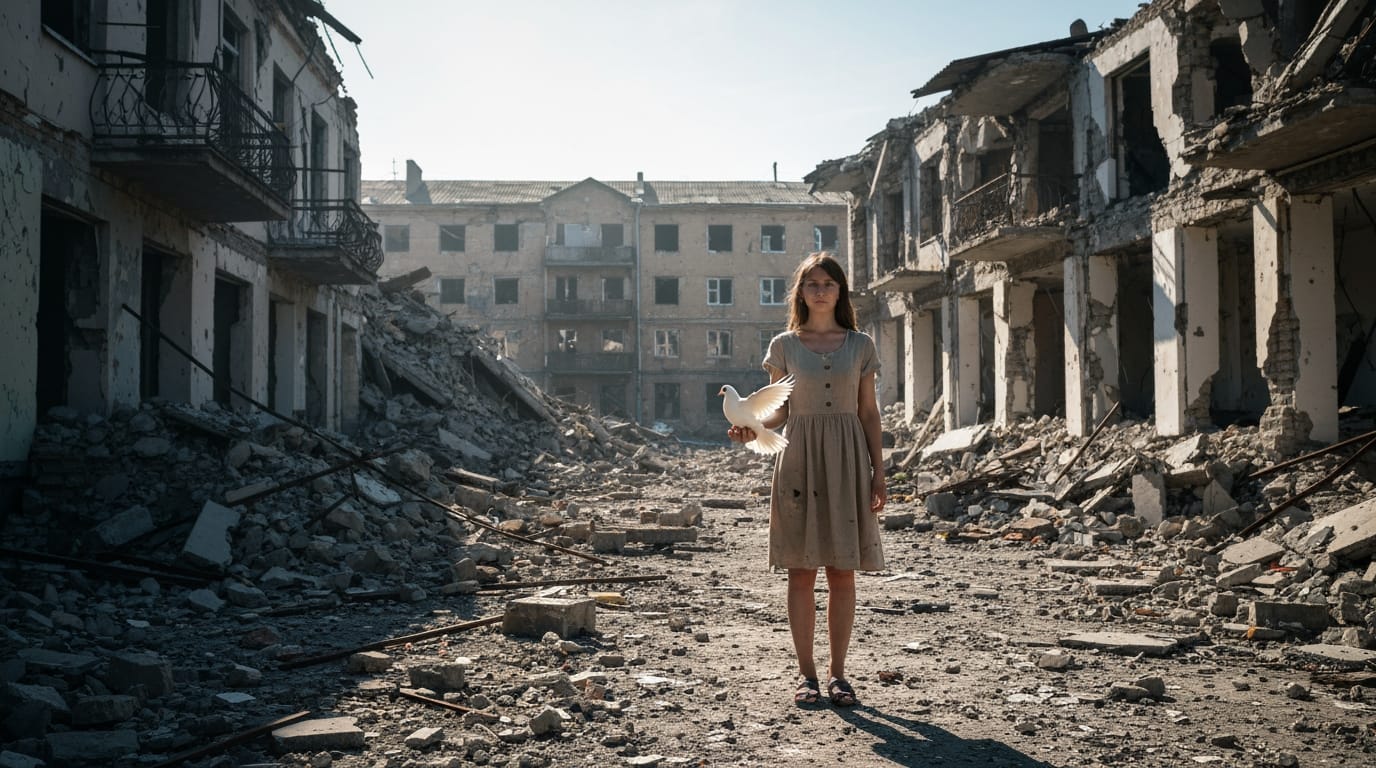
As the conflict in Ukraine approaches its fourth year, the United States, under the Trump administration, is spearheading a diplomatic offensive aimed at an "expeditious cessation of hostilities," marking a significant shift in its approach to the protracted war. This intensified push involves a controversial peace plan that has placed territorial concessions back at the forefront of negotiations and strained relations with European allies.
Evolving US Strategy Prioritizes Swift End to Conflict
The Trump administration's 2025 National Security Strategy (NSS), released in December, explicitly identifies an "expeditious cessation of hostilities in Ukraine" as a core US interest. This objective is aimed at stabilizing European economies, preventing unintended escalation, and reestablishing strategic stability with Russia. This represents a notable divergence from previous administrations, signaling a prioritization of a negotiated settlement over a prolonged conflict. The new strategy, rooted in a doctrine of "Civilizational Realism" and "Hard Sovereignty," also pivots US foreign policy to focus on domestic concerns and redefines alliances, urging Europe to take greater responsibility for its own defense. This reorientation has led to a flurry of shuttle diplomacy, with US special envoy Steve Witkoff and presidential son-in-law Jared Kushner engaging directly with both Russian and Ukrainian leadership in recent weeks.
Contested Peace Plan and Territorial Demands
Central to the US diplomatic efforts is a peace plan that has undergone several iterations and faced significant international scrutiny. An initial 28-point draft, reportedly developed by the US and Russia in November, was widely criticized for being heavily skewed in Moscow's favor. This plan was subsequently revised to 19 points after discussions involving the US, Ukraine, and European nations in Geneva on November 23.
More recently, Ukrainian President Volodymyr Zelenskyy revealed details of the latest US proposal, which suggests Ukraine withdraw its troops from the Donbas region to establish a "free economic zone" in the areas Kyiv currently controls. Under this evolving plan, frontlines would be frozen in the Kherson and Zaporizhzhia regions, with Russia ceding small pockets of land elsewhere. However, key sticking points remain, particularly concerning the ultimate governance of this proposed "free economic zone" and the future of the Russian-occupied Zaporizhzhia nuclear power plant. Zelenskyy has stressed the need for guarantees that Russia would not simply advance into any vacated territory.
Ukrainian negotiators, following consultations with British, French, and German leaders, presented their own revised 20-point peace plan to the US on December 9. This move aims to bolster Kyiv's negotiating position and counteract elements of the US-backed draft perceived as overly favorable to Russia. Despite intense pressure from President Trump to accept the US plan, Zelenskyy maintains that any decision on territorial concessions would require a national referendum. Russian President Vladimir Putin, meanwhile, has reportedly rejected certain European amendments to the US plan, deeming them "unacceptable." Ukraine is also seeking legally binding security guarantees from the US Congress as part of any future framework.
Shifting Aid Landscape and Congressional Pushback
The shift in US strategy has profoundly impacted military aid to Ukraine. Under the current administration, US military assistance has seen a sharp reduction in 2025, with President Trump explicitly not seeking new congressional funding for Ukraine, instead prioritizing a negotiated peace settlement. Prior to this, the United States had provided approximately $69.7 billion in military assistance to Ukraine since Russia's initial invasion in 2014, with $66.9 billion allocated since the full-scale invasion in February 2022.
Despite the administration's stance, Congress has demonstrated an intent to maintain a baseline of support for Kyiv. A bipartisan $901 billion defense bill, the National Defense Authorization Act (NDAA), passed by the House in December 2025, includes a provision allocating $400 million annually for the Ukraine Security Assistance Initiative (USAI) for fiscal years 2026 and 2027. This allocation is notable as it was inserted despite the administration's request for no funding for this program. The bill also contains measures designed to prevent the Trump administration from reducing US troop levels in Europe, underscoring congressional efforts to bolster European defense capabilities.
Concurrently, European allies and NATO partners have stepped up their collective contributions. Since August 2025, NATO Allies and partners have pledged over $4 billion in military equipment and munitions through the Prioritised Ukraine Requirements List (PURL) initiative, with monthly commitments of $1 billion.
Economic Pressure Through Sanctions and Reconstruction Efforts
Beyond diplomatic and military considerations, the US has continued to wield economic tools to pressure Russia. In October 2025, the US imposed direct sanctions on Russia's two largest oil companies, Rosneft and Lukoil. This action was cited as a direct response to Russia's perceived "lack of serious commitment to a peace process" and coincided with the cancellation of further face-to-face talks with President Putin. These tightened sanctions, coupled with Ukrainian attacks on Russian infrastructure and buyers moving away from Moscow, have contributed to a significant decline in Russia's oil exports and revenues, which have reportedly fallen to their lowest point since the war began. The US has also imposed additional tariffs on India for its continued purchases of Russian crude and has called for similar measures against China and other G7 countries. While sanctions are viewed as a means to compel Russia to negotiate, policymakers acknowledge they are not a standalone strategy to end the conflict.
Looking towards Ukraine's post-conflict future, an agreement has been announced to establish a United States-Ukraine Reconstruction Investment Fund. Ukrainian President Zelenskyy has also engaged with US officials on key points of a post-war reconstruction plan, emphasizing the importance of real security as a foundation for economic growth.
International Reactions and the Path Forward
The US peace initiative has generated mixed reactions among international partners. European leaders have expressed unease with aspects of the US plan, viewing them as potentially undermining European security and overly accommodating to Moscow. European Council President Antonio Costa noted the need for Europe to adapt to changing post-World War II alliances and build its own strategic autonomy. NATO Secretary General Mark Rutte has underscored the alliance's readiness to defend its territory, warning against complacency regarding Russia's threat.
The complex web of diplomatic negotiations, military support, and economic pressures underscores the challenging path toward resolving the conflict. While the US is pushing for a rapid settlement, the divergent demands of Kyiv and Moscow, coupled with the concerns of European allies, ensure that the future of Ukraine and regional security remains highly uncertain.


