Germany Turns to Immigrant Educators to Fortify Ailing School System
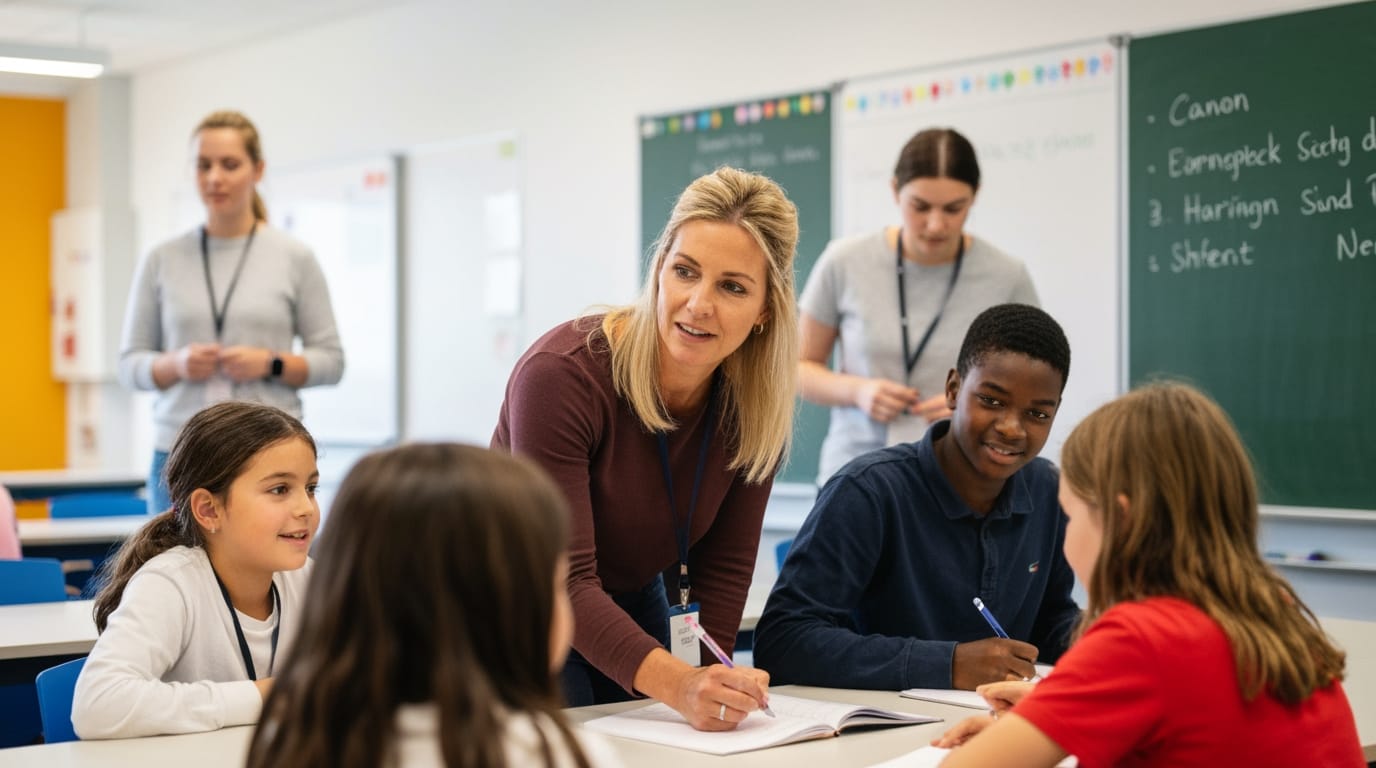
Berlin, Germany – Facing a deepening crisis in its classrooms, Germany is increasingly looking to a vital, yet often overlooked, resource: immigrant teachers. A robust array of programs across the nation is actively retraining foreign-qualified educators, aiming to bridge a significant and growing teacher shortage that threatens to undermine the country's renowned education system. This strategic initiative seeks not only to fill critical vacancies but also to leverage the diverse linguistic and cultural assets these new educators bring to an increasingly multicultural student body.
The Mounting Crisis in German Classrooms
Germany's schools are grappling with an alarming deficit of teaching professionals, a challenge years in the making. As of August 2022, estimations pointed to a gap of approximately 30,000 qualified teachers nationwide. Projections suggest this shortfall could escalate dramatically, potentially reaching 81,000 by 2030, with the Conference of Ministers of Education and Cultural Affairs (KMK) forecasting the shortage to persist until at least 2033. The impact is widespread, leading to cancelled classes, increased teacher overtime, and the employment of underqualified staff, all of which compromise educational quality and teacher well-being.
The crisis is particularly acute in specific areas. Primary schools, special needs institutions, and vocational schools are significantly affected, as are critical subjects such as mathematics, chemistry, physics, and music. This chronic shortage is attributed to a confluence of factors, including an aging teacher population nearing retirement, rising birth rates, an influx of migrants increasing student numbers, and a mismatch between the number of teacher training places and actual demand. The urgency of the situation has compelled educational authorities to explore innovative solutions, recognizing that traditional recruitment methods alone are insufficient.
A New Pipeline: Training Immigrant Educators
In response to this pressing need, several German federal states and universities have launched specialized programs designed to integrate internationally trained teachers into the local school system. Initiatives such as "Teachers PLUS" in North Rhine-Westphalia (NRW) and the "Refugee Teachers Program" at the University of Potsdam exemplify this proactive approach. These programs serve as crucial bridges, preparing educators who often possess extensive teaching experience from their home countries but require specific qualifications and language proficiency to teach in Germany.
The training typically spans one to 1.5 years and encompasses several key components. Participants undergo intensive German language courses, often aiming for the C1 or C2 proficiency levels required for professional teaching. Alongside language acquisition, the curriculum includes pedagogical and educational science seminars, subject-specific didactic training tailored to the German system, and practical school internships. These elements are critical for familiarizing immigrant teachers with the nuances of German educational philosophy, curriculum, and classroom management. The University of Potsdam's program, for instance, launched in 2016 following the 2015 refugee influx, was a pioneering effort to provide training and employment opportunities for migrants with teaching backgrounds, many from countries like Syria, Afghanistan, and Iraq.
Navigating Hurdles and Harnessing Potential
While these programs offer a promising pathway, immigrant teachers often encounter substantial challenges on their journey to full integration. The stringent requirements for professional recognition in Germany, particularly the need for two school subjects and a high level of German proficiency, can be significant hurdles. Even after completing retraining, many graduates initially secure positions as assistant teachers, with full teacher status requiring further adaptation and time.
Moreover, immigrant educators, historically an undervalued resource, have at times faced biases within the system. However, recent research indicates a more complex picture, with some studies suggesting that teachers might even show a tendency to favor migrant children in grading, possibly to compensate for perceived social disadvantages. Despite these potential obstacles, the unique strengths of immigrant teachers are increasingly recognized. Their diverse experiences and perspectives are invaluable in enriching the teaching force and addressing the evolving needs of German schools.
Beyond Filling Gaps: The Broader Impact
The integration of immigrant teachers extends far beyond simply alleviating staff shortages; it profoundly enriches the entire educational landscape. These educators serve as vital cultural bridge-builders and powerful role models for Germany's increasingly diverse student population. Their presence helps foster intercultural understanding within classrooms and schools, contributing to a more inclusive learning environment. For migrant children, in particular, having teachers who share similar backgrounds and experiences can significantly aid in their integration, providing a sense of belonging and facilitating academic success.
By internationalizing classrooms and promoting intercultural school development, these teachers contribute to a more comprehensive and globally aware education. Their linguistic skills can also be instrumental in connecting with migrant parents, overcoming communication barriers, and fostering stronger home-school partnerships. This dual benefit—addressing staff shortages while enhancing cultural competence—underscores the strategic importance of these integration efforts.
A Forward-Looking Strategy for Educational Equity
The German government and educational institutions are committed to these initiatives, recognizing their long-term benefits. The Conference of Ministers of Education and Cultural Affairs has emphasized the necessity of attracting new target groups to the teaching profession. Furthermore, federal and state governments have implemented legal frameworks to streamline the recognition of foreign qualifications. Significant funding programs, such as the ten-year "Startchancen-Programm" (Starting Opportunities Programme), are also being deployed to enhance educational equity, particularly for children with migrant backgrounds.
Despite ongoing debates regarding broader immigration and integration policies, including discussions around potential classroom caps for immigrant pupils, the core strategy remains clear: to develop a resilient, diverse, and high-quality education system capable of serving all students. The commitment to supporting immigrant teachers reflects a broader understanding that a diverse teaching force is not merely an auxiliary solution but a fundamental component of Germany's educational future.
The transformation of Germany's teaching landscape through the integration of immigrant educators represents a critical step towards creating a more robust, equitable, and culturally responsive school system. By harnessing the talents and experiences of these professionals, Germany is not only addressing an immediate crisis but also laying the groundwork for a more inclusive and globally competitive educational future for generations to come.


