Germany Unveils Ambitious Pension Overhaul as Chancellor Merz Hails Reform Proposals
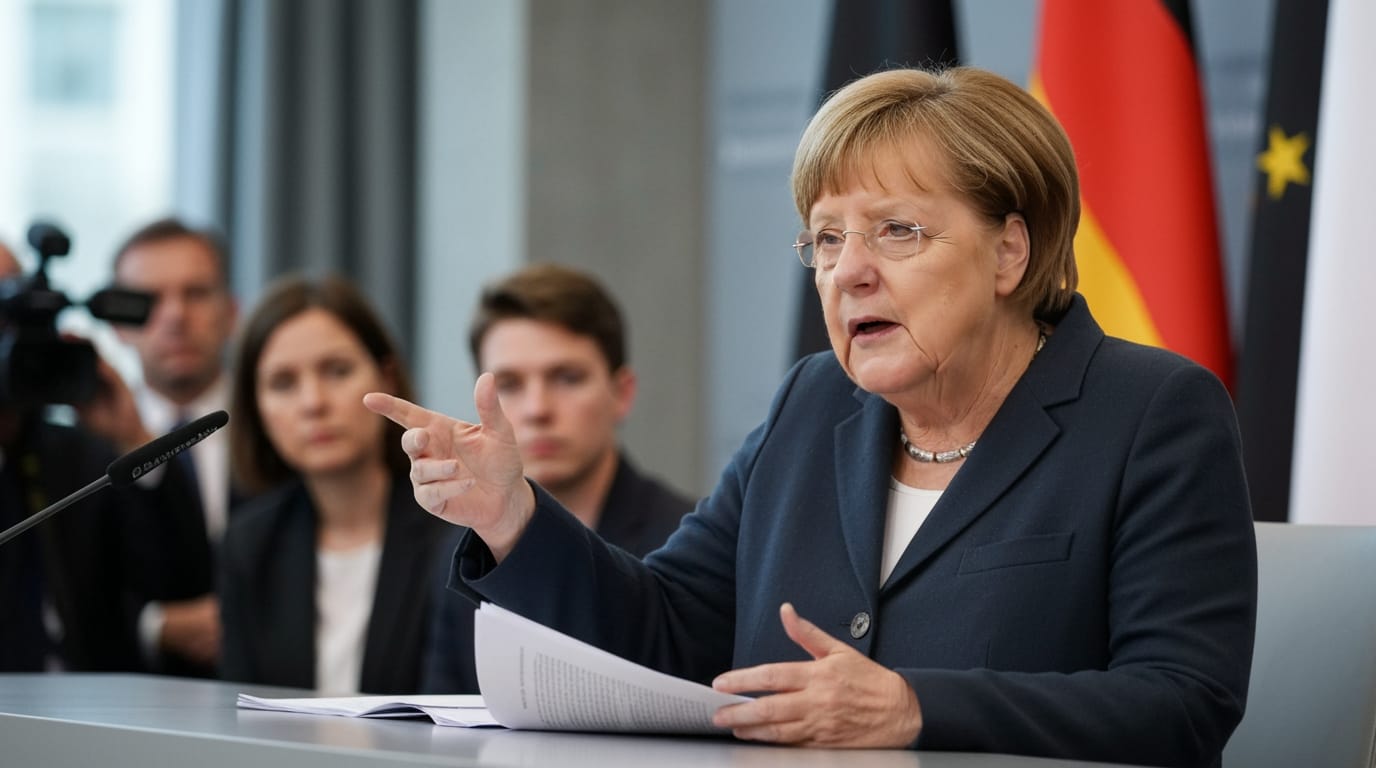
Berlin, Germany – Chancellor Friedrich Merz has voiced strong approval for a comprehensive package of pension reform proposals, signaling a pivotal shift in Germany's approach to securing retirement for future generations. The recommendations, delivered by a government-appointed commission, aim to fortify the nation's social security system against escalating demographic pressures through a blend of capital market investments, adjustments to the retirement age, and innovative savings programs. Merz emphasized the urgent necessity of these changes, stating unequivocally that "doing nothing is not an option" for Europe's largest economy.
The proposed reforms mark a decisive moment for Germany, grappling with a rapidly aging populace and the long-term sustainability of its traditional pay-as-you-go pension model. These proposals build upon the earlier "Rentenpaket II," which itself sought to introduce capital-based elements into the system. The commission's 33 recommendations, presented to Chancellor Merz and Labour Minister Bärbel Bas, are expected to form the bedrock of legislative action in the coming months, aiming to strike a delicate balance between intergenerational fairness and financial viability..
A New Blueprint: Capital-Backed Security and Flexible Retirement
Central to the reform agenda is the establishment of the "Generationenkapital," a sovereign wealth fund designed to inject capital market returns into the statutory pension system. This fund, approved by the German federal cabinet on May 29, 2024, is envisioned to accumulate €200 billion in assets by 2036, with an annual distribution goal of €10 billion to support future pension payments.. Initially seeded with federal loans and government transfers, starting with €12 billion in 2024, the fund will invest in global capital markets, marking a significant departure from Germany's purely pay-as-you-go model, which historically relied solely on current worker contributions.. This capital-backed pillar seeks to partially alleviate the burden on future contribution increases for employers and employees..
Further significant proposals include a gradual increase in the retirement age, incrementally rising in line with life expectancy, potentially reaching 70 by the early 2090s. The commission also recommended abolishing the option of penalty-free early retirement at age 63.. Currently, the standard retirement age is slated to reach 67 by the early 2030s.. These measures are intended to adapt the system to longer lifespans and ensure a more balanced ratio of contributors to retirees.
Moreover, the commission put forward the idea of a Swedish-style pension fund, which would involve mandatory contributions from both workers and employers. These contributions would then be invested in financial assets to fund future pensions, creating an additional, compulsory, and individually allocated funded pension.. This multi-pronged approach aims to diversify the financial basis of the pension system, reducing its sole dependence on an increasingly strained demographic base.
Confronting Germany's Demographic Imperative
The urgency behind these reforms is underscored by Germany's acute demographic challenges. The nation faces an accelerating aging population and a diminishing workforce, putting immense strain on its earnings-related pay-as-you-go pension system.. Projections indicate that the ratio of the elderly (aged 65 and above) to the working-age population (20-64) in Germany is set to increase from 37.3% in 2022 to nearly 50% (49.8%) by 2050. This means that by mid-century, there will be almost one pensioner for every two workers, a ratio that is projected to rise even further thereafter.. In the early 1960s, there were as many as six employees for every pensioner; today, that ratio stands at roughly two to one..
This demographic shift has placed "considerable pressure" on both the labor market and government finances.. The current pension system relies on current workers financing the incomes of current pensioners, making it particularly vulnerable to a shrinking pool of contributors.. Without intervention, the current contribution rate of 18.6% is projected to increase significantly, potentially reaching 20.0% in 2028 and 22.3% in 2035, placing a heavier burden on younger generations.. Chancellor Merz has explicitly stated that the state pension alone will, at best, serve as a basic safety net in old age and will not suffice to secure one's standard of living long-term, advocating for a greater focus on capital market-based instruments..
Navigating the Political Landscape
While Chancellor Merz has hailed the proposals as a "strong plan" and a "powerful sign" for Germany, the path to implementation is fraught with political complexities and differing perspectives within the ruling coalition and opposition.. The coalition has committed to legally securing the pension level at 48% until at least 2031, with increased costs to be covered by tax funds.. Some sources suggest this guarantee could extend to 2039.. However, this commitment runs contrary to the "sustainability factor," an instrument designed to link pension levels to demographics and ensure financial sustainability, which is currently suspended but set to re-engage around 2032..
The CDU's youth wing, the Junge Union, has voiced concerns that maintaining the 48% pension level guarantee beyond 2031 could disproportionately burden future generations.. Despite this internal dissent, Merz has affirmed his support for the overall package, including the pension guarantee, to maintain coalition stability.. The Social Democratic Party (SPD), a key coalition partner, emphasizes maintaining pension levels and has generally resisted proposals for raising the retirement age or cutting pensions, instead advocating for increased contributions.. Meanwhile, the Free Democratic Party (FDP) has consistently pushed for more ambitious capital-backed solutions and greater flexibility in the retirement age, even proposing individual accounts for contributions in the first pillar, similar to Sweden's premium pension model.. These different priorities highlight the ongoing challenge of achieving a consensus that satisfies all stakeholders.
Long-Term Vision: Intergenerational Equity and Economic Stability
Beyond the core structural changes, the reforms include specific measures designed to promote intergenerational equity and adapt to changing working lives. Starting January 1, 2026, the "Frühstart-Rente" (Early Start Pension) will see €10 monthly contributions made into individual, capital-funded retirement accounts for children aged 6 to 18 who are attending educational institutions in Germany.. This initiative aims to establish a foundation for long-term retirement savings through compound interest..
To encourage continued economic participation, the "Aktivrente" (Active Retirement) allows seniors to earn up to €2,000 tax-free per month alongside their pensions, incentivizing voluntary extended working lives without raising the statutory retirement age.. Furthermore, beginning April 2025, a mandatory pension obligation will be introduced for all "new self-employed" individuals, extending social security coverage.. Measures to equalize "mothers' pensions," providing three pension points for each child regardless of birth year and funded through tax revenues, are also part of the package..
These proposals collectively represent an ambitious endeavor to overhaul a system under immense pressure. The objective is not merely to plug financial holes but to create a robust, adaptable, and equitable pension system that can withstand future demographic and economic shifts. Chancellor Merz's strong endorsement underscores the government's determination to enact these far-reaching reforms, aiming to ensure that younger workers can rely on a secure pension system in the future..
The current pension debates, therefore, are not just about numbers and regulations; they are about redefining Germany's social contract and safeguarding the promise of a dignified retirement for all its citizens for decades to come. The coming legislative process will reveal the extent to which this comprehensive vision can be translated into concrete, broadly supported policy.


