Germany Urges Strong EU Response to Trump's Auto Tariffs
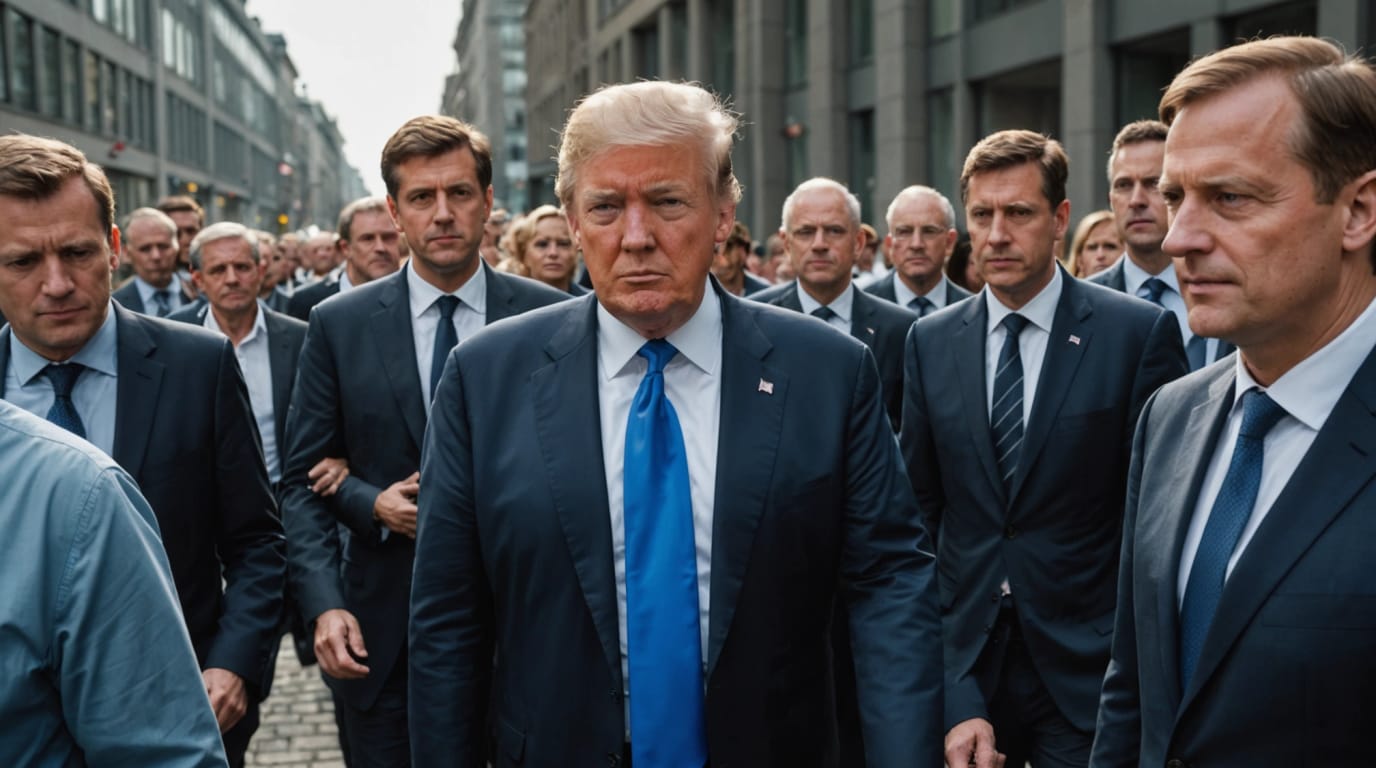
Berlin is calling for a robust response from the European Union after U.S. President Donald Trump announced a new 25% tariff on imported cars, a move that threatens to escalate the global trade war and significantly impact the German automotive industry. The tariffs, set to take effect on April 2, will apply to foreign-made cars, with a similar charge on imported car parts expected to follow in May or later.
"A Fatal Signal"
Germany's Economy Minister, Robert Habeck, has urged the EU to stand firm against the U.S., stating, "The EU must now give a firm response to the tariffs—it must be clear that we will not back down in the face of the USA." The German automotive industry, a cornerstone of the nation's economy, has reacted with alarm. The VDA car lobby, representing the industry, has described the new levies as a "fatal signal" for free, rules-based trade, warning of potential harm to companies and global supply chains. VDA President Hildegard Müller has called for immediate negotiations between the U.S. and the EU to reach a bilateral agreement.
The German automotive industry is a global leader, recognized for its innovation and competitiveness. It is the largest industrial sector in Germany in terms of turnover, research, and exports. In 2023, German passenger car and light commercial vehicle manufacturers generated foreign market revenue of €387.8 billion, accounting for approximately 17% of all German exports. The U.S. is a crucial market for German automakers, with nearly 450,000 vehicles imported to the U.S. from Germany in 2024. The total trade volume of automotive goods between the two countries amounted to €44.7 billion in the same year.
Trump's "Tremendous Growth" Claim
President Trump, in announcing the tariffs, claimed they would spur "tremendous growth" in the U.S. and bring back jobs to the American automotive industry. He stated he had already contacted the U.S.'s Big Three car manufacturers—Stellantis, Ford, and General Motors—and suggested that companies without factories in the U.S. would need to establish them. Trump hopes to generate $100 billion in revenue through the tariffs.
However, analysts warn that the tariffs could lead to higher prices for consumers, slow down domestic production, strain international relations, and disrupt global supply chains. The tariffs are expected to impact long-standing trade partnerships, potentially harming not only Germany but also Mexico, South Korea, Japan, and Canada, all major exporters of cars to the U.S. In 2024, the U.S. imported approximately eight million cars, with Mexico being the top supplier, followed by South Korea, Japan, Canada, and Germany.
Impact on German Automakers
The tariffs pose a significant threat to German automakers, particularly those with substantial production in Mexico for the U.S. market. Volkswagen, for instance, is expected to be heavily affected, as approximately 80% of its U.S. sales are imported vehicles. Mercedes-Benz and BMW also face considerable impact, importing around 63% and 52% of their U.S. sales, respectively. Shares in Volkswagen, Mercedes-Benz, BMW, and Daimler Truck have already experienced declines following the tariff announcement.
While many German automakers have established plants in the U.S., these may not be sufficient to mitigate the impact of the tariffs. Audi, BMW, Volkswagen and Mercedes-Benz also manufacture many of their cars for the U.S. market at plants in Mexico, and these too will be subject to the new tariff. The tariffs could force German automakers to reconsider their production strategies and potentially shift production to the U.S., which could lead to job losses in other locations.
EU Response and Potential Retaliation
The European Commission President, Ursula von der Leyen, has expressed deep regret over the U.S. decision and vowed to protect European businesses. She stated that the EU would seek negotiated solutions while safeguarding its economic interests. However, the EU is also prepared to take retaliatory measures if necessary.
While Germany's government has rejected calls for a boycott of U.S. products, it is urging the EU to respond firmly to the tariffs. The EU has the option of imposing its own tariffs on U.S. goods, which could further escalate the trade war. Trump has already threatened to impose "far larger" tariffs if the EU and Canada join forces to economically "harm" the U.S.
Broader Economic Implications
The automotive industry is a critical component of the German economy, accounting for a significant portion of the country's exports, research and development spending, and employment. Any disruption to the industry could have far-reaching consequences for the German economy as a whole.
The tariffs come at a time when German automakers are already facing significant challenges, including the transition to electric vehicle production, rising costs, and increasing competition from international brands. The industry has already planned job cuts in the coming years to reduce costs. The tariffs could exacerbate these challenges and lead to further job losses and economic uncertainty.
A Call for Negotiation
Germany is urging the U.S. and the EU to engage in immediate negotiations to find a solution to the trade dispute. The German automotive industry believes that a bilateral agreement could address tariff and non-tariff barriers to automotive products and lead to a more balanced approach. Discussions on legal regulations, standards, and certifications would also benefit both sides of the Atlantic.
The reduction of tariffs and trade barriers is seen as a key driver for further investment and jobs in the United States. The German automotive industry emphasizes that export success and imports are complementary and essential for economic prosperity.
Uncertainty Ahead
The imposition of U.S. tariffs on imported cars has created significant uncertainty for the German automotive industry and the global economy. The potential for a full-blown trade war between the U.S. and the EU looms large, with potentially devastating consequences for businesses and consumers on both sides of the Atlantic. As the April 2nd deadline approaches, all eyes are on Washington and Brussels to see if a negotiated solution can be reached to avert a trade war.


