Germany Welcomes Azerbaijani President Aliyev Amidst Critical Geopolitical Shifts
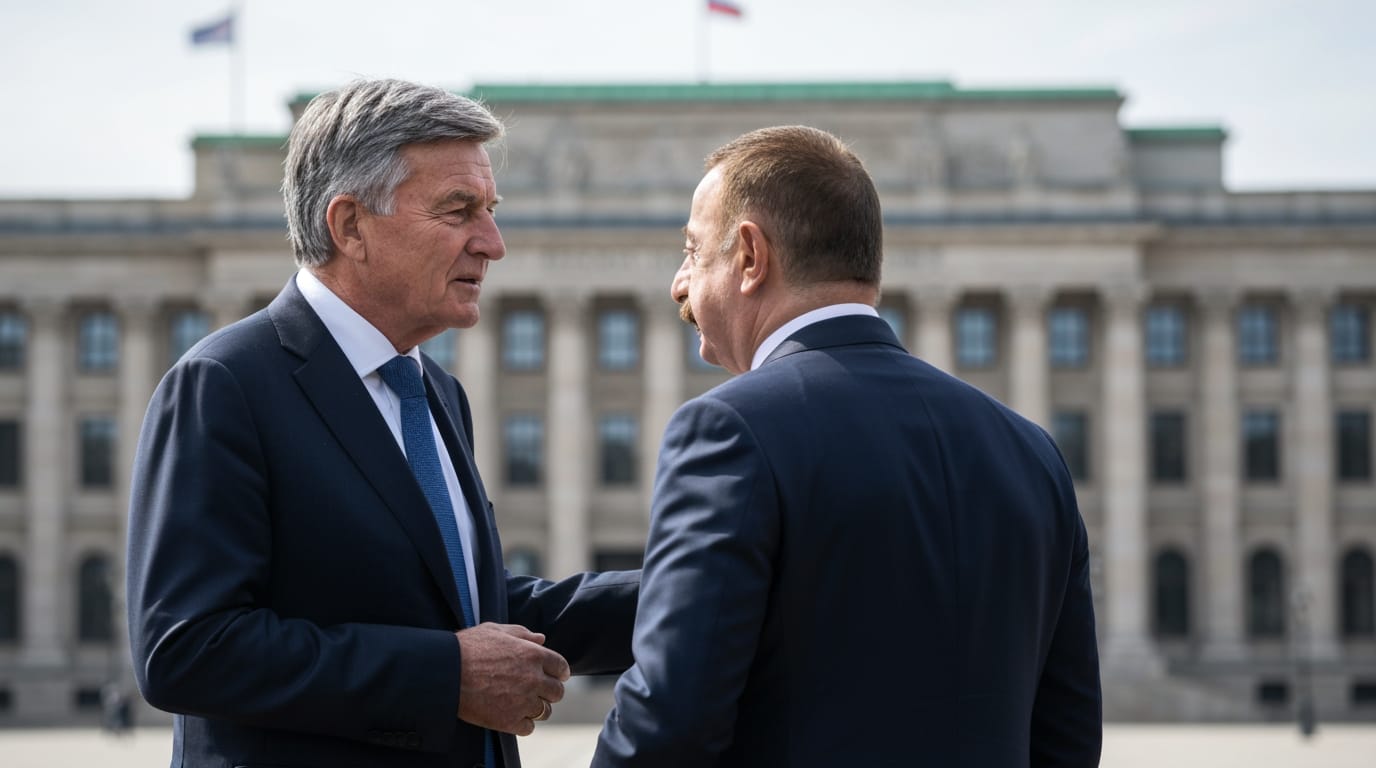
Berlin, Germany – In a significant diplomatic engagement underscoring Europe's evolving geopolitical landscape, German Chancellor Friedrich Merz is hosting Azerbaijani President Ilham Aliyev today in Berlin. The high-level meeting, taking place at the Federal Chancellery, signals Germany's deepened commitment to a strategic partnership with the South Caucasus nation, driven by urgent energy security needs, economic diversification, and regional stability initiatives. A joint press conference is anticipated to follow the discussions, where the leaders are expected to elaborate on the outcomes of their deliberations.
The official welcoming ceremony commenced at 12:00 p.m. local time, setting the stage for talks that are poised to shape future bilateral cooperation and influence regional dynamics. This visit follows several preparatory dialogues, including a phone call in December 2025 where Chancellor Merz extended the invitation, and another in March 2026, indicating a sustained diplomatic effort to foster closer ties between Berlin and Baku.
The High-Stakes Agenda: Energy Security and Regional Peace
At the forefront of today's discussions are critical issues surrounding energy and raw materials, the regional peace process between Azerbaijan and Armenia, and broader international security policy. For Germany, diversifying energy sources has become a paramount concern, particularly in the wake of geopolitical shifts and the ongoing conflict in Ukraine. Azerbaijan has emerged as an increasingly vital partner in this strategy, supplying natural gas directly to Germany and Austria since early 2026. This move reinforces Azerbaijan’s role as a reliable energy provider for Europe and lessens the continent's dependency on traditional, less stable sources.
A long-term gas supply contract between Azerbaijan’s state oil company SOCAR and Germany’s Uniper, valid until 2045, along with strategic cooperation involving SEFE, further solidifies Germany's energy security framework. These agreements underscore Berlin's view of Azerbaijan as an integral component of its long-term energy architecture, rather than merely an alternative in times of crisis. The reliability of the Southern Gas Corridor, a crucial pipeline for delivering Caspian energy to European markets, is central to this strategy, providing Germany with greater confidence that its industrial sector will be more resilient to future geopolitical shocks.
Beyond energy, the ongoing peace process between Azerbaijan and Armenia holds significant weight in the discussions. Chancellor Merz has consistently welcomed progress in this regard, emphasizing its importance for regional stability. Azerbaijan, for its part, views itself as a key initiator of regional peace initiatives and has committed to continued efforts to ensure lasting stability in the South Caucasus. This aspect of the dialogue highlights Germany's broader interest in fostering a secure and predictable environment in a region often subject to geopolitical tensions.
Beyond Hydrocarbons: Economic Diversification and the Middle Corridor
While energy remains a cornerstone, the relationship between Germany and Azerbaijan is rapidly expanding beyond hydrocarbons to encompass a broader spectrum of economic cooperation. Over 250 German companies currently operate in Azerbaijan, spanning industries such as manufacturing, logistics, and construction. Bilateral trade reached approximately €1.7 billion in 2025, driven significantly by German exports of industrial equipment, machinery, and transport systems to Azerbaijan. This growth reflects a deliberate effort by both nations to foster deeper industrial cooperation and diversify their economic engagements.
A critical area of shared interest is the development of the Middle Corridor, a burgeoning trade route connecting Europe with Central Asia and beyond. Positioned strategically at the crossroads of Europe and Asia, Azerbaijan serves as a vital hub for logistics, energy, and economic cooperation across Eurasia. For Germany, an export-driven economy with substantial reliance on resilient supply chains, the Middle Corridor offers reliable access to Central Asian markets, diversifies crucial raw material supply chains, and enhances global trade resilience.
The importance of this corridor is further highlighted by a scheduled conference in October 2026 focusing on infrastructure projects between Germany and Azerbaijan, with an agenda specifically addressing "Mobilizing Finance for Infrastructure, Transport, Logistics, Green Energy, and Digitalization along the Middle Corridor." Such initiatives demonstrate a shared vision for strengthening Eurasian connectivity, providing German industries with alternative routes that bypass geopolitical bottlenecks, and reducing excessive reliance on other regions.
Navigating Diplomatic Complexities: Human Rights and International Scrutiny
Amidst the burgeoning economic and strategic partnership, the issue of human rights in Azerbaijan remains a sensitive point in the bilateral relationship. Germany’s Foreign Minister Annalena Baerbock, during COP29 in Baku in November 2024, openly criticized Azerbaijan's "deplorable" human rights record, specifically calling for the release of arrested activists and critics. She emphasized that human rights concerns are an enduring part of political discussions between the two governments.
While acknowledging some progress in economic, social, and cultural rights, German officials have also pointed to the need for substantial improvements in civil and political rights, including the removal of restrictions on freedom of expression and assembly, and ensuring political elections align with international standards. Azerbaijani officials, including the human rights commissioner, have engaged with the German ambassador, providing information on actions taken to safeguard freedoms and human rights within the country. This ongoing dialogue underscores the complex balance Germany seeks to strike between its strategic and economic interests and its commitment to promoting democratic values and human rights. The visit is thus not merely transactional but also represents a platform for continued engagement on these critical, often challenging, issues.
A New Chapter in Bilateral Relations
President Aliyev’s visit to Berlin signifies the emergence of a new strategic partnership between Azerbaijan and Germany, one that is increasingly shaped by long-term economic and geopolitical realities. As Europe navigates a period of significant global turbulence, Azerbaijan has positioned itself as a valuable partner in the wider Eurasian context. The comprehensive nature of the discussions, encompassing energy, trade, infrastructure, regional peace, and human rights, reflects a mature and multifaceted relationship.
This shift represents a departure from viewing Azerbaijan solely as an energy supplier, moving towards a recognition of its broader strategic importance as a hub for transport, logistics, and a partner in Europe's efforts to diversify supply chains and enhance resilience. The visit today is expected to cement these growing ties, laying the groundwork for increased collaboration in various sectors and further integrating Azerbaijan into Europe's economic and strategic architecture.
The outcome of today's meeting and the subsequent joint press conference will be closely watched by international observers, as it has the potential to redefine Germany's engagement with the South Caucasus and contribute to a new geopolitical calculus in Eurasia. The discussions in Berlin are set to mark another stage in the consistent strengthening of the strategic partnership between Baku and Berlin, emphasizing their mutual interests in stability, security, and economic prosperity in a rapidly changing world.


