Germany's Bundestag Faces Momentous Vote on Healthcare Overhaul Amidst Fiscal Crisis
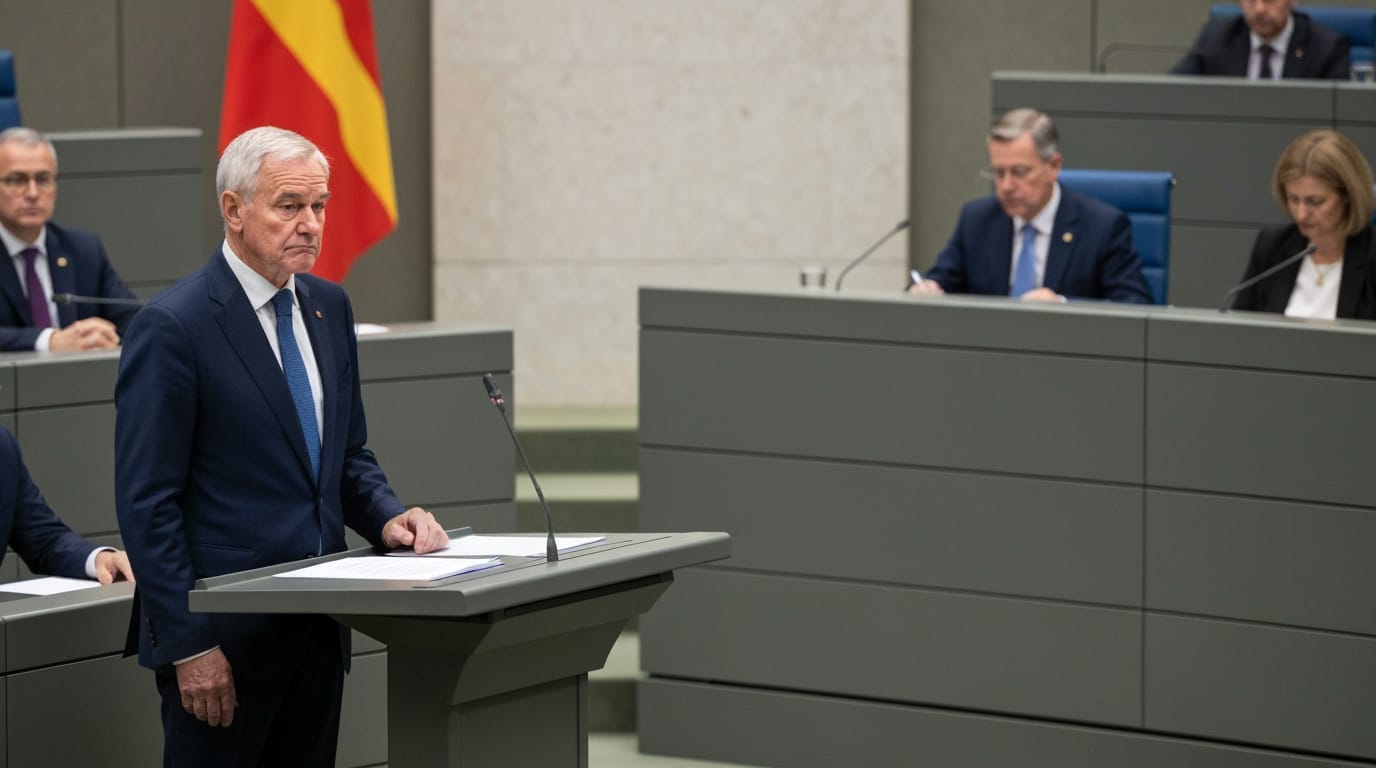
BERLIN, Germany – The German Bundestag is poised for a critical vote this week on a comprehensive package of healthcare savings measures, aiming to stabilize the nation's public health insurance system grappling with a projected multi-billion euro deficit. The legislative push, spearheaded by Health Minister Nina Warken, seeks to rein in rapidly escalating costs and prevent further premium hikes for millions of Germans, though it is met with significant concern from various stakeholders across the healthcare sector.
The proposed reforms arrive at a time when Germany's statutory health insurance (GKV) system faces an unsustainable financial trajectory, with a projected fiscal gap of €15.3 billion in 2027, escalating to an estimated €40 billion by 2030 if no action is taken. Even with contributions already rising by 3% this year, the system's expenditures continue to outpace its revenue base, driven by an aging population, medical advancements, and inflationary pressures. Chancellor Friedrich Merz has characterized the package as a historic reform and one of the most ambitious welfare changes in decades, asserting its necessity to save more than €16 billion and avert another sharp increase in statutory health insurance premiums.
Navigating a Dire Financial Landscape
Germany's healthcare expenditure ranks among the highest within the Organisation for Economic Co-operation and Development (OECD) countries, yet its performance in key population health indicators remains only average. Experts from the German Council of Economic Experts (GCEE) contend that the statutory health insurance system suffers from an expenditure problem rather than a revenue one, urging adjustments across multiple areas, particularly in hospital care and pharmaceuticals. Without significant countermeasures, the GCEE forecasts that the contribution rate could climb to 19.8 percent by 2040.
The government's draft law, titled "GKV-Beitragssatzstabilisierungsgesetz" (GKV-BStabG), aims to introduce a mix of spending cuts and revenue-generating measures. Initial estimates suggested these could yield nearly €20 billion in savings by 2027 and over €42 billion by 2030, with an overarching goal to cut more than €60 billion in healthcare costs by the end of the decade. These ambitious targets underscore the gravity of the financial challenges confronting Germany's healthcare infrastructure.
Key Measures and Their Immediate Impacts
The legislative package includes several pivotal measures designed to achieve these savings. One significant component targets pharmaceutical spending, proposing new pricing rules and compulsory markdown payment obligations for drug companies. Specifically, the compulsory markdown on patented prescription drugs is set to increase, expected to generate approximately €1.1 billion in savings in 2027. The draft also outlines a 50 percent increase in patient co-payments for prescription medications, raising the range from €5-€10 to €7.50-€15.
Hospitals are also in the crosshairs of the reform. In a move that has drawn considerable criticism, the "most-favoured-nation clause" for hospitals will be suspended on a one-off basis for 2026, effectively imposing an additional burden of approximately €1.8 billion on them as part of a €2 billion savings package for the statutory health insurance system. This comes at a time when many hospitals are already experiencing significant financial distress.
Furthermore, the reform package seeks to cap rising reimbursement rates for doctors' offices, hospitals, and the pharmaceutical industry. It also introduces new limits on free co-insurance for spouses, with an additional contribution of 2.5 percent of income for co-insured partners set to begin in 2028. However, amendments have softened the initial proposal, extending exemptions to families with children up to age 11, a significant increase from the original plan's age six threshold. The federal government will also increase its contribution towards the health costs of basic income support recipients, rising to €1 billion in 2027. To generate additional revenue for prevention programs, a tax on sugary drinks is planned from 2028, expected to yield around €450 million annually.
Industry Backlash and Political Concessions
The proposed cost-cutting measures have not been met without strong opposition. Pharmaceutical companies, in particular, have expressed deep disappointment. Novartis CEO Vas Narasimhan publicly stated the company was "very disappointed" by Germany's plan, highlighting concerns that it could have ripple effects across the wider European market, where Germany often serves as a reference point for pricing negotiations. Some pharmaceutical giants, such as Eli Lilly and Boehringer Ingelheim, have already scaled back billions in planned investments in Germany, citing the impending healthcare budget cuts as the primary reason. Lilly, for instance, has halved its planned €2.3 billion investment in a new manufacturing plant, significantly reducing its intended capacity and headcount.
Hospital associations have also voiced alarm, warning that the proposed savings could lead to severe cutbacks, impacting staffing, ongoing hospital reform projects, and the overall quality of care. They argue that the focus on capping costs fails to account for rising wage, energy, and modernization expenses over which hospitals have no control.
In response to pressure from coalition partners, state governments, and industry representatives, Health Minister Warken has introduced several amendments to soften some of the original proposals. These revisions aim to ease the financial burden on insured households and families, for instance, by reducing the additional contribution for co-insured spouses and widening the exemption for parents. The federal subsidy for statutory health insurance funds, initially slated for a larger reduction, will now see slightly smaller cuts of €1.35 billion in 2027 and €1.55 billion in 2028. While these adjustments have been welcomed by health insurance funds, the opposition has criticized them as insufficient. Resistance to a swift passage is also brewing among Germany's federal states (Länder), with some governors seeking further talks before the bill moves to the Bundesrat.
A Glimpse into the Future of German Healthcare
The impending vote represents a pivotal moment for Germany's healthcare system. While the immediate focus is on addressing the urgent financial deficit, the reforms also hint at broader structural changes. Long-term strategies emphasize increasing efficiency in hospital care, promoting outpatient treatment where possible, strengthening preventive healthcare, and leveraging digitalization to unlock further savings. The Hospital Reform Adjustment Act, passed earlier in March 2026, aims to refine hospital funding and extend implementation deadlines, providing greater planning certainty for operators. The government also plans to inject up to €50 billion into hospital infrastructure modernization by 2035 through the Hospital Transformation Fund.
As lawmakers debate and prepare to cast their votes, the outcome will not only determine the immediate financial stability of the GKV but also shape the accessibility and quality of healthcare for millions across Germany for years to come. The delicate balance between fiscal responsibility and maintaining a high standard of patient care remains at the heart of this complex and contentious legislative battle.