Germany's CDU Ignites Fierce Debate Over Proposed Sick Note Restrictions
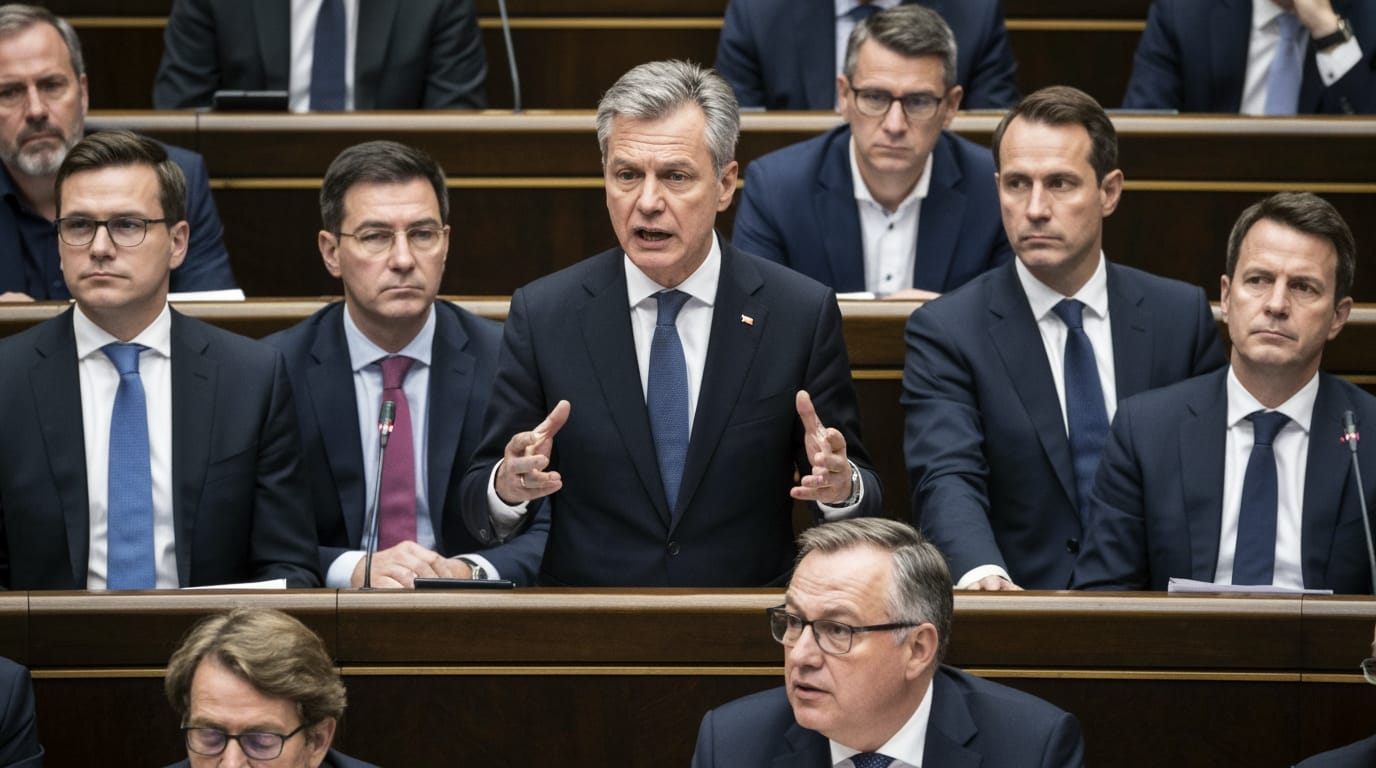
BERLIN, Germany – A proposal by Germany's Christian Democratic Union (CDU) to tighten regulations surrounding medical sick notes, particularly the abolition or restriction of telephone consultations for short-term illnesses, has triggered a significant backlash from labor unions, medical associations, and even government coalition partners. The conservative party argues that the current system, particularly the practice of obtaining a sick note over the phone, contributes to a high number of sick days, potentially undermining economic productivity in the nation. This push for reform comes amidst a broader economic climate where Chancellor Friedrich Merz and other CDU leaders have expressed concerns about Germany's overall work ethic and economic performance.
The CDU's Drive for "Practical Solutions"
Federal Health Minister Nina Warken (CDU) and Chancellor Friedrich Merz (CDU) have signaled their intent to review the existing law that permits doctors to issue sick notes via telephone. The CDU's primary motivation for this proposed change is to reduce the number of sick days taken by employees each year, which they believe is excessively high. Chancellor Merz has voiced concerns that the current system could be exploited, stating that incentives are needed for people to perform their jobs and questioning whether Germans still merit their reputation as diligent workers given the number of sick days. He has also linked the review to broader efforts to stimulate Germany's economy, which has experienced a period of stagnant growth since 2022. At a recent party congress, the party's motion book included "potential restrictions on telephone-based sick notes" as a key debate point. Merz has underscored the importance of enhanced economic productivity for the nation's future.
Germany's Established Sick Leave System Under Scrutiny
Germany boasts a comprehensive and historically robust system for sick leave, rooted in the Continued Remuneration Act (Entgeltfortzahlungsgesetz). Under this legislation, employees who have been with their employer for at least four weeks are entitled to full pay for up to six weeks per illness, directly from their employer. Should an illness extend beyond this period, statutory health insurance steps in, providing sickness benefits equivalent to 70% of the employee's salary for up to 78 weeks within a three-year timeframe. Typically, a medical certificate, commonly known as a sick note, is mandated after three consecutive calendar days of absence; however, individual employers retain the discretion to request this documentation much earlier, even from the first day of illness, a condition often outlined in employment contracts.
The contentious provision allowing sick notes to be issued via telephone was initially introduced during the COVID-19 pandemic as a measure to curb the spread of infection. This temporary rule proved effective in reducing patient traffic at doctor's offices and was subsequently made a permanent fixture in late 2023 by then-Health Minister Karl Lauterbach (SPD). These remote consultations allow doctors to issue sick notes for short-term illnesses, generally capped at five days, primarily for patients already known to their practice. Since 2023, for those with public health insurance, these sick notes are often transmitted digitally to employers, streamlining the process.
Broad Opposition Challenges CDU's Stance
The CDU's proposal has encountered a formidable wall of opposition, uniting labor unions, medical professionals, and other political parties. The German Trade Union Confederation (DGB) has been particularly vocal, condemning the initiative as an affront to workers. Jasmin Fahimi, the DGB leader, characterized the CDU's stance as "highly indecent," arguing it places employees under general suspicion and treats them as potential "shirkers and slackers". The DGB emphasizes that punitive measures against sick employees or pushing for later retirement will not generate new employment opportunities.
Medical associations, too, have largely expressed skepticism. Markus Beier, chairman of the Association of General Practitioners, points to evaluations by health insurance companies which consistently show that telephone-issued sick notes do not correlate with an increase in abuse of sick leave. He further highlights that these remote notes are limited to five days and are typically only available to established patients. Former Health Minister Karl Lauterbach (SPD) has warned that abolishing telephone consultations would be "counterproductive," as it would likely lead to overcrowded waiting rooms in doctor's surgeries, straining an already stretched healthcare system. While some medical figures, like Andreas Gassen from the Association of Doctors in the Health System, acknowledge the possibility of abuse and the difficulty in assessing true incapacity remotely, many doctors' groups have advocated for further relaxation of sick note rules, suggesting an extension of self-certification periods to alleviate pressure on their practices.
Even within the current government coalition, the Social Democrats (SPD), a junior partner, have voiced strong reservations. They argue that compelling individuals with short-term illnesses to visit a doctor in person would constitute "harassment". The coalition agreement itself mentions changes to the telephone sick leave system to prevent abuse, rather than outright abolition, suggesting a more nuanced approach than the CDU's current proposal. The Left Party has similarly rejected the CDU's narrative, contending that elevated sick leave rates are symptoms of underlying issues such as workplace overload, understaffing, and unfavorable working conditions, rather than a deficiency in employee work ethic. Public sentiment also appears to lean against the CDU's position; a recent ZDF poll indicated that a significant majority of Germans believe they are "already working enough," with only 20% agreeing with the CDU's premise that people are working too little to boost the economy.
Economic Realities and the Human Element
The debate is framed against the backdrop of Germany's current economic performance and recent sick leave statistics. Data from DAK-Gesundheit shows that employees in Germany took an average of 19.5 sick days in 2025 and 19.7 days in 2024, measured in calendar days. The Federal Statistical Office (Destatis), using working days, reported a slightly lower average of 14.8 days in 2024. However, an empirical analysis cited by an AOK study suggests that telephone sick notes constitute a marginal proportion, between 0.8% and 1.2% per year, of overall sick leave cases and show "no signs of systematic abuse". This data directly challenges the CDU's assertion that remote consultations are a significant driver of absenteeism.
The conversation also carries a profound human element, touching on issues of trust and historical worker protections. Paid sick leave in Germany is not merely a statutory benefit but a hard-won right, secured through decades of industrial action, including a notable 114-day strike by metalworkers in 1956/57. Any attempt to curtail these rights is therefore met with strong historical memory and a fierce defense of worker solidarity. Critics argue that the CDU's proposals risk alienating the workforce and exacerbating existing tensions regarding work-life balance and economic expectations.
A Contentious Path Forward
As the CDU pushes for its proposed reforms, the path ahead appears fraught with contention. While the party emphasizes the need for "practical solutions" to boost the economy and improve productivity, the widespread opposition highlights deeply ingrained concerns about workers' rights, the burden on the healthcare system, and a potential erosion of trust between employers and employees. The debate over sick notes by telephone has evolved beyond a simple administrative adjustment, becoming a symbol of a broader philosophical clash over the nature of work, welfare, and economic responsibility in Germany. The outcome of this discussion will undoubtedly shape not only Germany's labor laws but also the relationship between its political leadership and its working population.


