Germany's Conservative Coalition Grapples with Widespread Dissatisfaction in First Year
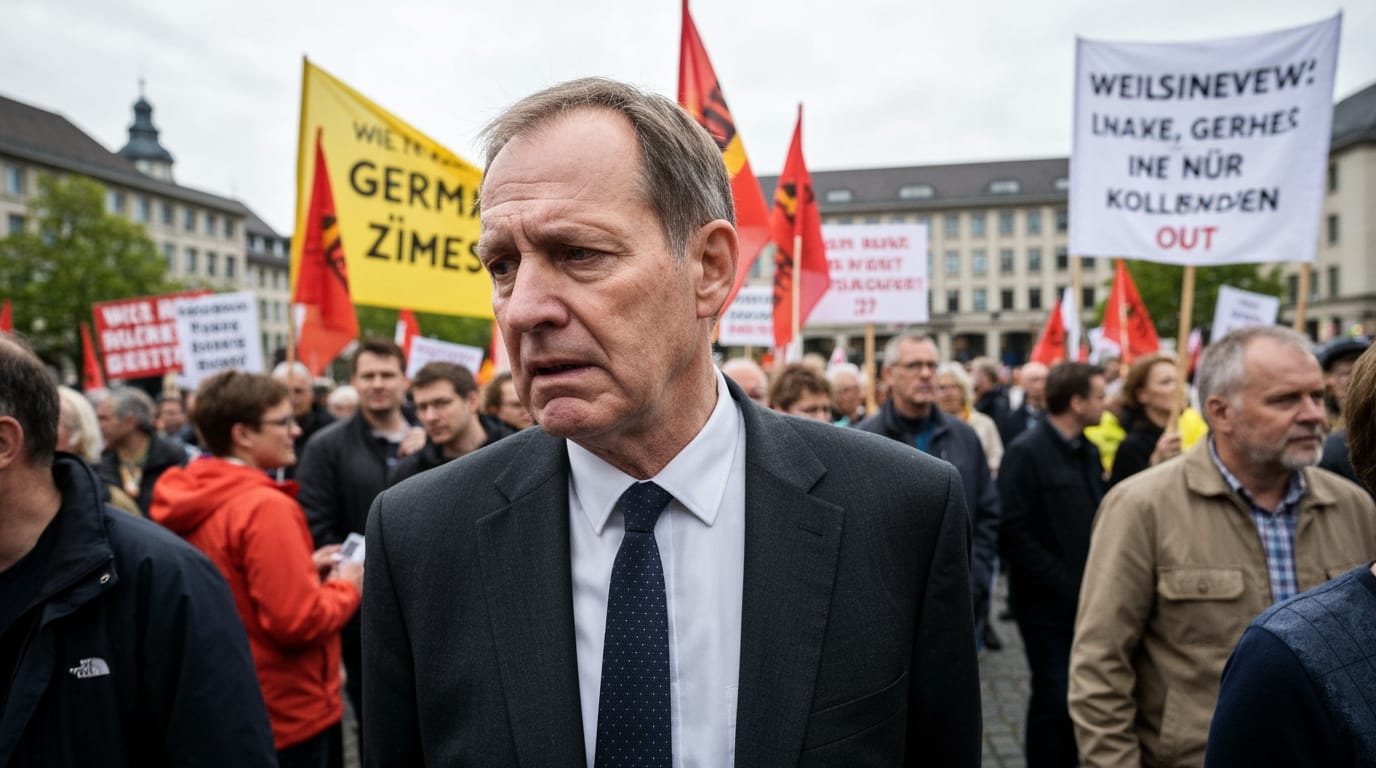
BERLIN – A profound sense of disillusionment has gripped Germany, with a majority of its citizens expressing little confidence in the current governing coalition, led by conservative Chancellor Friedrich Merz. As the administration marks its first year in office, recent polls reveal that over half the country anticipates an early collapse of the government, signaling deep public skepticism and mounting pressure on the nation's leadership.
Chancellor Merz, a conservative Christian Democrat, assumed office on May 6, 2025, forming a coalition with the center-left Social Democrats. His tenure began under a cloud of instability, marked by a challenging first round of parliamentary voting that immediately raised doubts about the coalition's longevity. One year into its term, this conservative-led government finds itself struggling to gain public trust. A YouGov poll conducted recently indicated that a significant 55% of respondents do not believe the coalition will endure its full term until 2029. Only a mere 10% of those surveyed rated the government's performance as good, while a substantial 69% described it as poor. This sentiment underscores a broad-based desire for change, with nearly a third of Germans, 29%, favoring a minority government as a preferable alternative to the current setup.
A Leadership Tested by Crises
Merz's first year as chancellor has been characterized by a series of crises, gaffes, and internal friction that have left his administration "stuck in the mud," according to political observers. His personal approval ratings have plummeted to historic lows, with a Morning Consult survey placing him as the second-least popular among 24 democratically elected world leaders, achieving only a 19% approval rating. This figure aligns with other polls showing Merz as the least popular German chancellor on record, with his approval hovering around 21% after a year in power. The perception of strategic helplessness in the face of compounding domestic and international challenges has become a defining feature of his government.
The economic landscape has been a significant contributor to public discontent. Germany's economy continues to falter, with key sectors like the vital car industry facing considerable pressure from international tariffs and heightened global competition. Furthermore, the social welfare system is grappling with an impending demographic crunch, adding another layer of complexity to the government's challenges. While the previous "traffic light coalition" under Olaf Scholz faced criticism for focusing on niche issues and failing to address the concerns of the broader population, Merz's government has similarly struggled to implement swift and effective reforms. The current administration has also been plagued by internal disagreements and infighting, further eroding public confidence and the perception of unified leadership.
The Shadow of the Far-Right and Political Crossroads
The prevailing dissatisfaction with the conservative-led coalition has created fertile ground for alternative political forces, most notably the far-right Alternative for Germany (AfD). The AfD has seen a surge in support, surpassing the conservatives in several recent polls and rising to the top in others. This rise poses a significant threat to Germany's established political order and has intensified the pressure on mainstream parties.
The prospect of a snap election, however, is widely viewed with trepidation across the political spectrum. Political analysts suggest that new federal elections would be akin to "hara-kiri" for the parties currently in power, given their declining ratings. Despite frequent internal clashes, both Merz's conservative bloc and the Social Democrats appear committed to maintaining their alliance, primarily to prevent a government collapse that the AfD could exploit to its advantage. This reluctance to face the electorate highlights a profound political impasse: the current government is deeply unpopular, yet an immediate alternative presents its own set of destabilizing risks. Even with the conservative CDU/CSU preparing contingency plans for an emergency government that could potentially see them supporting Chancellor Scholz in return for key ministries, the overarching sentiment within the political establishment is to avoid premature elections.
An Uncertain Future for German Governance
As Germany looks towards an uncertain future, the conservative-led government under Friedrich Merz finds itself at a critical juncture. The widespread public desire for an early end to the current coalition, coupled with the chancellor's historically low approval ratings, paints a picture of a nation yearning for stable and effective leadership. The challenges are multifaceted, encompassing economic stagnation, social pressures, and the rising influence of populist movements. While the ruling parties are seemingly bound together by a mutual fear of empowering the far-right in new elections, this pragmatic alliance does little to assuage the deep-seated public discontent. The ability of Merz's government to navigate these turbulent waters and address the core concerns of the German populace will determine not only its own fate but also the trajectory of German politics in the coming years.


