Rwandan Genocide Suspect Félicien Kabuga Dies in Custody, Eluding Final Verdict
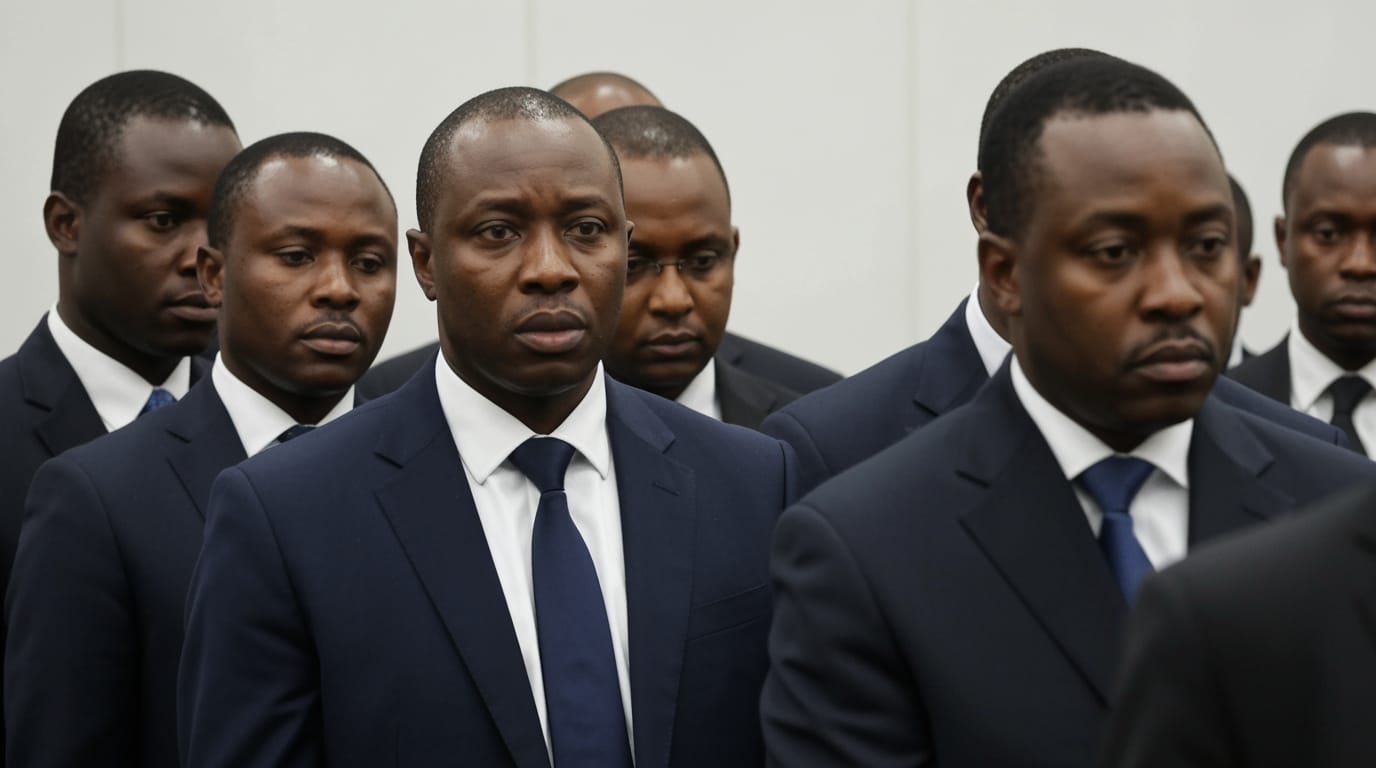
THE HAGUE, Netherlands – Félicien Kabuga, the notorious Rwandan businessman accused of financing the 1994 genocide against the Tutsi, has died at the age of 93 while in custody in The Hague, a United Nations court announced Saturday. His death closes one of the final, high-profile chapters in the international pursuit of justice for the horrific massacres, though it leaves survivors without a definitive judicial verdict on the comprehensive charges he faced. Kabuga, who had spent 26 years as a fugitive before his 2020 arrest, was declared unfit to stand trial in 2023 due to severe dementia, a condition that ultimately brought an indefinite halt to proceedings at the International Residual Mechanism for Criminal Tribunals (IRMCT).
The End of a Protracted Pursuit
Kabuga passed away on May 16, 2026, while hospitalized in the Netherlands, under the care of the United Nations Detention Unit. The circumstances surrounding his death have prompted both Dutch authorities and the President of the IRMCT to launch investigations, with Judge Alphons Orie assigned to lead the tribunal's inquiry. His demise marks the conclusion of a decades-long international manhunt that captivated global attention and underscored the persistence of international justice mechanisms.
Born on March 1, 1933, in Munig, Rwanda, Kabuga amassed considerable wealth through tea farms and other ventures, making him one of the country's richest individuals. He was a key figure within the Hutu Power MRND party, closely linked to President Juvénal Habyarimana, and allegedly part of the Akazu, an informal group of Hutu extremists who played a pivotal role in orchestrating the genocide. Following the 1994 atrocities, in which an estimated 800,000 Tutsis and moderate Hutus were systematically murdered over 100 days, Kabuga vanished. He evaded capture for more than two decades, despite a $5 million bounty offered by the U.S. State Department for information leading to his arrest. His flight took him through various countries, including Switzerland, the Democratic Republic of Congo, and Kenya, where he allegedly continued business operations under false pretenses.
The long arm of justice finally reached him on May 16, 2020, when French police, in a joint investigation with the IRMCT Office of the Prosecutor and support from Interpol, located and arrested him in Asnières-sur-Seine, a suburb near Paris. At the time of his arrest, he was living under a false identity. He was subsequently transferred to the IRMCT's custody in The Hague on October 26, 2020, to face justice.
Architect of Atrocity: The Charges Against Kabuga
Kabuga was indicted by the United Nations International Criminal Tribunal for Rwanda (ICTR) in 1998, with an amended indictment in 2004, on a litany of severe charges. These included genocide, conspiracy to commit genocide, direct and public incitement to commit genocide, and crimes against humanity, specifically persecution, extermination, and murder. He pleaded not guilty to all counts.
Central to the accusations was his alleged role as the primary financier and propagandist for the extremist Hutu Power movement. Prosecutors contended that Kabuga used his vast financial resources and influence to propagate ethnic hatred and incite violence. He was particularly noted for his alleged involvement as the president of the Comité d'Initiative of Radio Télévision Libre des Mille Collines (RTLM), a radio station that became infamous for broadcasting genocidal propaganda, dehumanizing Tutsis, and openly calling for their extermination. The station's broadcasts are widely recognized as having played a critical role in fueling the mass killings. Furthermore, Kabuga was accused of acquiring and distributing weapons, including machetes and hoes, and providing logistical support and transport to the Interahamwe militia, the primary perpetrators of the genocide.
The Unfinished Trial: A Battle Against Time and Health
Kabuga's trial officially commenced on September 29, 2022, nearly three decades after the genocide he was accused of facilitating. However, the legal proceedings were quickly complicated by his advanced age and deteriorating health. In March 2023, the trial was suspended to allow for medical assessments of his mental competency to stand trial.
By June 7, 2023, a panel of judges at the IRMCT ruled that Kabuga was indeed unfit to continue with a conventional trial. Medical reports confirmed he suffered from severe vascular dementia and Alzheimer's disease, rendering him incapable of meaningfully participating in his own defense. This presented the court with an unprecedented challenge: how to proceed with a case of such gravity when the accused was physically present but mentally incapacitated.
The court explored an alternative procedure, akin to a "trial of facts," which would allow for the presentation of evidence and a determination of facts without the possibility of a conviction. The aim was to provide a degree of closure and historical record for victims and survivors. However, in August 2023, the Appeals Chamber ruled that this alternative procedure was incompatible with the Mechanism's Statute and Rules, which necessitate a possibility of conviction for a trial to proceed. Consequently, on September 8, 2023, the proceedings were indefinitely stayed, and Kabuga remained in detention. At the time of his death, he was awaiting provisional release to a state willing to accept him, as he had rejected repatriation to Rwanda, citing safety concerns.
A Complex Legacy for International Justice
Félicien Kabuga's death closes one of the final legal chapters arising from the Rwandan genocide, but without the definitive judgment many survivors had sought. While his arrest after 26 years as a fugitive was hailed as a significant victory for international justice, affirming that those responsible for heinous crimes cannot escape accountability indefinitely, his inability to stand full trial due to his health leaves an undeniable void.
For victims and their families, the news of Kabuga’s death may evoke mixed emotions. Many had hoped for a public accounting of his actions in court, a formal recognition of his alleged role in their suffering, and a final conviction that could offer a measure of justice. His death before a verdict, despite the overwhelming evidence gathered against him, means that he will never be legally declared guilty by the international tribunal. This outcome underscores the complexities and inherent limitations of prosecuting elderly defendants afflicted by severe illnesses, particularly when the pursuit of justice spans decades.
The IRMCT, established to conclude the remaining work of the ICTR and the International Criminal Tribunal for the former Yugoslavia, continues to pursue the last few fugitives from the Rwandan genocide. Kabuga's case serves as a poignant reminder of both the resilience of international law enforcement and the often-protracted nature of achieving full justice for crimes against humanity. His legacy will remain etched in history as a symbol of the destructive power of incitement and the enduring struggle for accountability in the wake of genocide.


