Germany's Defense Overhaul: Are Billions Buying the Right Future?
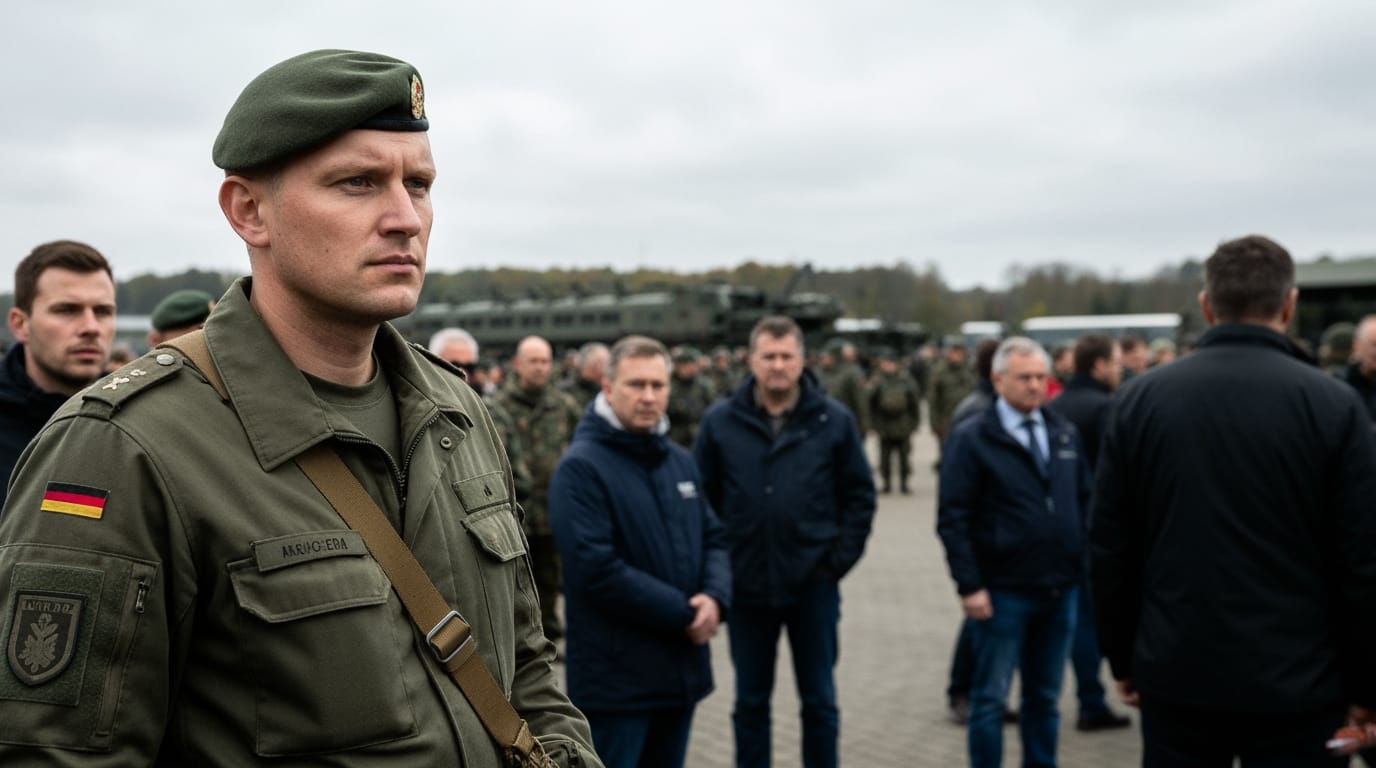
BERLIN – In a monumental shift for its post-Cold War military posture, Germany is pouring unprecedented billions into its armed forces, known as the Bundeswehr. Sparked by Chancellor Olaf Scholz's "Zeitenwende" (turning point) declaration following Russia's 2022 invasion of Ukraine, the nation has embarked on its largest military modernization effort in decades, aiming to transform its defense capabilities and meet stringent NATO commitments. With defense spending skyrocketing and ambitious procurement plans underway, the critical question remains: Is Germany investing its vast new resources in the right weapons and strategies to effectively counter modern threats and secure its future?
A Financial Tidal Wave Reshapes German Defense
For years, Germany faced international criticism for its anemic defense spending. That era is definitively over. In 2026, Germany's defense budget reached an estimated $114 billion (€108.2 billion), marking a 24% year-over-year increase from 2025 and, for the first time since 1990, exceeding NATO's 2% of GDP spending target. This surge is largely fueled by the initial €100 billion special defense fund announced in 2022, designed to rapidly address critical shortfalls in the Bundeswehr. Projections indicate further increases, with spending expected to hit €152 billion by 2029, and a long-term goal of allocating 3.5% of GDP to core military capabilities by 2035, part of a broader 5% target including critical infrastructure resilience. This financial commitment underpins a comprehensive €350 billion long-term modernization plan extending to 2041, focusing on sustained procurement, infrastructure development, and industrial augmentation. To expedite this massive undertaking, the Bundestag passed the Armed Forces Planning and Procurement Acceleration Act in January 2026, aiming to streamline traditionally cumbersome acquisition processes.
Modernizing Across Domains: Key Procurement Highlights
Germany's investment strategy is broad, touching all facets of its military. A major priority is the establishment of a multi-layered air defense shield. Berlin is a leading force behind the European Sky Shield Initiative (ESSI), committing €34.2 billion to aircraft, missile systems, and integrated air defense infrastructure. Key systems being acquired include the Arrow 3 for high-altitude ballistic missile interception, and the IRIS-T SLM, designed to protect against fighter jets, helicopters, drones, and cruise missiles at medium ranges. Additionally, Patriot systems are being upgraded, and 561 Skyranger 30 air-defense systems are planned.
In the air, Germany is acquiring F-35A stealth fighter jets to fulfill its NATO nuclear-sharing obligations and enhance interoperability with allies, with at least 15 jets part of immediate procurement plans. The Bundeswehr is also bolstering its air superiority with an order for twenty additional Eurofighter Typhoons.
For its land forces, significant investments are targeting armored capabilities and infantry modernization. Several hundred upgraded Leopard 2 main battle tanks are on order, alongside 200 additional Puma infantry fighting vehicles (IFVs), with a €1.4 billion investment dedicated to the PUMA fleet, and 687 Puma IFVs included in long-term plans. The army is also set to receive up to 5,000 Boxer armored personnel carriers (APCs) and 3,500 new-generation Fuchs replacements, with 200 Boxer APCs ordered in late 2025. Artillery is undergoing modernization, incorporating PULS rocket artillery systems and self-propelled howitzers with increased range. Infantry soldiers are seeing a significant boost with a €1 billion framework agreement for the "Infantry Soldier of the Future – Enhanced System" (IdZ-ES), providing advanced kits and equipment for 8,600 soldiers across 237 platoon systems. Furthermore, long-range strike capabilities are being enhanced with renewed efforts to purchase US-made Tomahawk cruise missiles.
Beyond traditional domains, Germany is heavily investing in future warfare capabilities. A military space program, launched in April 2026, commits €35 billion by 2030 to bolster cybersecurity, develop satellite constellations and early-warning systems, and ensure independent space operations. German satellite manufacturer OHB is collaborating with Airbus and Rheinmetall to establish a national military satellite network. The Bundeswehr is also prioritizing unmanned systems, including drones, reconnaissance assets, and the development of laser weapons for defense against drones, with loitering munitions being procured from both established and newer defense technology companies. Critical ammunition shortages, highlighted by ongoing conflicts, are being addressed with a €70.3 billion allocation for increased production.
Navigating Challenges and Scrutiny
Despite the impressive financial commitments and significant procurements, Germany's defense overhaul is not without its critics and challenges. Concerns persist regarding the underlying structural issues within the Bundeswehr, such as persistent ammunition shortages, outdated maintenance protocols, and ongoing personnel shortfalls, which some argue cannot be resolved by increased spending alone. Long-term solutions, according to experts, necessitate comprehensive financial and organizational reforms.
A notable critique points to Germany's pace in adopting truly innovative "new-paradigm" systems. While spending has surged, only about 12% of it is dedicated to these advanced capabilities, a share that has actually declined between 2020 and 2026. This contrasts with countries like Poland, which have increased both the absolute amount and the share of procurement for such systems. This slower transformation is partly attributed to a perceived lack of a cohesive strategic vision for Germany's defense, with its strategy endorsed only by the defense minister and lacking clear reflections on lessons from modern warfare or a defined role outside a US-led NATO.
Bureaucratic hurdles also remain a concern. Despite legislative efforts to accelerate procurement, many of the entrenched rules and processes hindering rapid acquisition have yet to fundamentally change, potentially slowing down the integration of new equipment. Furthermore, a strong "home bias" in procurement often sees Germany favoring domestic or EU suppliers, which some argue might stifle innovation by limiting access to cutting-edge global technologies. European partners have at times criticized Germany for "going solo" in its procurement decisions. The German defense industry itself faces challenges, including a limited pool of skilled labor, even as it invests heavily in expanding production capacity.
A crucial long-term concern is the sustainability of funding beyond the initial €100 billion special fund, which is expected to be fully utilized by the end of 2027 or 2028. Defense Minister Boris Pistorius has advocated for even higher defense spending targets and for military expenditures to be exempt from Germany's constitutional debt brake, underscoring the ongoing debate about sustained financial commitment.
A Future-Ready Bundeswehr?
Germany's "Zeitenwende" has undoubtedly catalyzed an unprecedented rearmament effort, rapidly transforming the Bundeswehr's capabilities across air, land, sea, cyber, and space domains. The nation is acquiring state-of-the-art platforms and systems essential for conventional deterrence and alliance interoperability, from F-35 fighter jets and advanced air defense networks to upgraded armored vehicles and cutting-edge space capabilities. These investments directly address long-standing deficits and underscore Germany's renewed commitment to its role within NATO and European security.
However, the effectiveness of these investments in truly future-proofing the Bundeswehr hinges not just on the volume of spending, but on the agility and strategic foresight with which these resources are deployed. While significant strides have been made in rectifying historical underinvestment in conventional hardware, ongoing debates about bureaucratic efficiency, the pace of adopting innovative "new-paradigm" technologies, and the need for a more coherent overarching defense strategy highlight areas for continued focus. As Germany strives to become the "strongest conventional army in Europe" by 2039, the ultimate measure of success will be its ability to not only fill current gaps but also to dynamically adapt to the evolving landscape of global security threats.


