Germany's Democratic Paradox: Deep Approval, Growing Discontent Challenges Nation's Stability
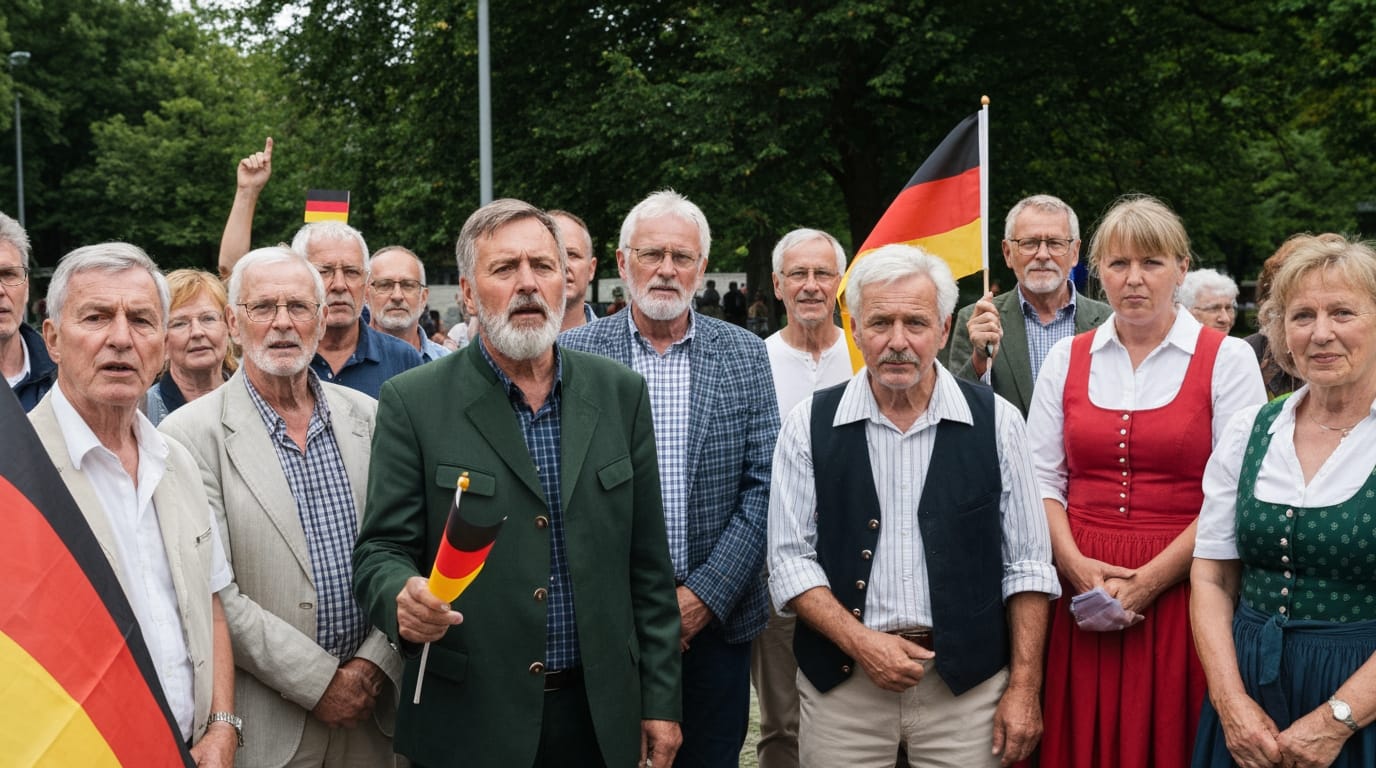
BERLIN, Germany – A profound paradox is gripping Germany, Europe's economic powerhouse. While an overwhelming majority of Germans steadfastly uphold the principles of democracy, a surging wave of discontent suggests a deepening disillusionment with how their democratic system actually functions. Recent surveys paint a picture of a nation that cherishes its fundamental political freedoms yet harbors significant distrust in the very institutions tasked with safeguarding them, posing substantial challenges to the country's political stability and future direction.
The chasm between democratic ideals and practical realities has widened dramatically in recent years. Polls indicate that nearly all Germans, an impressive 98 percent, express positive views regarding the concept of democracy. This unwavering commitment to democratic values underscores a foundational consensus within society. However, this strong theoretical approval stands in stark contrast to the public's waning satisfaction with the operational efficacy of Germany's political landscape. A study released in late 2024 revealed that only 42.3 percent of Germans were content with how democracy functions within the Federal Republic, marking a notable decline from 57.7 percent just two years prior. This figure represents the lowest point recorded since the Leipzig Authoritarian Study began tracking these sentiments in 2006.
This growing dissatisfaction is not merely a generalized unease but is sharply focused on specific political institutions. Trust in key government bodies and figures has plummeted to alarming lows. A Forsa Institute survey from 2023 indicated that a staggering two-thirds of Germans no longer trust the institutions of "Federal Chancellor" and the "Federal Government." This represented a drop of 24 and 22 percentage points, respectively, compared to the previous year. The Bundestag, Germany's federal parliament, fared little better, with 63 percent of respondents expressing a lack of trust. Furthermore, political parties registered as the least trusted among ten major institutions surveyed, with only 17 percent of Germans nationwide believing they effectively represent their interests. Even the European Union and its institutions saw a decline, with trust falling to 31 percent. The German Civil Servant Association (dbb) further reinforced these findings in early 2024, reporting that a mere 27 percent of Germans trust the state to fulfill its responsibilities—a record low since the survey's inception in 2017. This pervasive erosion of confidence highlights a critical moment for German governance.
The roots of this widespread disillusionment are multi-faceted, stemming from a combination of perceived policy failures, bureaucratic inefficiencies, and political instability. Germans express particular dissatisfaction with the state's performance in critical areas such as asylum and refugee policy, education policy, and climate and environmental policy. Many respondents also voiced frustration over the practicalities of engaging with public authorities, citing long waiting times, complex procedures, and outdated technology. Adding to the public's concern is the perceived political uncertainty and instability that has characterized recent years. The coalition government, comprising the Social Democrats (SPD), Greens, and Free Democrats (FDP), faced criticism for internal disagreements and scandals since taking office in early 2022. Chancellor Olaf Scholz himself has been scrutinized for a perceived lack of communication and leadership skills. This environment has fostered a widespread feeling among citizens that the nation is caught in a "Problemstau," or a traffic jam of unresolved issues, including a stuttering economy, challenges with illegal immigration, and perceived failings in crime prevention. Many believe that politicians are "paralysed by infighting" and that the financial and social burdens of these accumulating problems are disproportionately falling upon ordinary citizens.
Regional disparities further complicate the picture of democratic satisfaction in Germany, with a notable divide observed between eastern and western parts of the country. A Deutschland-Monitor study released in January 2025 indicated that four in ten Germans are unhappy with the functioning of democracy, with dissatisfaction levels significantly higher in the eastern regions. Specifically, 53 percent of eastern Germans expressed discontent, compared to 36 percent in western regions. Social Democrat MP Carsten Schneider attributed this disparity, in part, to eastern Germans feeling undervalued 34 years after reunification and underrepresented in decision-making positions. This sentiment is particularly pronounced in economically disadvantaged areas of eastern Germany, where dissatisfaction reaches 56 percent, underscoring a clear correlation between democratic trust and economic hardship. Beyond regional differences, a persistently pessimistic mood pervades the general population. Surveys from 2024 revealed that a good half of German citizens (54 percent) are worried about their own future, with low-income individuals (72 percent) and women (59 percent) being particularly affected. Global crises, such as the war in Ukraine, the subsequent energy crisis, the significant increase in the cost of living, and rising migration figures, have profoundly impacted citizens' trust in democracy and its institutions.
This environment of growing dissatisfaction and eroding trust has created fertile ground for the rise of populist political movements. The far-right Alternative for Germany (AfD) has emerged as a significant force, doubling its vote share to become the second-largest party in the February 2025 federal election. The AfD also made substantial gains in state elections in Thuringia, Saxony, and Brandenburg in 2024. Concurrently, the newly founded left-wing populist Sahra Wagenknecht Alliance (BSW) has also gained traction, capitalizing on widespread frustration with mainstream politics. These developments raise concerns about the resilience of German democracy, particularly as the "firewall policy," which traditionally sought to exclude the AfD from government coalitions, faces increasing pressure. The collapse of the "traffic-light coalition" government in late 2024, following internal disputes and leading to snap elections, further underscored the political instability facing the nation. Studies reveal that a notable segment of the population, approximately 8 percent, adheres to a "fundamentally right-wing far right world view," contributing to anxieties about the mainstreaming of extremist views. The ability of Germany's political system to navigate these internal divisions and external pressures will be crucial in determining the future trajectory of its democracy.
In conclusion, Germany finds itself at a critical juncture, navigating the complex interplay between a deep-seated commitment to democratic ideals and a growing disillusionment with the practical functioning of its political system. The pervasive decline in public trust across government institutions, fueled by perceived policy shortcomings, bureaucratic hurdles, and sustained political instability, presents a formidable challenge. Coupled with significant regional disparities in satisfaction and the rising influence of populist movements, the nation faces an imperative need to restore confidence. The future stability of German democracy hinges on the capacity of its leaders and institutions to effectively address these profound concerns and bridge the widening gap between the aspirations of its citizens and the perceived realities of their governance.


