Germany's Gas Reserves Under Scrutiny Amid Shifting Energy Landscape
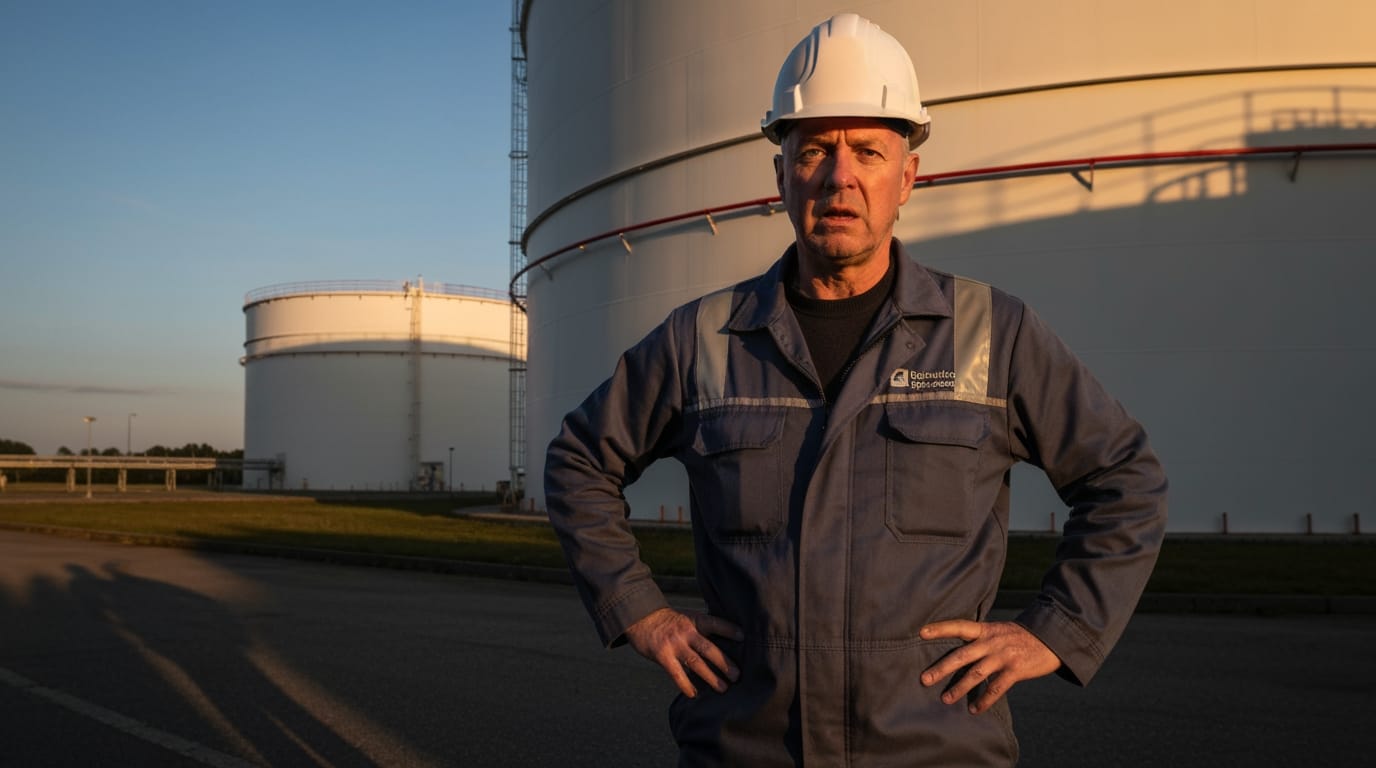
Germany's vital natural gas reserves are once again at the center of a national debate as the country navigates a complex energy landscape transformed by geopolitical upheaval and an accelerated shift away from traditional supply routes. Despite significantly lower storage levels compared to previous years, government officials maintain confidence in the nation's energy security, citing robust diversification efforts and newly established liquefied natural gas (LNG) infrastructure. However, the current figures, particularly amidst a cold winter, are raising concerns among some analysts and political observers, highlighting the ongoing challenges in safeguarding a stable energy supply for Europe's largest economy.
The New Reality of German Gas Storage
As of late January and early February 2026, Germany's natural gas storage facilities registered levels around 35%, with some reports indicating as low as 32.9% by February 1. This marks a noticeable decrease from previous years and places European gas stocks at their lowest point since the energy crisis of 2022. Germany boasts the largest natural gas underground storage capacity in the European Union, ranking fourth globally, capable of holding approximately 23 to 24.6 billion cubic meters of gas. This extensive capacity is crucial for balancing seasonal demand fluctuations. In response to the 2022 energy crisis, the German government implemented legal requirements mandating storage levels to reach 85% by October 1 and 95% by November 1 each year, with a minimum of 30% by February 1. While these targets were met ahead of schedule in 2023 and 2024, the current decline underscores the impact of heightened winter demand and evolving market dynamics.
The Federal Ministry of Economic Affairs and Climate Action and the Federal Network Agency have publicly expressed assurance that despite the reduced storage, Germany's gas supply remains secure. They argue that the availability of alternative supply routes and the operational flexibility provided by new LNG terminals lessen the singular reliance on stored gas levels as the primary indicator of security. Nevertheless, critics contend that earlier, more proactive measures to replenish reserves could have mitigated current anxieties.
From Russian Dependency to Global Diversification
Germany's current energy strategy is largely a direct consequence of the 2022 Russian invasion of Ukraine, which abruptly exposed the vulnerabilities of its previous reliance on Russian pipeline gas. Prior to the conflict, Russia supplied over half of Germany's natural gas imports. This profound dependency necessitated a radical and costly pivot towards diversification. The response involved an accelerated development of new import infrastructure and a fundamental shift in procurement strategies.
A cornerstone of this diversification has been the rapid construction of floating liquefied natural gas (LNG) terminals (FSRUs) along Germany's North Sea and Baltic Sea coasts. Facilities in Wilhelmshaven, Brunsbüttel, Lubmin, and Mukran have quickly become operational, with four state-owned terminals now playing a significant role in the country's import capabilities. These terminals provide crucial flexibility, allowing Germany to import gas more readily throughout the year, which in turn reduces the urgency for early, extensive storage filling. LNG imports through German terminals constituted 8% of total gas imports in 2024 and between 16-17% in 2025. The United States has emerged as a dominant supplier, accounting for over 90% of Germany's direct LNG imports. Simultaneously, Norway has stepped up to become Germany's largest pipeline gas supplier, providing between 45% and 48% of total imports in 2024 and 2025, complemented by supplies from the Netherlands and Belgium.
Evolving Consumption and Economic Pressures
Germany's natural gas consumption patterns have also undergone significant changes. Following a 21% decline between 2021 and 2023, primarily driven by energy-saving campaigns, higher prices, and mild weather, consumption saw a 3.5% increase in 2024 compared to 2023. However, this rebound still left consumption 14% below the average levels observed between 2018 and 2021. While household and commercial gas demand, largely for heating, decreased in 2024, industrial consumption saw a slight recovery, reflecting the nuanced challenges faced by Germany's energy-intensive industries. Projections indicate a further decline in overall gas consumption by at least 20% by 2032, driven by ongoing energy transition efforts and enhanced efficiency measures.
The economic repercussions of the energy transition and the diversification strategy have been substantial. The shift away from cheaper Russian gas to more expensive alternative sources, particularly LNG, has contributed to elevated energy prices. These persistently high costs have fueled inflation and placed considerable pressure on Germany's industrial sector, prompting concerns about potential industrial relocation. As Europe's largest economy, largely reliant on natural gas for manufacturing, Germany's energy situation has an outsized effect on both gas availability and economic performance across the European Union.
Looking Ahead: Balancing Act and Policy Shifts
The German government's confidence in its energy supply security hinges on a multi-pronged approach that combines diversified imports, a robust LNG infrastructure, and continued efforts in demand management. Officials indicate that even with lower storage levels at the beginning of February 2026, there is adequate infrastructure and supply flexibility to navigate the remaining winter months, assuming no unforeseen disruptions or prolonged extreme cold spells. However, the current situation underscores the sensitivity of the system to unexpected events, such as cold snaps that can rapidly deplete reserves and trigger price volatility.
In a forward-looking move, Germany is reportedly preparing to advocate for the discontinuation of EU gas storage targets once they expire in 2027. Instead, it proposes an alternative strategic reserve system managed at the national level. This potential shift reflects a desire for greater flexibility, acknowledging that the newly established LNG infrastructure offers different operational paradigms compared to the pre-2022 supply model.
Ultimately, Germany continues to perform a delicate balancing act. The nation aims to ensure immediate energy security, foster long-term sustainability through a rapid transition to renewable energy sources, and manage the economic implications for its industries and citizens. While the immediate crisis of a potential Russian gas shutoff has been averted, the ongoing test of Germany's gas reserves highlights a continuous evolution in its energy policy, marked by strategic adaptations, significant investments, and an enduring vigilance against global market volatilities and geopolitical uncertainties.