Germany's Industrial AI Ambition: A Bid for Global Leadership Amidst US-China Tech Rivalry
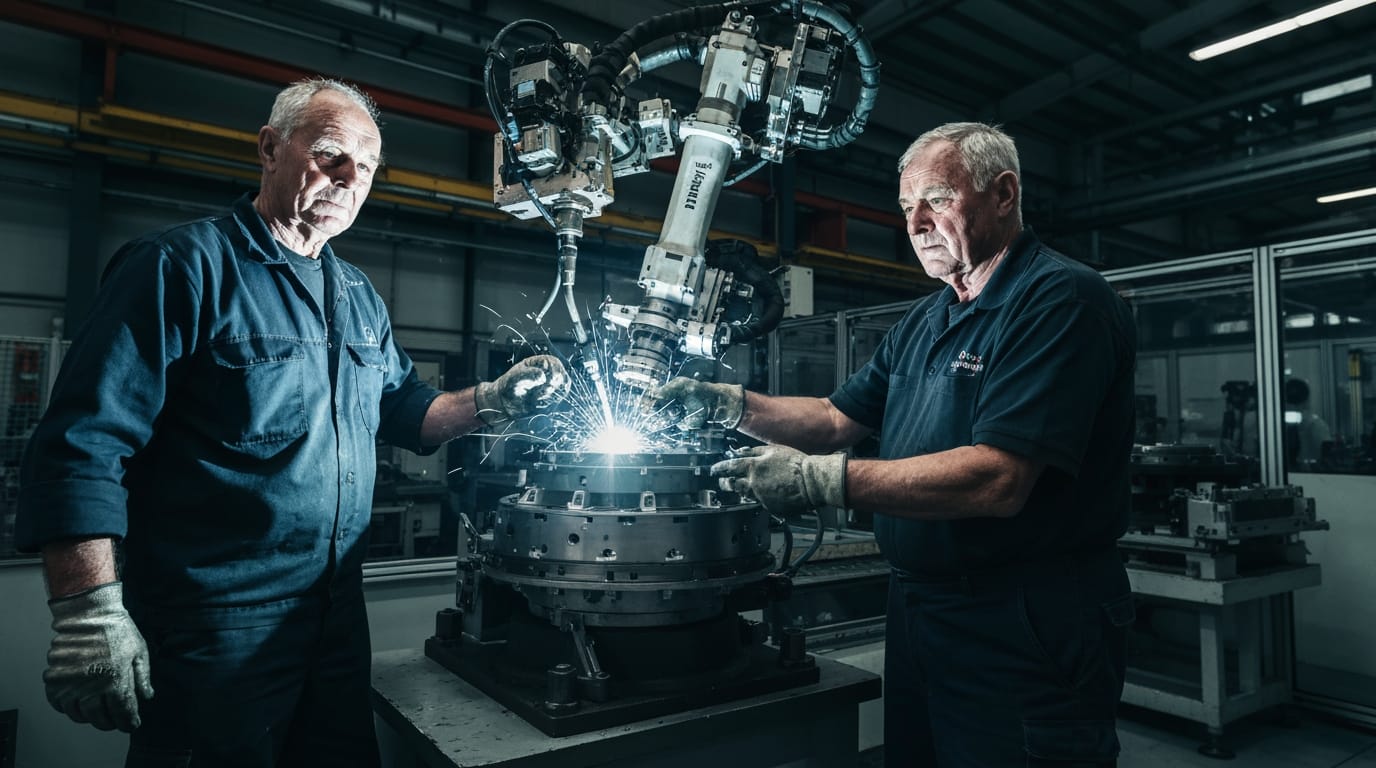
Germany, long revered as the industrial heartland of Europe, is strategically positioning itself to leverage Artificial Intelligence (AI) as a crucial tool for economic resilience and global competitiveness. As the world navigates a rapidly evolving technological landscape dominated by the AI advancements of the United States and China, Germany is channeling its engineering prowess and manufacturing heritage into industrial AI, seeking to redefine its future and maintain its economic standing. This concerted effort is not merely an upgrade but a fundamental transformation, aiming to integrate AI across its formidable industrial base to drive innovation and efficiency.
The Imperative of Industrial AI for an Economic Powerhouse
The adoption of industrial AI is becoming an operational necessity for German businesses, driven by escalating global competition, persistent supply chain disruptions, and an increasing demand for efficiency and sustainability. Industrial AI encompasses a spectrum of applications, from smart factories powered by digital twins to intelligent supply chains capable of predicting disruptions and "cognitive production" systems that learn and adapt. These advanced applications include predictive maintenance, robotics control, machine monitoring, and enhanced quality control, fundamentally reshaping the manufacturing sector.
Currently, more than 40% of companies in Germany utilize AI in their operations, with an additional 19% planning to adopt it in the near future. The manufacturing sector leads this technological shift, with approximately 42% of German industrial firms already deploying AI in their production processes. This represents a significant acceleration in AI adoption compared to previous years. The financial implications are substantial, with the German AI market projected to expand from over 9 billion euros in 2025 to 37 billion euros by 2031, reflecting an annual growth rate exceeding 26%. This trajectory underscores AI's emergence as one of Germany's most vital future markets.
Leveraging Core Strengths and Strategic Investments
Germany's journey into industrial AI is built upon a robust foundation of established strengths. The nation boasts a powerful manufacturing base, renowned engineering excellence, and the resilient "Mittelstand"—its network of small and medium-sized enterprises (SMEs) that form the backbone of the economy. Recognizing AI's transformative potential, the German government was among the first globally to establish a national AI strategy in 2018, which was subsequently updated in 2020. This strategy is underpinned by significant financial commitments, including Germany's "High-Tech Agenda 2025," a 5.5 billion euro policy initiative dedicated to promoting "new technologies made in Germany," with a strong emphasis on industrial applications and knowledge transfer projects. Further reinforcing this commitment, the Federal Ministry of Education and Research (BMFTR) plans to invest over 1.6 billion euros in AI during the current legislative period.
A thriving ecosystem of research institutions, technology companies, and public-private collaborations supports Germany's progress in industrial AI. Initiatives such as new industrial AI cloud projects aim to provide manufacturers with advanced computing power and secure data environments, ensuring technological sovereignty. Regional hubs are also driving localized AI adoption, with cities like Stuttgart, a key center for the automotive sector, seeing companies like Bosch and Siemens implement AI-driven quality control and production optimization. Bavaria has emerged as a dynamic AI region, backed by over 2 billion euros in state funding and more than 100 new AI professorships. North Rhine-Westphalia's AI.NRW initiative further connects research and industry, generating hundreds of millions in value creation since 2020.
The Global AI Arena: A Two-Front Competition
Germany's industrial AI aspirations unfold within a competitive global landscape primarily shaped by the United States and China. The US maintains a dominant position, propelled by its tech giants such as Google, OpenAI, Microsoft, and Amazon. Its strengths lie in robust private investment, which reached 150.8 billion US dollars in 2024, unparalleled academic research output, and a substantial lead in producing frontier AI models, with 40 compared to China's 15. The US also excels in advanced AI chips, cutting-edge AI software, and large language models, with a strategic focus on Artificial General Intelligence (AGI).
Conversely, China has rapidly emerged as a formidable AI power, driven by centralized government support, ambitious funding targets, and a vast repository of data. Beijing's "Made in China 2025" initiative has significantly propelled AI integration into the manufacturing sector. China now surpasses the US in AI-related academic papers and patent filings, showcasing its commitment to research and innovation. Notably, China is leading in mass-scale AI robotics manufacturing, operating approximately 2 million industrial robots and installing about 295,000 new units in 2024 alone—more than the rest of the world combined. This focus on "embodied AI" in manufacturing, coupled with its leadership in clean energy technologies that power data centers, provides China with distinct advantages. While the US currently holds an edge in certain industrial AI solutions, China's massive investments in AI, 5G, and robotics are rapidly closing the gap. For Europe, and Germany in particular, this dual competition necessitates a strategic approach that emphasizes quality, regulatory frameworks, and robust ecosystem development to differentiate itself.
Confronting Challenges and Charting the Future
Despite its strong foundations and ambitious strategies, Germany faces significant hurdles in fully realizing its industrial AI potential. A notable challenge lies within the Mittelstand, the economic backbone of the nation. A 2026 report indicated that 94% of German Mittelstand firms had not yet implemented AI, primarily due to leadership hesitation and skills shortages, rather than solely data protection regulations. Smaller businesses, while increasingly recognizing AI's potential, encounter greater difficulties in translating interest into practical implementation. Furthermore, a 2025 study revealed that 90% of traditional German asset-heavy industrial firms allocated 5% or less of their IT budgets to AI investments, lagging significantly behind other industries that invest up to 15%.
Integrating AI into existing legacy systems, ensuring high-quality data, and addressing cybersecurity concerns also remain considerable challenges. A persistent skills gap necessitates extensive workforce training to equip employees with the necessary digital competencies to collaborate effectively with AI technologies. Data availability is another bottleneck, hampered by personal data protection concerns and limited access to industrial and open government data. The European Union's regulatory landscape, including the AI Act, while fostering trust and ethical standards, can also present a perceived bureaucratic burden for some enterprises.
To overcome these obstacles, Germany is pursuing a multi-pronged approach. Public-private partnerships, substantial government investment in AI, and collaborations with global tech leaders are crucial. The EU's "Apply AI Strategy," launched in October 2025, aims to accelerate AI adoption across strategic sectors, support SMEs, foster innovation, and reduce reliance on foreign technologies, backed by a 20 billion euro commitment to AI gigafactories. The Mittelstand is increasingly adopting "agentic AI" for pragmatic applications such as process optimization and predictive maintenance, focusing on augmenting human labor rather than replacing it. Crucially, successful AI adoption in German manufacturing often prioritizes clear leadership intent and a focus on measurable returns on investment, allowing for early wins and building internal trust.
The Path Forward: Quality, Niche, and Collaboration
Germany's strategy in the global AI race extends beyond direct competition, emphasizing a "quality-first" approach and a focus on industry-specific AI applications and open-source solutions, differentiating itself from the more closed models prevalent elsewhere. This nuanced approach recognizes that while Germany may not match the scale or speed of AI development in China or the venture capital influx of the US, it can carve out a leadership position in specialized industrial AI sectors.
The complex trade relationship with China further underscores the intertwined global economy. In 2025, China reclaimed its position as Germany's top trading partner, with bilateral trade reaching 251 billion euros. German car manufacturers, for instance, remain heavily reliant on the Chinese market and are increasingly seeking partnerships with Chinese AI firms to integrate advanced AI into their products. This dynamic highlights a strategic tension between competition and collaboration, where the transfer of know-how and the quest for market access continue to shape Germany's technological trajectory.
Ultimately, Germany's success in industrial AI hinges on its ability to sustain investment, foster a highly skilled workforce, adapt its strong industrial base to new technological paradigms, and strategically navigate the intricate global power dynamics of AI development. By focusing on its inherent strengths, addressing its unique challenges, and selectively collaborating, Germany aims not just to compete, but to lead in the intelligent industrial future.