Germany's New Government Faces Risky Path Amidst Economic Woes and Political Fragmentation
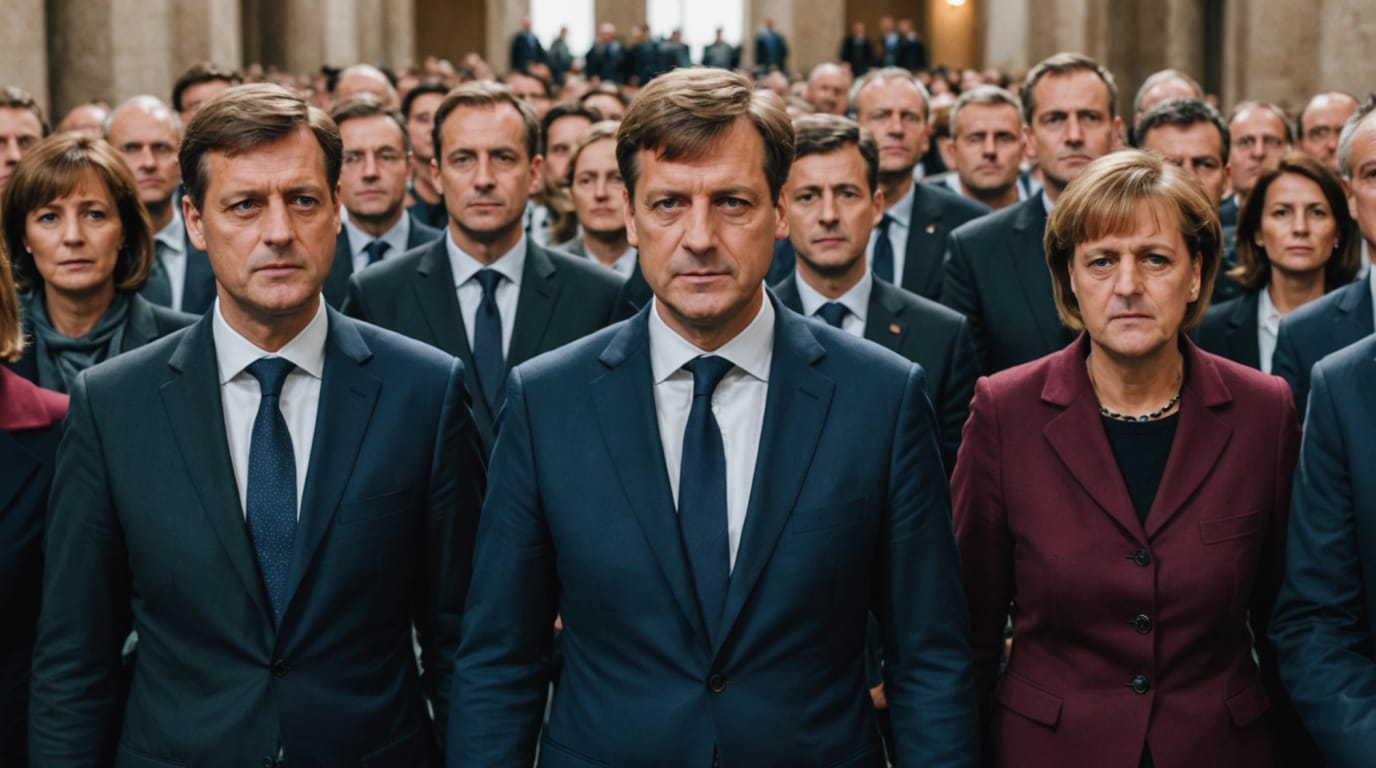
Germany's political landscape has undergone a seismic shift following the snap federal election on Feb. 23, 2025, triggered by the collapse of Chancellor Olaf Scholz's coalition. While the center-right Christian Democratic Union/Christian Social Union (CDU/CSU), led by Friedrich Merz, emerged victorious, the path ahead is fraught with challenges. The new government, likely a grand coalition with the Social Democrats (SPD), faces a daunting task of navigating economic stagnation, rising right-wing populism, and deep divisions over key policy issues.
Coalition Conundrums and the Rise of the Right
The election results revealed a fractured political landscape, with the center ground weakened and the fringes strengthened. The CDU/CSU secured 28.6% of the vote, positioning Merz to become the next Chancellor. However, the SPD experienced its worst performance in over a century, plummeting to 16.4%. The far-right Alternative for Germany (AfD) surged to 20.8%, becoming the second-largest parliamentary group and highlighting a growing trend of political polarization.
Merz has ruled out any alliance with the AfD, leaving a grand coalition with the SPD as the most viable option. Exploratory talks are underway, with the aim of establishing common ground for coalition negotiations. However, deep divisions remain on issues such as fiscal reform, domestic policies, and European integration. The SPD, recovering from its historic defeat, will likely demand significant concessions to secure the support of its base.
The rise of the AfD poses a significant challenge to the new government. The party has successfully tapped into economic anxieties and concerns about immigration, particularly in Eastern Germany. Its growing support base extends beyond its nationalist core, attracting younger voters and making inroads in the West. The AfD's presence in the Bundestag will put immense pressure on the governing coalition, testing its unity and potentially exploiting divisions on key policy issues.
Economic Headwinds and the Debt Brake Debate
Germany's economy is facing its most significant crisis since reunification in 1990. Uncertainty over tariffs has weighed on confidence and domestic demand, leading to a bleak economic outlook for 2025. The government has cut its growth forecast to 0.3%, while the Federation of German Industries (BDI) predicts a further contraction in GDP.
The new government must address key economic issues, including modernizing transportation infrastructure, digitalizing public administration, advancing energy transition, and addressing rising rent prices. A central point of contention is Germany's debt brake (Schuldenbremse), which limits annual structural deficits to 0.35% of GDP.
Merz has highlighted plans for extra spending on defense and infrastructure, which may require reforming the debt brake. However, any reform requires a two-thirds majority in the Bundestag, necessitating support from the Greens and the Left party. While these parties favor reforming the debt brake, they are also against raising defense spending, creating a complex political challenge.
Europe and Foreign Policy: A Shifting Landscape
Germany's role in Europe and on the global stage is also undergoing a transformation. The new government faces a shifting transatlantic relationship, the need to sustain military and financial support for Ukraine, and a fragile economic outlook. Expectations are high for Germany to shape Europe's response to these challenges.
Merz aims to strengthen Germany's existing partnerships, notably with France, Poland, and the UK, invest in German and European defense, and boost the competitiveness of the EU. However, he will face challenges in navigating expected US policies towards the EU and managing trade conflicts.
Defense spending is a key priority for the new government. Germany is committed to the NATO target of spending at least 2% of GDP on defense. However, achieving this target will require finding a substitute for the special off-budget instrument that will run out in 2027 and financing an additional increase in defense spending.
A Risky Gambit for Stability
The formation of a grand coalition between the CDU/CSU and SPD represents a risky gambit for stability in Germany. While it offers the prospect of a stable government with a majority in the Bundestag, deep divisions and competing priorities could undermine its effectiveness.
The rise of the AfD and the fragmentation of the political landscape pose significant challenges to the new government's ability to address Germany's economic woes and navigate a complex geopolitical environment. The success of the coalition will depend on its ability to bridge divides, build consensus, and deliver tangible results for the German people.
As Germany stands at a crossroads, the new government must act decisively to restore economic growth, strengthen social cohesion, and reaffirm its commitment to European integration. The challenges are immense, but so too is the opportunity for Germany to regain its position of leadership and responsibility in Europe and the world.


