Germany's Political Ground Shifts: Far-Right AfD Overtakes Chancellor Merz's Conservatives in National Polling
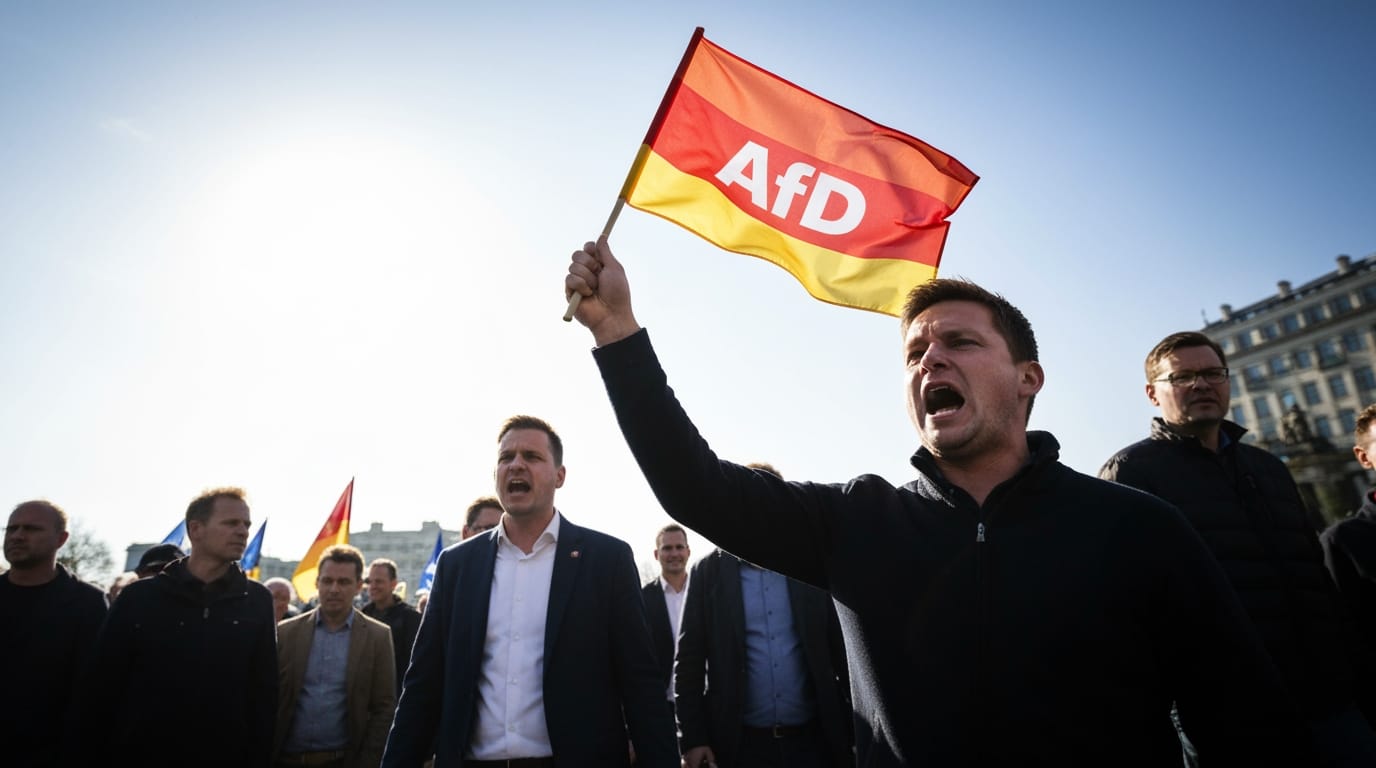
Recent polls indicate a profound reordering of Germany's political landscape, with the far-right Alternative for Germany (AfD) surpassing Chancellor Friedrich Merz's Christian Democratic Union/Christian Social Union (CDU/CSU) bloc to become the nation's leading political force. This unprecedented development reflects deep voter dissatisfaction and poses significant questions for the future of German governance and stability, challenging traditional political norms in Europe's largest economy.
A Historic Electoral Turn
For the first time in recent history, the Alternative for Germany (AfD) has emerged as the frontrunner in national opinion polls, signaling a critical shift in the country's political dynamics. A YouGov poll conducted between April 10 and April 13, surveying 2,178 voters, placed the AfD at 27% support, a one-percentage-point increase from March. In contrast, Chancellor Friedrich Merz's conservative CDU/CSU alliance saw its support drop by three points to 23%, marking its lowest level since December 2021. The margin of error for this poll was 2.5 percentage points.
Other recent surveys corroborate this trend. A Forsa poll indicated the AfD at 26%, one point ahead of the CDU/CSU's 24%. Similarly, a December 2025 Insa poll showed the AfD leading with 27% to the Union's 24.5%, representing the largest gap between the two parties since that polling series began. The ZDF "Politbarometer" also reported the AfD ahead of the CDU/CSU for the first time. These figures underscore a dramatic reversal from just months prior, when an Insa poll in late March showed the CDU/CSU and AfD tied at 26%, and in late February, Merz's bloc had held a slight lead with 26% to the AfD's 25%.
The Erosion of Confidence in Mainstream Politics
The rise of the AfD coincides with a stark decline in public approval for Chancellor Friedrich Merz and his grand coalition government, composed of the CDU/CSU and the Social Democratic Party (SPD). Recent data paints a picture of widespread disillusionment, with Merz facing record unpopularity. A Forsa poll revealed an astonishing 80% dissatisfaction with Merz's performance, marking his lowest personal standing to date. This sentiment is not isolated, as a YouGov survey indicated that 79% of Germans are dissatisfied with the overall performance of the government, a significant increase from 55% in June 2025.
Merz's personal approval rating has plummeted to approximately 20%. Even within his own party's base, satisfaction with the government among CDU/CSU voters dropped from 48% in March to a mere 34% in April. A Morning Consult survey even labeled Merz as the "world's most unpopular democratic leader," with 76% of German citizens expressing dissatisfaction with his chancellorship. Critics point to "full-bodied announcements without consequence," "broken election promises," a "lack of clear line," "contradictory action," and "lack of leadership" as key factors undermining his credibility. Furthermore, Merz has faced criticism for echoing the AfD's populist rhetoric on immigration, despite publicly identifying the far-right party as his primary political adversary.
Unpacking the AfD's Ascent
Several intertwined factors contribute to the AfD's unprecedented surge in popularity. A primary driver is persistent discontent among voters regarding large-scale migration, an issue the AfD has consistently championed with its anti-immigration stance. Beyond immigration, broader economic anxieties, including a stagnant economy, have fueled frustration across the populace. The ongoing war in Ukraine and its associated economic and geopolitical ramifications have also played a role in shaping public opinion.
The AfD has skillfully capitalized on a general dissatisfaction with the current government's performance and perceived internal disputes within the ruling grand coalition. Experts suggest the party effectively exploits global crises and internal conflicts, presenting itself as the only viable alternative to a mainstream political establishment perceived as failing. The narrative that Chancellor Merz has "U-turned" on more right-wing campaign pledges, particularly concerning debt and immigration, has further alienated some conservative voters, many of whom have subsequently migrated from the CDU to the AfD. Polling suggests that roughly 10% of Germans who voted for the CDU in the 2025 election are now considering supporting the AfD. Concerns over the increasing cost of the German welfare state also resonate with a segment of the electorate, allowing the AfD to make inroads with traditional voters who feel neglected by mainstream parties.
Initially founded as a eurosceptic party, the AfD has progressively shifted its focus towards nationalism and stringent immigration policies, a strategy that has garnered significant attention and support.
The Conservative Predicament and Germany's Future
The dramatic shift in polling data presents a formidable challenge for Chancellor Merz and the CDU/CSU as they grapple with regaining public trust and countering the AfD's momentum. Merz assumed the chancellorship on May 6, 2025, after the CDU/CSU emerged victorious in the federal election held in February 2025, subsequently forming a grand coalition with the SPD. His initial platform promised to revitalize Germany's economy, lower taxes, and tighten immigration policies. However, efforts to reform the debt break to fund public investment and increased defense spending were met with disapproval, particularly among AfD voters and a notable portion of CDU supporters who felt his actions contradicted earlier stances.
A significant aspect of German politics has been the "Brandmauer," or "firewall," where all mainstream parties have unequivocally ruled out forming coalition governments with the AfD due to its links to far-right extremism. This firewall has been crucial in isolating the AfD from direct governance. However, the latest polling data reveals a shifting public sentiment, with nearly half of CDU/CSU voters now expressing a preference for case-by-case collaboration with the AfD, and an additional 10% supporting broader cooperation. This growing openness to engagement with the far-right could significantly challenge the integrity of the Brandmauer, potentially leading to political deadlock in upcoming state elections and complicating coalition formations. The AfD's strength, historically rooted in eastern Germany, has increasingly expanded into western regions, solidifying its national presence. With crucial state elections slated for 2026, the current political landscape suggests a tumultuous period ahead for German democracy.
The Alternative for Germany's ascent to the top of national polls marks a profound realignment in German politics, reflecting widespread disaffection with established parties and a turbulent socio-economic climate. The challenges facing Chancellor Merz and the CDU/CSU are multifaceted, requiring a strategic approach to address voter grievances while upholding democratic principles. As Germany navigates this period of significant political fragmentation, the implications extend beyond its borders, resonating across Europe and the international stage.


