Myanmar Junta Pardons Over 4,500 Prisoners in Annual New Year Amnesty
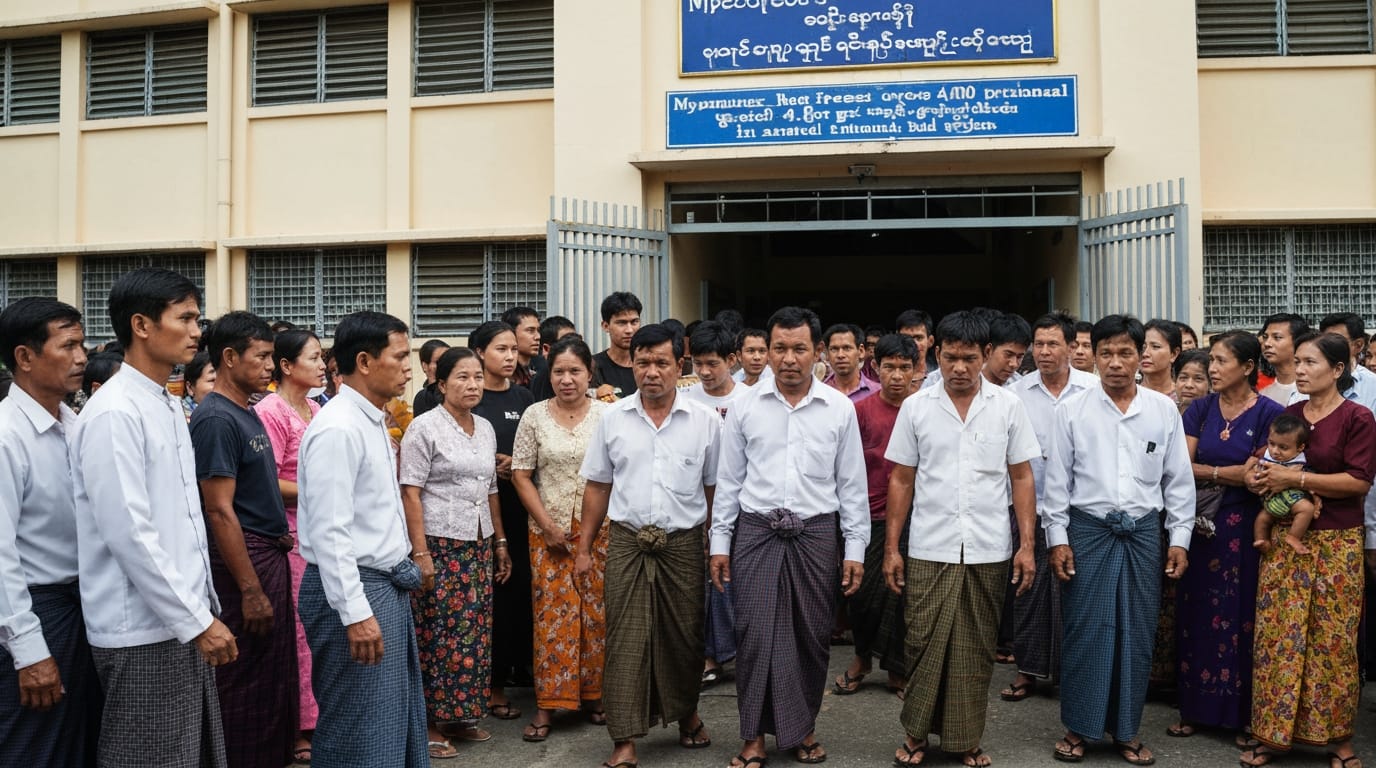
YANGON, Myanmar – Myanmar's military government has released more than 4,500 prisoners as part of its traditional New Year amnesty, a customary gesture that unfolds against a backdrop of escalating conflict and persistent calls for the release of political detainees. The pardon, issued by junta leader Min Aung Hlaing, marks the country's Thingyan (Water Festival) holiday, a time typically observed with celebration, but now muted by the nation's ongoing political crisis. While thousands are now free, questions persist regarding the number of political prisoners included in the amnesty and the broader implications for a nation grappling with military rule since the 2021 coup.
A Traditional Gesture Amidst Tumult
The mass release, announced on April 17, 2026, saw a reported 4,335 local prisoners granted amnesty, alongside 179 foreign nationals who are slated for deportation. State-run media, including MRTV, conveyed the pardon order from Min Aung Hlaing, who had just been sworn in as president a week prior following an election widely criticized as neither free nor fair. The announcement stipulated that any freed individual who reoffends would be required to serve the remainder of their original sentence in addition to any new penalties.
Beyond outright release, the amnesty also included significant sentence reductions. Death sentences were commuted to life imprisonment, while existing life sentences were reduced to 40 years. Prisoners serving terms of less than 40 years saw their sentences cut by one-sixth. For instance, under these measures, the 27-year sentence of former leader Aung San Suu Kyi, held virtually incommunicado since the coup, would theoretically be reduced by four-and-a-half years, though there was no indication of her immediate release. The scene outside Yangon's notorious Insein Prison, a facility that has housed political prisoners for decades, saw relatives and friends gathered expectantly from early morning, hoping for news of their loved ones.
The Shifting Purpose of Amnesties
Mass prisoner releases are a long-standing tradition in Myanmar, commonly occurring around major holidays such as Independence Day in January and the Thingyan New Year in April. Historically, these amnesties have been presented as acts of benevolence aimed at fostering social reconciliation and peace. However, since the military's seizure of power in February 2021, these periodic pardons have taken on a more complex and often scrutinized dimension.
The junta's official statements often frame these releases as measures to "pacify the hearts and minds of the people" and demonstrate a commitment to "humanitarian considerations" and national development. Yet, human rights organizations and political observers frequently question the true motivations behind these actions, especially given the ongoing crackdown on dissent and the thousands who remain incarcerated for opposing military rule. The releases are seen by some as an attempt to project an image of legitimacy and stability, both domestically and internationally, amidst widespread condemnation of the coup and the subsequent violence.
Scrutiny Over Political Detainees
A major point of contention surrounding these amnesties is the lack of transparency regarding the identities of those released, particularly the number of political prisoners. While state media reports the total figures, it rarely provides a detailed breakdown of the charges for which individuals were imprisoned. Rights groups, such as the Assistance Association for Political Prisoners (AAPP), closely monitor these releases, often noting that only a small fraction of those pardoned are political detainees.
According to AAPP, as of April 2026, some 22,170 political detainees, including figures like Aung San Suu Kyi, remain jailed across Myanmar. Since the 2021 coup, more than 30,000 people have been detained on political charges, with many held under vague laws designed to suppress dissent, such as incitement. Critics argue that many of the political prisoners included in previous amnesties were often those nearing the end of their sentences, minimizing the impact on the overall number of political prisoners. The condition that re-offenders would serve their original sentences is also seen by some as a deterrent to future political activity. This selectivity leads many to conclude that the amnesties are not genuine steps towards reconciliation but rather strategic maneuvers by the junta.
Broader Implications in a Nation Under Duress
The current amnesty occurs as Myanmar endures a deepening civil war, triggered by the military's violent suppression of pro-democracy protests following the 2021 coup. The country's political landscape is further complicated by the recent "election" process, which opposition groups have denounced as a sham designed to entrench military power. Min Aung Hlaing's inauguration as president shortly before the amnesty further solidifies the military's control, despite ongoing resistance and international isolation.
Previous amnesties, including one in January 2026 that saw over 6,100 prisoners released for Independence Day, also faced similar criticisms regarding the limited inclusion of political prisoners. The pattern suggests that while these traditional pardons offer a measure of relief for thousands of common criminals and their families, they do little to address the fundamental human rights concerns and political grievances that have plunged Myanmar into its current crisis. The releases serve as a stark reminder of the humanitarian toll of the conflict, with nearly 8,000 civilians reportedly killed since the coup.
A Cycle of Hope and Disappointment
As families celebrate the return of their loved ones, the annual New Year amnesty in Myanmar represents a recurring cycle of hope and disappointment. While the release of over 4,500 prisoners is a significant event for those directly affected, it continues to highlight the military junta's firm grip on power and its selective approach to justice. Human rights organizations remain steadfast in their calls for the unconditional release of all political prisoners, arguing that genuine peace and reconciliation can only begin when those imprisoned for peacefully opposing the military coup are set free. Until then, these amnesties, though traditional, remain deeply intertwined with the ongoing political struggle and the yearning for a democratic future in Myanmar.


