Germany's Skies Under Siege: A Nation Grapples with Pervasive Drone Threats
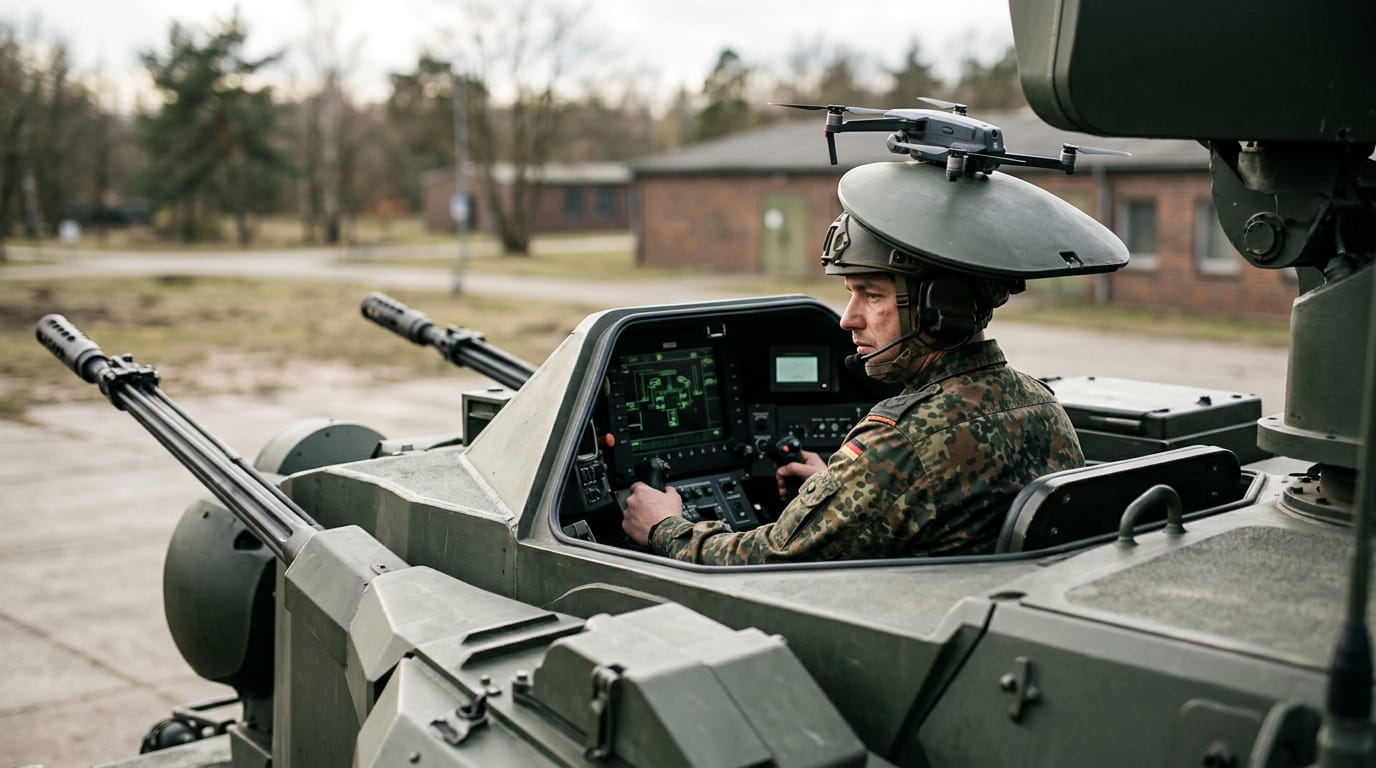
Germany is facing a rapidly escalating and sophisticated drone threat, exposing critical vulnerabilities in its national security infrastructure. A recent incident at Leipzig/Halle Airport, where an explosive-laden drone was discovered near a Ukrainian cargo plane, has underscored the nation's struggle to adequately defend against increasingly sophisticated unmanned aerial systems. This event has been described by German officials as a "new level of danger," highlighting systemic shortcomings in technology, coordination, and legal frameworks that have left the country's airspace and vital assets exposed.
The incident at Leipzig/Halle Airport, which federal prosecutors are investigating as a serious attack on transportation and logistics infrastructure, represents a stark realization of a threat long anticipated. Reports indicate the drone was carrying Semtex, a powerful plastic explosive, and was only discovered hours after breaching airport security, averting what could have been a catastrophic event. U.S. intelligence sources have reportedly linked Russia to the incident, amidst a backdrop of persistently rising drone incursions over German territory. The implications of such incidents extend beyond immediate physical damage, striking at the heart of national security and economic stability in a country that serves as a crucial hub for NATO logistics and support to Ukraine.
The Alarming Reality of the Drone Threat
The security landscape in Germany has fundamentally shifted since Russia's full-scale invasion of Ukraine in February 2022. German military and police forces have recorded a significant increase in suspicious drone activity around sensitive sites, including military installations, airports, and critical civilian infrastructure. In 2025 alone, over 1,000 suspicious drone overflights were reported, according to the Federal Criminal Police Office. These numbers have been steadily climbing, with 172 drone-related disruptions to civilian air traffic reported by the end of September in a recent year, exceeding the total for the entire previous year. Military sites, such as the Wilhelmshaven naval base and the U.S. Ramstein Air Base, have been frequent targets, with one period seeing 117 incidents at military locations.
This surge in activity is attributed to a broader "hybrid warfare" campaign, encompassing espionage, sabotage, cyberattacks, and disinformation, where drones serve as versatile tools for intelligence gathering and potential disruption. The war in Ukraine has dramatically altered global perceptions of small, inexpensive unmanned aircraft, demonstrating their effectiveness not only for reconnaissance but also for direct attacks far behind front lines. This reality has German officials increasingly concerned that drones could transition from mere surveillance platforms to instruments of sabotage against the nation's extensive energy, transportation, telecommunications, and industrial networks. Even unarmed drones pose a significant threat, capable of forcing airport closures and causing widespread disruption, as seen with numerous incidents at major German airports.
Systemic Flaws: A Web of Bureaucracy and Outdated Defenses
Germany's struggles in drone defense are rooted in a complex interplay of outdated technology, fragmented bureaucratic structures, and restrictive legal frameworks. The German Aerospace Industries Association (BDLI) has issued stark warnings, stating that Germany lacks the capability to effectively protect its critical infrastructure from hostile drone activity. A primary issue identified is the "insufficient and overly complex" coordination among the various authorities responsible for national security, including the police, military, and aviation authorities. Their differing responsibilities create significant jurisdictional complexities, making rapid and decisive action difficult when a drone incident occurs.
Furthermore, the legal framework governing the use of force against drones within German airspace is fraught with complications. Germany's post-World War II constitution places strict limits on the domestic deployment of the military, generally restricting it to emergencies like natural disasters. While recent amendments to the Aviation Security Act permit the Bundeswehr to assist in intercepting drones in cases of "serious accident," critics argue this has only blurred lines of accountability. The reluctance to shoot down suspicious drones is also driven by practical concerns, as engaging an aircraft over a populated area risks collateral damage from falling debris or hazardous payloads. As one expert noted, "no one dares to shoot down drones because that could cause collateral damage."
Technologically, Germany finds itself "really behind" in equipping its forces with adequate counter-drone systems. Conventional radar systems are often ineffective against small, low-flying drones, and specialized detection and neutralization equipment is still being integrated. This technological gap was highlighted by an incident at Manching military airfield, where illegal drone activity reportedly continued for weeks undetected. The Bundeswehr's long-standing hesitancy to procure armed drones due to ethical and political concerns further exacerbated this deficiency, though this stance has begun to shift following the lessons of the Ukraine war.
The Cost of Complacency: Impact on Security and Perception
The vulnerabilities in Germany's drone defense carry significant consequences for national security and its international standing. The continuous overflights of military installations compromise intelligence, potentially revealing sensitive information about troop movements, equipment, and readiness. The threat to critical infrastructure, from airports to energy grids, presents not only a risk of physical damage but also the potential for widespread disruption and economic costs. The Leipzig/Halle incident, which targeted a key logistical hub for NATO and Ukrainian support, demonstrates the strategic impact of these incursions.
Moreover, the perception of an inadequate defense system could embolden hostile actors. Interior Minister Alexander Dobrindt characterized the Leipzig incident as a "professional hybrid threat scenario" by a "well-equipped foreign actor," suggesting a calculated exploitation of Germany's weaknesses. The German Aerospace Industries Association explicitly stated that the fact "hostile spy drones often outperform police aircraft does not align with our self-image as a secure, law-based state." This erosion of confidence can undermine public trust and project an image of vulnerability on the international stage.
A Race Against Time: Germany's Ambitious Counter-Drone Overhaul
Recognizing the gravity of the situation, the German government has initiated an ambitious overhaul of its drone defense capabilities, albeit belatedly. Defense Minister Boris Pistorius openly acknowledged the nation is "really behind" but committed to making up for this shortcoming. A significant investment of approximately €16 billion is slated for drone defense by the end of the decade, covering reconnaissance, offensive capabilities, and counter-drone systems.
Key measures include:
- Procurement of Advanced Systems: Germany is acquiring modern anti-aircraft systems, such as 19 Rheinmetall Skyranger anti-aircraft tanks, capable of combating drone swarms, with deliveries expected by 2027. Development of a miniature anti-drone missile (SADM) designed to be integrated into the Skyranger system is also underway, extending its effective range against small and micro-drones. The Bundeswehr is also rapidly procuring armed drones, including loitering munitions (kamikaze drones), a significant shift from previous policies.
- Fleet Expansion: An ambitious plan aims to expand the Bundeswehr's drone fleet from around 600 to over 8,000 by 2029, encompassing a wide range of platforms from nano-drones for close-range reconnaissance to precision-strike loitering munitions. This expansion reflects a move towards Ukraine's "precision mass" doctrine, emphasizing large quantities of relatively inexpensive, AI-enabled systems.
- Legal and Structural Reforms: Efforts are underway to clarify jurisdictional ambiguities and empower authorities. A draft amendment to the Federal Police Act seeks to expand police powers to combat drones, including authorization for their destruction. A dedicated drone defense center was established in late 2025 to improve information exchange between security agencies and the military. By July of the current year, all Bundeswehr branches are expected to have dedicated anti-drone units.
- Technological Innovation: Germany is planning a national research center for counter-drone technology to evaluate, test, and deploy defensive systems for airports and transport networks. Collaborations, such as that between defense giant Rheinmetall and Deutsche Telekom, aim to develop a "drone defense shield" that utilizes cellular networks as wide-area sensors to detect and track drones. The strategy emphasizes a multi-layered defense incorporating electronic countermeasures, kinetic solutions, and low-tech options like net launchers.
Conclusion
The escalating drone threat represents a profound challenge to Germany's security posture, exposing critical deficiencies that demand urgent and comprehensive action. The recent incident at Leipzig/Halle Airport serves as a stark reminder that the era of abstract threats is over, replaced by a tangible and present danger. While the government has embarked on an ambitious program of investment, legal reform, and technological development, the path to a robust and fully integrated drone defense remains long and complex. Overcoming bureaucratic inertia, clarifying jurisdictional boundaries, and rapidly deploying advanced technologies will be crucial for Germany to secure its skies and protect its vital infrastructure against an evolving and determined adversary. The nation's ability to adapt and build a resilient defense system will not only safeguard its own interests but also strengthen the collective security of its European and NATO allies.


