Germany's SPD Urges Fundamental Reset in US Ties Amidst Renewed Trump Era
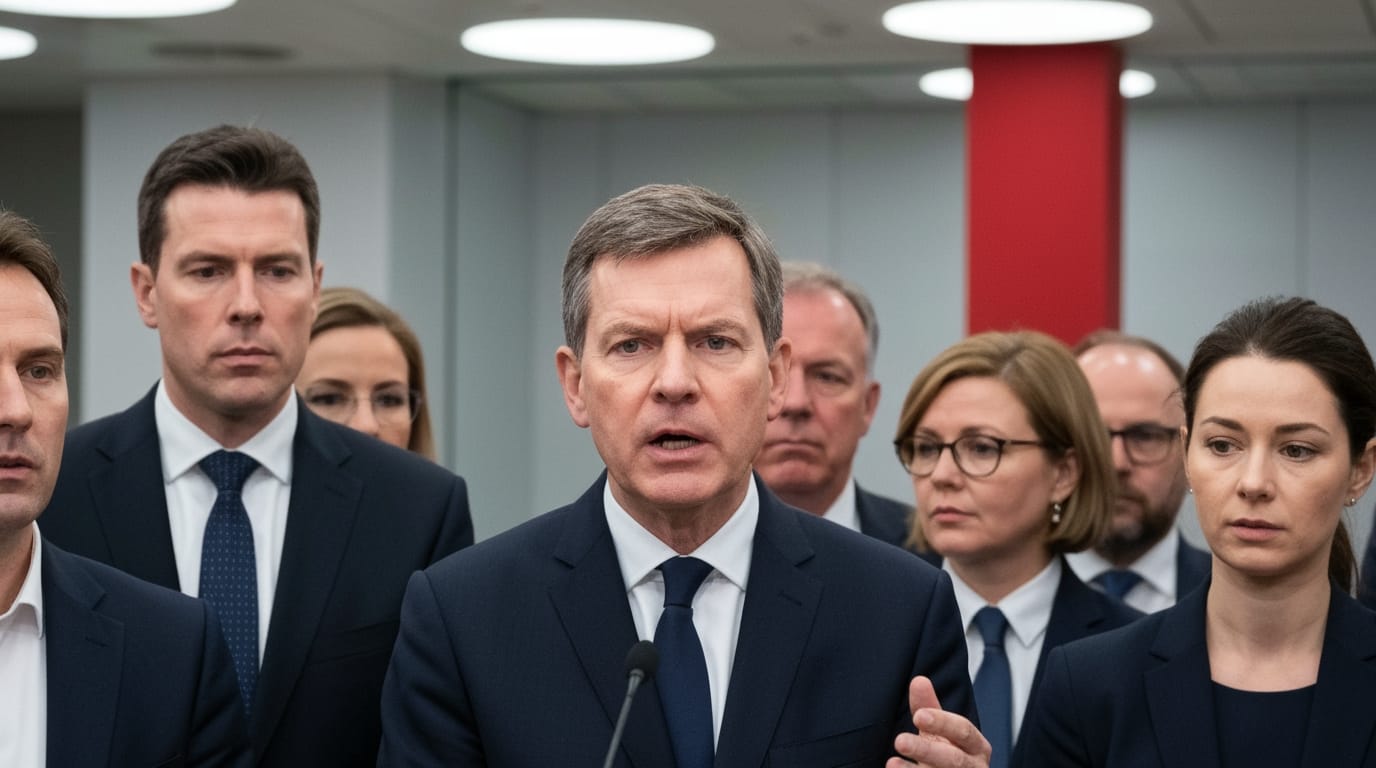
Berlin, Germany – Germany's Social Democratic Party (SPD) is advocating for a fundamental recalibration of the transatlantic relationship, a stance sharpened by the re-entry of the Trump administration into the White House. This call for a significant policy reset reflects deep-seated concerns within the party regarding the stability of trade relations, democratic values, and the future of European security amidst a shifting global landscape. The SPD's proposals highlight a growing determination in Berlin to assert greater European autonomy, particularly after years of perceived strain on the historically robust partnership.
The Rationale for a Reset
The SPD's push for a reset is rooted in experiences from previous Trump administrations and heightened anxieties about the current trajectory of US foreign policy. Rolf Mützenich, leader of the SPD, has articulated significant concerns over the economic risks posed by the current US administration, particularly the potential for job losses and renewed trade tensions that could arise from protectionist policies. He has emphasized the importance of free trade, provided it does not involve what he terms "dumping prices." Beyond economic implications, Mützenich has also voiced apprehension regarding broader threats to democratic principles and has expressed skepticism about the feasibility of swiftly resolving conflicts, such as the war in Ukraine, under the current US leadership. These sentiments echo earlier criticisms from prominent SPD figures; for instance, former SPD leader Martin Schulz characterized a previous Trump presidency as a "destroyer of all Western values" in 2017, signaling an enduring ideological divergence.
From a German perspective, the Trump administration's approach to transatlantic relations has been widely perceived as a "brutal, multipronged assault" on the core pillars of the bilateral relationship: trade, security, and shared values. This includes worries over the vulnerability of Germany's export-driven economy to US tariffs, with approximately four percent of its Gross Domestic Product tied to exports to the United States. The long-standing framework of collective security, centered around NATO and a consistent US military presence in Europe, has also been subject to considerable doubt.
Erosion of Trust and Shifting Perceptions
The advent of the current Trump administration in January 2025 has coincided with a stark decline in German public confidence in the US-German relationship. Polling data from 2025 reveals a dramatic shift, with only 27% of Germans viewing relations with the United States positively, a steep drop from 74% prior to the current US presidential term. Concurrently, a significant 73% now hold a negative view. This erosion of trust is also reflected in Germany's diplomatic priorities, with France now surpassing the United States as Germany's most important foreign policy partner.
Specific policy pronouncements from the current US administration have further exacerbated these tensions. The US National Security Strategy (NSS), published in December 2025, sent "shockwaves through Europe" by painting European allies as potentially weak and explicitly criticizing European politics and culture. This document suggested that continued US investment in European security could become conditional, directly challenging the traditional underpinnings of transatlantic defense cooperation. Adding to the diplomatic friction, US Vice President JD Vance's appearance at the Munich Security Conference in February 2025 reportedly criticized European governments and, notably, included a meeting with Alice Weidel of the far-right Alternative for Germany (AfD) rather than the sitting German Chancellor at the time. Such actions are widely interpreted in Germany as a deliberate undermining of established alliances and democratic norms.
Economic and Security Implications
The tangible effects of this strained relationship are already becoming evident in economic and security spheres. Since the start of the current US presidential term, German foreign direct investment into the United States has reportedly decreased by approximately 24 percent, while German exports to the US have seen a nearly 9 percent decline. These figures underscore the economic vulnerabilities Germany faces under a protectionist US trade agenda.
On the security front, the questioning of NATO commitments and the implications for collective defense have spurred calls for Europe to assume greater responsibility for its own security. Chancellor Friedrich Merz, currently leading a grand coalition government in Germany, has stated that the US administration's national security strategy "underscores the need for Europe to become 'much more independent' from the United States in terms of security policy." This sentiment highlights a broader German political consensus on the necessity of enhancing European strategic autonomy. Within the SPD, internal debates further illustrate this trend, with a "peace faction" advocating for a "Manifesto on Securing Peace in Europe." This manifesto calls for a significant recalibration of US forces in Eastern Europe and the Middle East, alongside the development of a distinct European diplomatic strategy for resolving the conflict in Ukraine. It also explicitly opposes the stationing of US medium-range missiles on German soil. While these views may not represent the entire party's mainstream, they reflect a growing desire for a more independent security posture.
Towards Greater European Autonomy
The challenges posed by the current US administration are accelerating Germany's strategic pivot towards greater self-reliance and European integration. Germany is actively pursuing diversification in critical sectors, seeking increased independence, including from the US, in areas such as energy, by looking to new sources for liquefied natural gas (LNG) and climate-friendly hydrogen from other global partners. The imperative for Germany is to transform into a "capable, sovereign equal" within the transatlantic relationship, necessitating a re-evaluation and potential restructuring of its military, trade, and energy strategies.
Metin Hakverdi, the German government's coordinator for transatlantic cooperation and an SPD member, acknowledges the intensely intertwined economic and security relations between the two nations. However, he stresses the importance of Germany prioritizing its own national interests, advocating for a focus that extends beyond the shifting political dynamics within the White House. This perspective underscores a broader strategic shift within German foreign policy, aiming to solidify a stronger, more independent Europe capable of navigating complex geopolitical challenges without being solely reliant on a fluctuating US foreign policy.
Conclusion
The SPD's call for a fundamental reset in US-German relations signals a pivotal moment in the transatlantic partnership. Fueled by the perceived disruptions of the Trump era, the party's concerns reflect a wider German political and public sentiment demanding greater European independence across economic, security, and diplomatic fronts. While the historical bonds between Germany and the United States remain significant, the ongoing recalibration underscores a determined effort by Berlin to forge a more autonomous path, solidify European unity, and safeguard its national interests in an increasingly unpredictable world. This strategic evolution will likely redefine the parameters of transatlantic cooperation for years to come, emphasizing resilience and self-reliance within Europe.


