Germany's Waterways in Peril: Ministers Confront Unprecedented River Lows
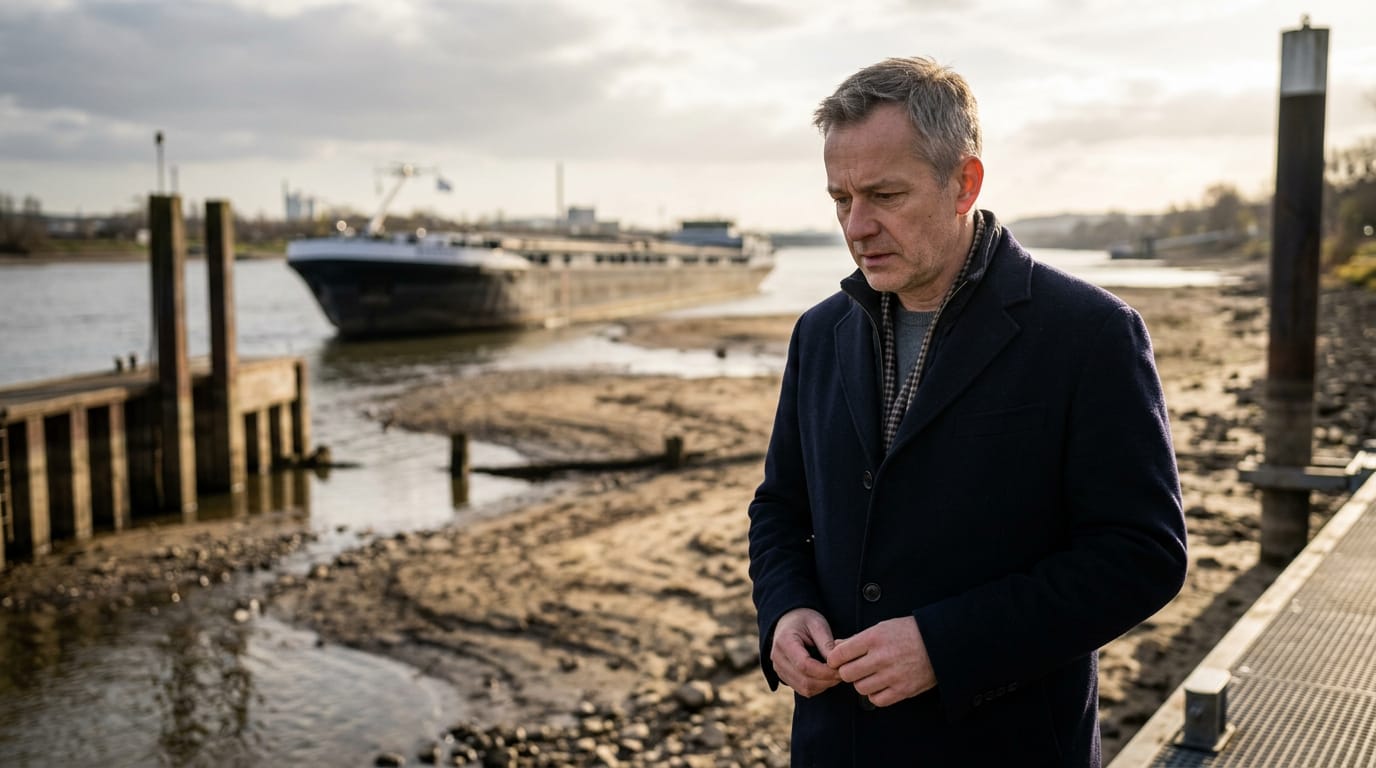
Bonn, Germany – German transport ministers convened in an urgent crisis meeting this week, grappling with record-low water levels across the nation's vital river network, particularly the Rhine, Elbe, and Danube. The severe drought, exacerbated by prolonged heat, has brought inland shipping to a near standstill in many areas, threatening to deliver a significant blow to Germany's already embattled economy and disrupting crucial supply chains.
Newly appointed Transport Minister Steffen Bilger hosted the critical talks in Bonn on Thursday, August 6, 2026, bringing together industrial executives, shipping companies, and port authorities. The dire situation, which has seen the Rhine's water levels plummet to historic lows "unusually early" in the year, underscores the escalating impact of climate change on Europe's industrial heartland.
Historic Lows Paralyze Key Shipping Arteries
The extent of the crisis is stark. At the strategically important Kaub gauge on the Rhine, a critical choke point for inland shipping, water levels registered a mere 24 centimeters (9.4 inches) on Wednesday, August 5, 2026, falling below the previous 2018 record by one centimeter. Forecasts indicated a further drop to an alarming 18 to 19 centimeters by Friday, August 7. Similarly, the Elbe River in Magdeburg saw its level dip to a record 45 centimeters (17.7 inches), with predictions of a further decline to 40 centimeters.
"If you look at the Rhine, the Danube or the Elbe currently, you see the problem," Minister Bilger remarked at the meeting. "Where normally ships are carrying thousands of tonnes of goods, today we see bare sandbanks." The visuals are grim, with partially dry riverbeds near major industrial complexes like thyssenkrupp's blast furnaces in Duisburg serving as a stark reminder of the unfolding challenge. The appearance of centuries-old "hunger stones" in rivers like the Elbe, bearing inscriptions like "Wenn du mich siehst, dann weine" ("If you see me, weep"), further highlights the historical echoes of severe droughts now returning with alarming frequency.
Economic Fallout: A Supply Chain Under Duress
The economic implications of the constricted waterways are profound. The Rhine alone accounts for approximately 80 percent of Germany's inland waterway traffic, facilitating the transport of some 285 million tonnes of goods annually. This vital artery links major industrial clusters, including the Rhine-Ruhr steel region, Rhine-Main, and the Ludwigshafen chemical complex, directly to the major Dutch port of Rotterdam.
The current low levels mean cargo vessels can operate at only a fraction of their normal capacity, often as little as one-third, and for tanker barges, sometimes just 300 to 400 tonnes. This drastic reduction in load capacity has inflated freight prices, compelled shipping companies to impose surcharges, and led to a 50 to 60 percent increase in port calls as goods must be spread across more vessels or shifted to alternative, more expensive transport methods like rail and road. Industries reliant on timely deliveries of raw materials such as grain, minerals, ores, coal, and petroleum products are feeling the pinch, facing market bottlenecks, increased transportation costs, and extended delivery times.
Economists are warning of significant economic repercussions. The 2018 drought, while severe, is estimated to have shaved 0.3 percentage points off German GDP growth. Analysts from the Kiel Institute for the World Economy suggest that a month of critically low water levels can reduce inland shipping volumes by about 25 percent and industrial production by approximately 1 percent, indicating that the current crisis could have an even more pronounced impact.
Urgent Measures and Long-Term Strategies
In response to the escalating crisis, Minister Bilger announced a series of both immediate and long-term measures designed to mitigate the economic damage and bolster the resilience of Germany's transport infrastructure.
Short-term actions include exploring exemptions from existing Sunday and public holiday lorry bans for particularly affected goods, aiming to facilitate the transfer of freight from rivers to roads. State-owned rail freight operator DB Cargo has committed to providing additional capacity to handle increased volumes of goods via rail. Furthermore, efforts will be made to minimize avoidable motorway roadworks to prevent further disruption to diverted traffic, and a planned lock refurbishment on a major canal has been postponed. "We can't control the weather, but we can make sure our economy gets through these difficult weeks in better shape," Bilger stated.
For the longer term, the government is considering significant infrastructure improvements. Calls are growing for fast-tracking projects to deepen critical stretches of the Rhine, a measure also advocated by Oliver Krischer, Transport Minister for North Rhine-Westphalia, who stressed the need for a national task force. Other long-term strategies include expanding waterways, modifying ships to be better adapted for low water levels, and establishing pilot areas for optimized navigation during periods of low water. Experts like Klaus Roettcher, an expert on water management, are advocating for a fundamental rethinking of how water is managed, urging a reversal of past practices that prioritized rapid water drainage. There is also a renewed emphasis on shifting more freight traffic from roads to rail and waterways in general.
A Climate Change Wake-Up Call
The early onset and severity of this year's low water levels have amplified concerns that such events, once considered anomalies, are becoming the "new normal" due to climate change. Jens Schwanen, head of Germany's domestic shipping association, described the current dry spell as potentially a "once-in-a-century event," emphasizing the urgent need for action.
The transport ministers' discussions signify a broader recognition that Germany must adapt its infrastructure and policies to withstand increasingly frequent and intense climatic events. While immediate measures aim to alleviate the current bottlenecks, the overarching challenge lies in building long-term resilience for a future defined by a changing climate. The fate of Germany's economic engine is now inextricably linked to the health of its waterways and the strategic decisions made today to protect them.


