Ghosts of War Emerge from Shrinking Danube as Europe Grapples with Historic Drought
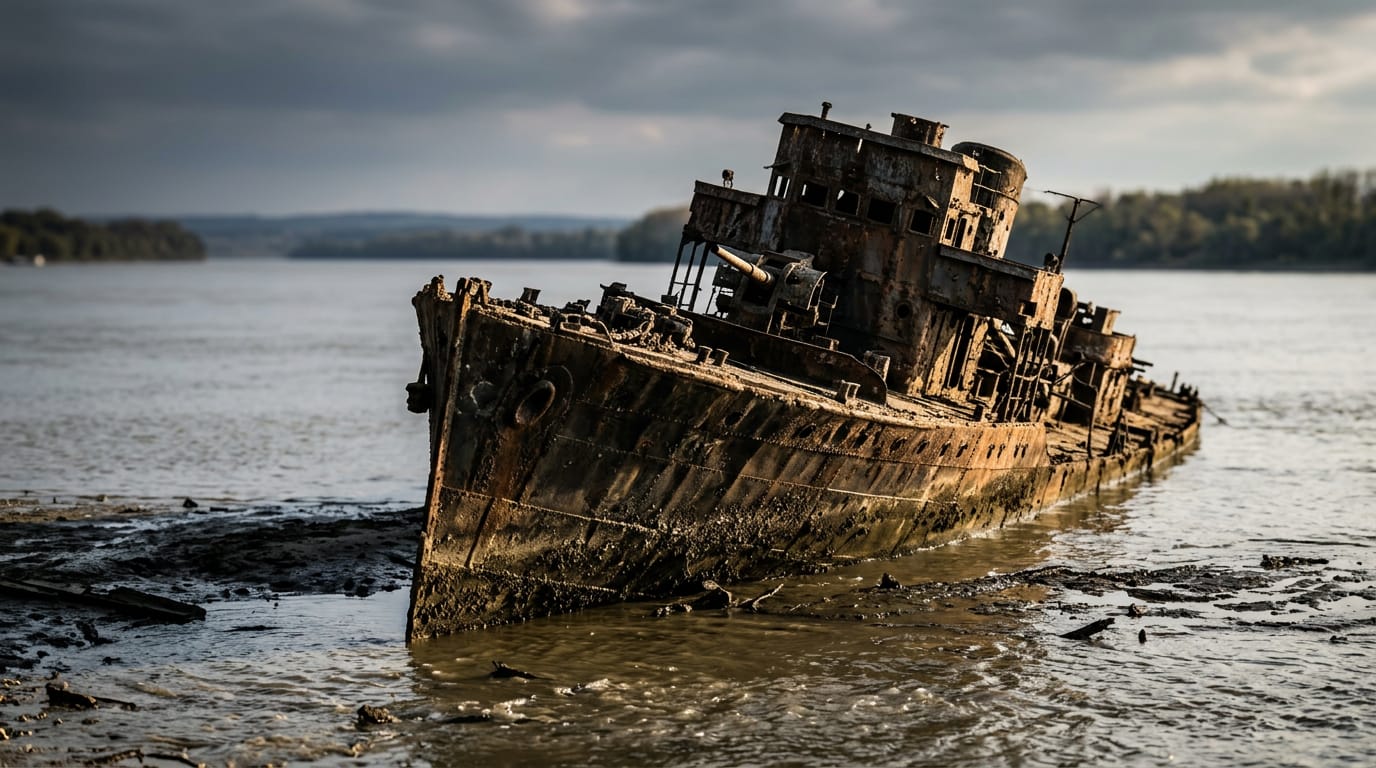
PRAHOVO, Serbia – A stark and unsettling tableau has emerged along the Danube River, as record-low water levels, driven by intensifying drought and heatwaves across Europe, reveal a hidden legacy of World War II: the rusting hulks of dozens of Nazi warships, many still laden with unexploded ordnance. This eerie re-emergence, most prominently observed near the Serbian port town of Prahovo, serves as a poignant reminder of a brutal past and presents a complex, multi-faceted challenge for the present, threatening navigation, the environment, and regional economies.
The phenomenon, particularly pronounced during the severe dry spells of 2022 and again in 2024 and 2026, has brought into plain sight vessels that have rested beneath the surface for more than eight decades. These ghost ships, part of the German Black Sea Fleet, were deliberately scuttled in September 1944 by retreating Nazi forces to impede the advance of the Soviet Red Army and prevent their capture. Today, their reappearance underscores a critical nexus between historical conflict and the contemporary climate crisis, creating pressing safety and logistical concerns for the nations bordering Europe's second-longest river.
A Wartime Legacy Unveiled
The story of the sunken fleet dates back to the autumn of 1944. As Soviet forces pressed their advance through Eastern Europe, Nazi Germany's Black Sea Fleet found itself in a desperate retreat along the Danube. To deny the advancing Red Army access to their naval assets and to create a formidable blockade, German commanders issued orders to scuttle their vessels. Near Prahovo, in the Djerdap Gorge on the border between Serbia and Romania, an estimated 200 German warships – including transport ferries, barges, and torpedo boats – were sent to the riverbed. This strategic sinking successfully created an underwater barrier, effectively hindering Soviet movement, but also left a dangerous and enduring legacy. While some wrecks were recovered by Communist Yugoslav authorities immediately after the war, the majority remained submerged, largely forgotten until recent years.
The scale of the wreckage is considerable; approximately 200 wrecks are believed to remain in the Prahovo area alone. The newly exposed vessels display a haunting spectacle, with twisted hulls, broken masts, and even some turrets and command bridges piercing the water's surface, a tangible link to a pivotal moment in 20th-century history.
Perilous Payload: Unexploded Ordnance and Environmental Threat
Beyond their historical significance, the re-emerging shipwrecks pose immediate and severe threats. A substantial number of these sunken vessels are still believed to contain tons of unexploded ordnance (UXO), including mines, shells, and other explosives. Experts and local residents alike warn that these volatile remnants could cause "major, catastrophic problems if they were to explode," endangering shipping, local populations, and the environment. The potential for ecological disaster extends to the risk of oil and chemical leaks from the corroded vessels, further threatening the Danube's delicate ecosystem and the communities reliant on the river.
The presence of UXO makes any salvage operation inherently dangerous and complex. Each vessel requires meticulous inspection by divers and explosives specialists, working in often murky waters with severely restricted visibility, to identify and safely neutralize any hazardous materials before removal can even begin.
Navigation Hazards and Economic Strain
The exposed fleet also creates significant impediments to navigation on one of Europe's most vital waterways. The wrecks narrow the navigable channel, particularly near Prahovo, reducing it from a typical 180 meters to as little as 100 meters in some areas. This constriction forces cargo vessels to lighten their loads or reroute, directly impacting the flow of goods and increasing transportation costs.
Serbia, a country heavily reliant on Danube shipping for trade and transport, faces estimated annual losses of $5.75 million due to disruptions caused by these underwater obstacles. The broader economic repercussions extend across the continent, affecting fuel deliveries, agricultural shipments, and even energy production. Low water levels have curtailed hydropower output in Serbia and Hungary, and threatened the cooling systems of nuclear power plants, leading to concerns about electricity shortages and increased import costs for energy. The tourism sector, particularly river cruises, has also suffered cancellations and operational disruptions.
A Collaborative Effort for Clearing the Past
Recognizing the multifaceted dangers and economic strain, concerted efforts are underway to address the issue. The Serbian government, with substantial financial backing from the European Union (EU) and the European Investment Bank (EIB), has launched a multi-million-euro project to remove the most obstructive wrecks. The total cost of this complex operation is estimated at 30 million euros, with approximately 16 million euros provided as grants.
The initial phase targets 21 of the most dangerous and impediment-causing vessels near Prahovo, aiming to improve the traffic capacity of the Danube. Specialized teams are utilizing advanced sonar technology to map the underwater sites and precisely locate wrecks and potential UXO targets. The laborious process involves carefully inspecting each ship, defusing ordnance, and then either removing the wrecks or, in some cases, burying larger ones to facilitate safer navigation. As of 2024, some ships have been successfully removed, including a minesweeper, with the project slated for completion by 2028.
Climate Change: The Unseen Force
The recurring appearance of these historical artifacts is a stark indicator of a modern crisis: climate change. Scientists have consistently linked the unusually hot weather and persistent drought conditions across Europe to global warming. The Danube's water levels have reached some of their lowest points in a century, turning the riverbed into an "unstable archive" that reveals not only Nazi warships but also other long-submerged relics, including ancient mammoth bones in some stretches.
This ongoing environmental shift exacerbates the challenges posed by the wartime wrecks, transforming a historical curiosity into an urgent practical problem. As Europe experiences more frequent and severe droughts, the "ghosts" of the Danube are likely to continue their unwelcome resurfacing, demanding sustained attention and substantial resources.
Conclusion
The low water levels in the Danube have brought forth a vivid, dangerous reminder of World War II, merging a dark historical legacy with the pressing realities of climate change. The exposed Nazi warships, laden with unexploded ordnance and obstructing vital shipping lanes, present a complex challenge that demands a coordinated international response. While efforts are underway to mitigate the immediate threats and clear these historical hazards, their persistent re-emergence serves as a powerful testament to how climate shifts can unearth buried pasts, forcing contemporary societies to confront the long-term consequences of both human conflict and environmental transformation. The Danube's shrinking waters are not merely revealing old ships; they are revealing the interconnectedness of history, ecology, and economic stability in an increasingly vulnerable world.


