Global Avian Influenza Outbreak Devastates Bird Populations, Raises Economic and Health Concerns
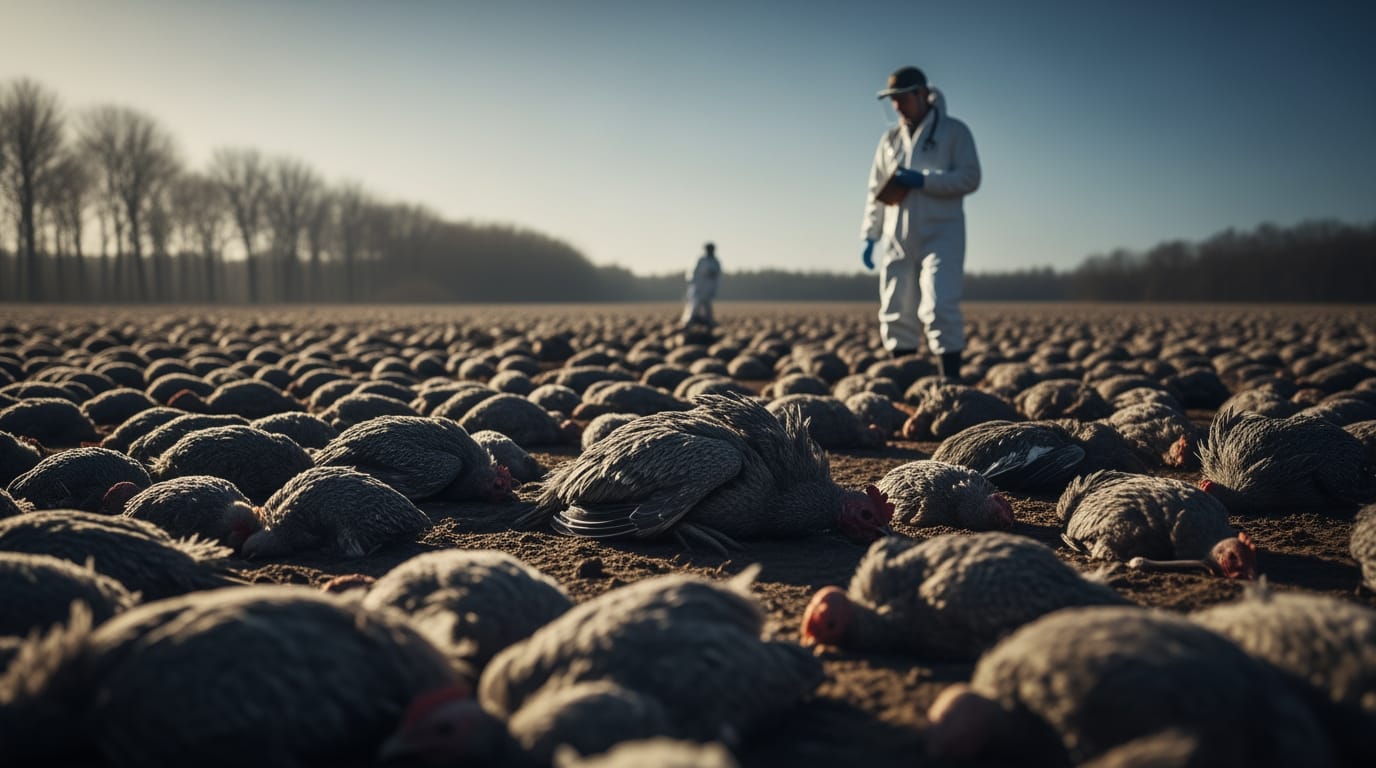
A virulent strain of highly pathogenic avian influenza, identified primarily as H5N1, has triggered an unprecedented global health crisis, leading to the deaths or culling of hundreds of millions of birds worldwide since late 2021. This ongoing outbreak, marked by its rapid spread across continents and increasing spillover into mammalian species, poses severe threats to poultry industries, wildlife ecosystems, and presents a persistent, albeit low, public health concern for potential human transmission. The sheer scale and persistence of this panzootic have prompted urgent calls for enhanced surveillance and integrated global response strategies.
The current wave of highly pathogenic avian influenza (HPAI), predominantly involving the H5N1 clade 2.3.4.4b variant, began its significant global escalation around late 2021. Since then, the virus has been relentless, causing the deaths of at least 280 million birds, with some estimates placing the total closer to half a billion when including birds culled to prevent further spread. This staggering toll represents the most significant and sudden loss of bird populations in decades, impacting both commercial poultry operations and wild avian species. The virus initially spread from Europe to North America in late 2021, subsequently reaching Africa, Asia, and most recently, Antarctica, marking its presence on every continent except Australia. Its rapid dissemination is attributed to a combination of factors, including migratory bird movements and, in some instances, trade.
A Widening Circle of Infection: Beyond Poultry
What began as a severe threat to poultry farms has expanded into a broader ecological crisis, as H5N1 continues to cross species barriers. The virus has been detected in over 70 species of domestic and wild mammals across three continents, signifying its evolving adaptability. Notable instances include significant die-offs in South American sea lions and elephant seals, with outbreaks in affected areas leading to mortality rates as high as 96% in some seal colonies. Other mammalian species, including foxes, bears, and even domestic dairy cattle in the United States, have tested positive for the virus. The detection of H5N1 in dairy cattle since March 2024, affecting over 1,000 herds across 18 U.S. states, has introduced a new dimension to the outbreak, raising concerns about novel transmission pathways and potential risks to the livestock industry. Experts emphasize that this increasing spillover into mammals underscores the unpredictable nature of the virus and the need for comprehensive monitoring across diverse animal populations.
Economic Repercussions and Food Security Concerns
The relentless march of H5N1 has inflicted a heavy financial burden on the global poultry industry. Losses are estimated to be in the billions of dollars, primarily due to the mass culling of infected flocks and associated trade disruptions. In the United States alone, the outbreak cost the poultry industry approximately $1.4 billion as of November 2024, with the majority of this allocated to indemnity and compensation payments for farmers. The extensive losses in commercial poultry, particularly egg-laying hens and turkeys, have led to significant market volatility. Wholesale egg prices have soared in some regions, more than doubling in certain periods, and supply shortages have prompted retailers to implement purchase limits. This situation has not only impacted producers' livelihoods but has also translated into increased costs for consumers, further straining food security in regions heavily reliant on poultry as a primary protein source. The economic impact extends beyond direct losses, affecting downstream industries such as feed production and causing declines in employment within the poultry sector.
Human Health on Watch: A Potential Pandemic Threat?
While the current public health risk to the general population remains low, health organizations worldwide are maintaining heightened vigilance due to the virus's evolving nature. The primary risk for human infection is associated with close or prolonged contact with infected birds, other animals, or environments contaminated by the virus. Sporadic human cases of H5N1 have been reported across the globe, with the World Health Organization recording 991 human H5N1 cases since 2003, resulting in a case-fatality rate of 48%. In 2024, 76 people were infected with H5 avian influenza viruses, with most cases occurring among farm workers, particularly in the United States, where infections have been linked to exposure to infected dairy cattle.
A significant concern among experts is the potential for the H5N1 virus to mutate and gain the ability for sustained human-to-human transmission, which could trigger a global pandemic. Researchers have noted that unlike common seasonal flu strains, against which humans have some antibodies, there is little to no pre-existing immunity to H5N1. Furthermore, recent studies indicate that some bird flu viruses are capable of replicating at temperatures higher than a typical human fever, making them a particular threat. However, health officials emphasize that no sustained human-to-human transmission has been identified thus far, and while the pandemic risk is a possibility, its probability remains low for now.
Global Response and the Path Forward
In response to the escalating crisis, a multi-faceted global strategy is underway, centered on a "One Health" approach that recognizes the interconnectedness of human, animal, and environmental health. Key mitigation efforts include stringent biosecurity measures on farms, rapid culling of infected flocks, and enhanced surveillance programs, which involve continuous monitoring through genomic sequencing to detect viral mutations. Public health experts advocate for the use of personal protective equipment for individuals working with poultry and dairy cattle and are exploring the development of both animal and human vaccines. Vaccination programs for poultry have been implemented in some countries, such as China and France.
The ongoing spread of H5N1, coupled with its increasing presence in diverse mammalian populations, underscores the urgent need for international collaboration and robust preventative measures. The challenges are considerable, including the logistical complexities of surveillance in wild populations and the economic pressures faced by affected agricultural sectors. As the virus continues to evolve, sustained scientific research, coordinated public health interventions, and effective communication remain crucial to mitigating its impact and preparing for potential future developments. The world watches as the H5N1 virus continues its unpredictable trajectory, necessitating vigilance and adaptive responses to protect both animal and human populations.