Global Commerce Choked as Iran Firmly Rejects US Talks Amid Hormuz Strait Closure
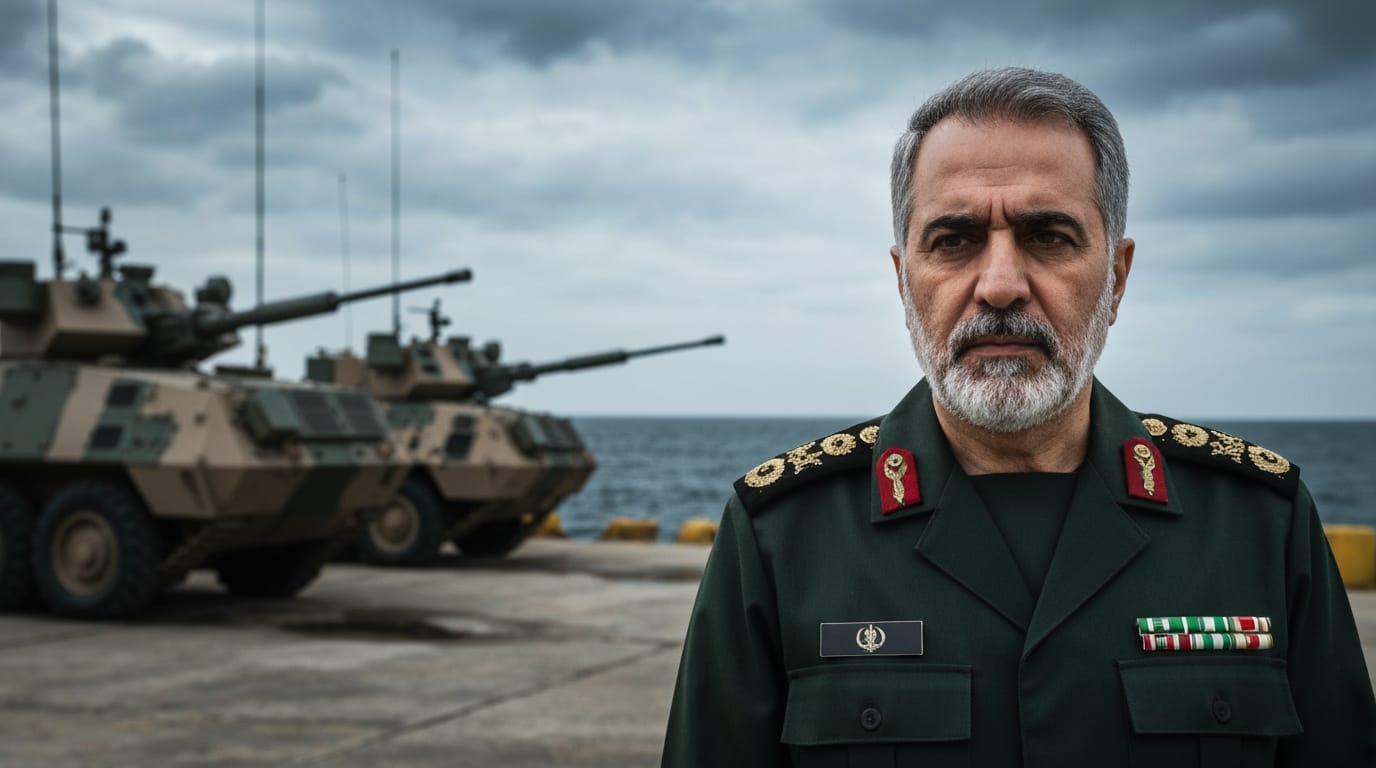
TEHRAN – The vital Strait of Hormuz remains largely impassable to international shipping, effectively severing a critical artery of global commerce, as Iran emphatically ruled out direct negotiations with the United States under current conditions. The diplomatic deadlock, characterized by mutual accusations and unyielding demands, has amplified an already severe global energy crisis and is triggering far-reaching economic instability.
For months, the narrow waterway, through which a significant portion of the world's oil and liquefied natural gas (LNG) transits, has been under Iran's control following an escalation of hostilities earlier this year. With Tehran asserting its sovereignty and setting stringent preconditions for dialogue, the international community faces a deeply unsettling geopolitical and economic quagmire that threatens to deepen with each passing day.
Strait of Hormuz Under Iranian Control, Global Shipping Paralyzed
The Strait of Hormuz, a strategic maritime chokepoint, has been largely blocked by Iran since February 28, 2026, marking the largest disruption to world energy supply since the 1970s energy crisis. This action was initiated in retaliation for air attacks launched against Iran by the United States and Israel. The Iranian Revolutionary Guard Corps (IRGC) has actively enforced the closure, issuing warnings, boarding merchant ships, and deploying sea mines within the strait. Iran's Khatam-al Anbiya Central Headquarters stated the closure was a response to a "breach of promise" and violations of a 14-point memorandum of understanding (MOU) that called for a cessation of conflict on all fronts, including in Lebanon.
Iranian Foreign Ministry spokesman Esmaeil Baqaei confirmed on July 27, 2026, that the waterway "remains closed." Iran has explicitly stated its intention to retain control over the strait's management, including the collection of service fees for passage. While Iran has engaged in talks with Oman regarding operational mechanisms for safe passage, Tehran maintains that these discussions are bilateral and do not involve the United States. Moreover, Iran has rejected U.S. proposals for a shipping route closer to Oman, asserting that an interim deal allows it to manage traffic through the strait.
The United States, while acknowledging the severe disruption, has consistently pushed back against Iran's claims of full control over the international waterway. U.S. Central Command (CENTCOM) has previously stated that Iran does not control the Strait of Hormuz and that commercial traffic continued to flow, with U.S. forces monitoring the situation to ensure unhindered passage. However, despite these assurances, the reality on the ground reflects a stark disruption, with the flow of commercial tankers largely halted, exposing the fragility of global supply chains.
Diplomatic Impasse: Iran's Unyielding Conditions for Dialogue
Despite signals from Washington indicating an openness to diplomacy, Iran has remained resolute in its refusal to engage in direct negotiations with the United States under the prevailing circumstances. Foreign Ministry spokesman Esmaeil Baqaei articulated Iran's position on Sunday, July 27, acknowledging that messages are being exchanged with the U.S., but stressing that the "conditions for negotiations are currently absent." Baqaei criticized Washington for allegedly undermining diplomatic efforts through its continued military actions, declaring that Iran's immediate priority is the defense of its sovereignty and territorial integrity.
Tehran has laid out a comprehensive set of non-negotiable conditions for any future talks to commence. These demands include a permanent cessation of the ongoing conflict, firm guarantees against any future aggression, and financial compensation for damages incurred during the hostilities. Furthermore, Iran insists on the immediate lifting of all blockades and "illegal" sanctions, the unfreezing of its assets held abroad, and explicit recognition of its legitimate rights, including its sovereignty over the Strait of Hormuz. A key demand also involves ending the war "on all fronts," with particular emphasis on the conflict in Lebanon. Iran has also proposed establishing a new, Iran-administered regime to govern the Strait of Hormuz, potentially introducing transit charges for vessels.
In Washington, Secretary of State Marco Rubio affirmed the U.S. commitment to finding a diplomatic solution, but highlighted Iran's "behavior" — specifically, the launching of missiles and drones at ships in the Strait of Hormuz — as the primary impediment to progress. President Donald Trump has reportedly provided "some space" for diplomatic discussions, particularly after a recent halt in U.S. strikes. However, the deep mistrust and conflicting demands from both sides present a formidable challenge to breaking the current diplomatic logjam.
Escalating Economic Fallout and Global Repercussions
The sustained closure of the Strait of Hormuz is unleashing an unprecedented wave of economic disruption across the globe. This crisis has been branded by the International Energy Agency as the "largest supply disruption in the history of the global oil market," surpassing even the impact of the 1970s energy crisis. Oil prices have surged dramatically, with the U.S. benchmark West Texas Intermediate (WTI) crude fluctuating between $90 and $100 per barrel, and international Brent crude briefly exceeding $115. Experts warn that prolonged disruption could push WTI crude prices as high as $132 per barrel, with sustained closure potentially driving prices to $180-$200 per barrel.
The ripple effects extend far beyond the energy sector. Global equities are slumping, with Asian markets experiencing significant plummeting, and a contraction of at least 1.1% in global economic output is projected if the closure continues. The strait's closure has severely impacted the supply chains of critical commodities such as aluminum, fertilizer, and helium. Approximately 33% of globally traded fertilizers pass through this waterway, making the disruption a direct threat to global food security, particularly for vulnerable, lower-income nations in Africa.
Countries within the Gulf Cooperation Council (GCC) are reportedly losing up to $2 billion due to the trade disruptions. The region's energy infrastructure has also suffered significant damage, notably at Qatar's Ras Laffan LNG export terminal, the world's largest, which has seen 17% of its export capacity compromised with repairs estimated to take at least five years. Furthermore, oil production from Kuwait, Iraq, Saudi Arabia, and the United Arab Emirates has seen a collective drop of up to 10 million barrels per day. The financial infrastructure underpinning global shipping has also fractured, with many insurance providers withdrawing war risk coverage for Gulf transits or making it prohibitively expensive, effectively halting many shipping operations.
Ironically, while Iran's overall economy is suffering, particularly its non-oil trade with China, which declined by 75% between March and June 2026, the country is also reportedly benefiting from elevated oil and gas revenues. Reports indicate that Iran has allowed only Chinese-affiliated vessels to transit the strait, suggesting a strategic alignment amidst the crisis. Russia and China are also identified as potential beneficiaries of the destabilized global energy market.
An Uncertain Path Forward Amidst High Stakes
The current situation in the Strait of Hormuz represents a profound geopolitical challenge with no clear resolution in sight. A temporary ceasefire between Iran and the U.S., agreed upon in early April and intended to facilitate the reopening of the strait, ultimately collapsed. This was followed by a 14-point Memorandum of Understanding in June, outlining plans for 60 days of talks on various issues, including freedom of navigation, but this agreement too unraveled, leading to a renewed exchange of fire for nearly two weeks before a recent lull.
The stakes remain exceptionally high. The U.S. administration continues to demand that Iran publicly acknowledge the Strait of Hormuz is open and cease attacks on commercial vessels. Meanwhile, Iran perceives control over the strait as both a strategic deterrent and a potential source of revenue, demonstrating its capacity to challenge major global powers. The impasse over this critical waterway not only exacerbates global economic woes but also maintains a dangerous state of heightened tension in a region already prone to conflict. The absence of a diplomatic breakthrough and the continued closure of the strait ensure that uncertainty and economic pressure will persist, leaving the world to grapple with the consequences of an unyielding standoff.


