Global Cybercrime Ring Crippled as German-Led Operation Dismantles Major Botnets
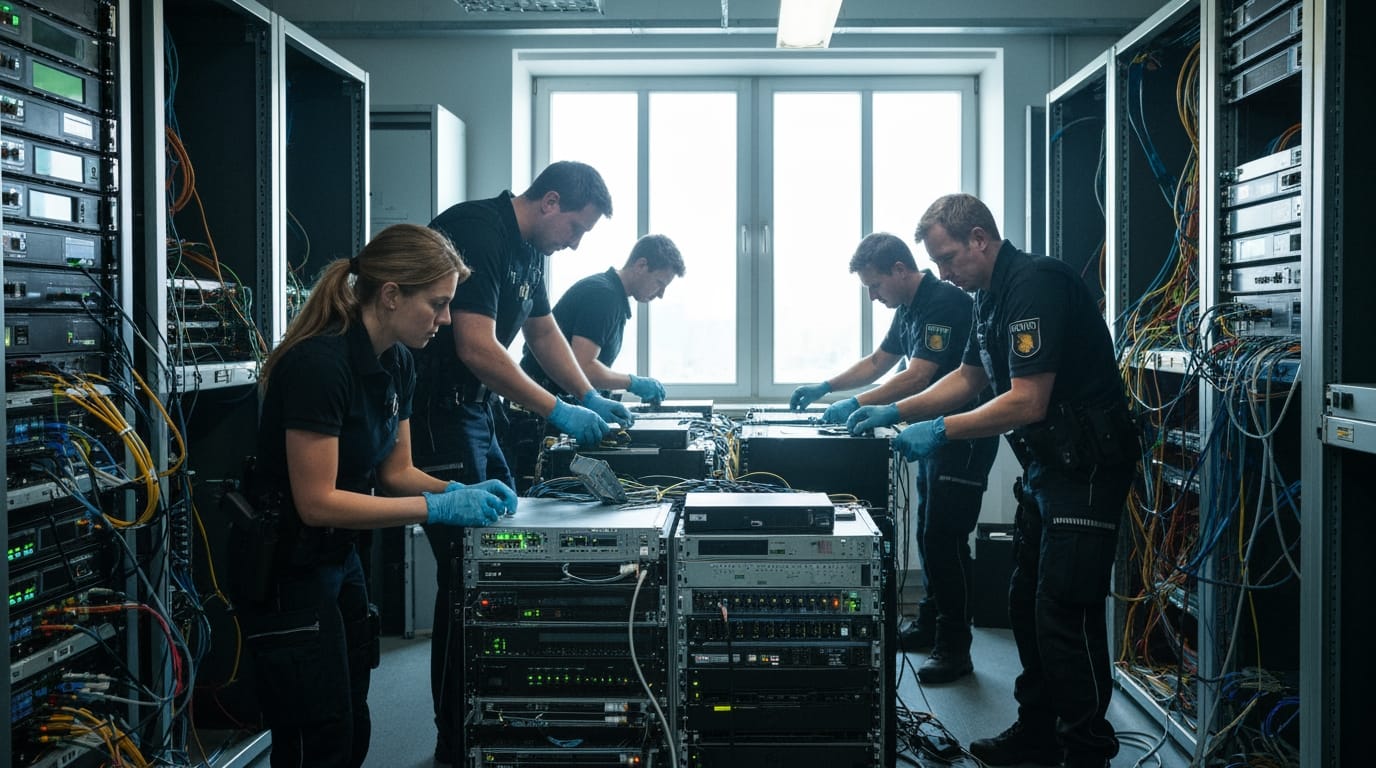
Frankfurt, Germany – In a significant triumph against global cybercrime, an international law enforcement effort co-led by Germany has successfully dismantled the command-and-control infrastructure of four prominent botnets: Aisuru, KimWolf, JackSkid, and Mossad. This coordinated operation, spanning across the United States, Canada, and Germany, targeted sophisticated networks responsible for infecting over three million internet-connected devices worldwide and orchestrating a barrage of record-breaking Distributed Denial-of-Service (DDoS) attacks. The takedown, which culminated around mid-March 2026, marks one of the most comprehensive cybersecurity interventions in recent years, though experts caution that the fight against such resilient threats is far from over.
A Coordinated Strike Against Digital Infrastructure
The intricate operation saw the German Federal Criminal Police Office (BKA) and the Central Office for Combating Cybercrime in North Rhine-Westphalia (ZAC NRW) working in close concert with agencies like the U.S. Department of Justice (DoJ), the FBI, the Defense Criminal Investigative Service (DCIS), and Canadian law enforcement including the Royal Canadian Mounted Police (RCMP), Ontario Provincial Police (OPP), and Sûreté du Québec (SQ). This multinational collaboration also leveraged critical support from private sector partners, including major technology firms like Akamai, Amazon Web Services, Cloudflare, Google, and The Shadowserver Foundation, whose intelligence and technical assistance proved invaluable in mapping and disrupting the complex botnet ecosystems.
Authorities executed seizure warrants targeting virtual servers, internet domains, and other infrastructure essential to the botnets' operations. Parallel actions were carried out in Germany and Canada, where investigators identified suspected administrators, conducted searches, and seized data storage devices and cryptocurrency valued at tens of thousands of euros. The focus extended beyond mere infrastructure disruption to actively pursuing the individuals behind these malicious networks, signaling a determined effort to bring cybercriminals to justice.
The Modus Operandi of Malicious Networks
The four dismantled botnets specialized in launching massive DDoS attacks, which overwhelm targeted systems with traffic, rendering them inaccessible. The networks operated on a "cybercrime-as-a-service" model, where operators leased access to their compromised devices to other threat actors for a fee. These services were then used for various illicit activities, including extortion campaigns that often resulted in tens of thousands of dollars in losses for victims, encompassing operational downtime, incident response costs, and reputational damage.
The scale of the botnets' capabilities was substantial. Aisuru, for instance, often targeted critical infrastructure, including telecommunications and financial services sectors, and was responsible for over 200,000 DDoS attack commands. One notable Aisuru attack in December 2025 reportedly peaked at an unprecedented 31.4 terabits-per-second (Tbps) and 200 million requests per second. KimWolf, an Android variant of Aisuru, leveraged compromised Android TV boxes and SOHO routers, infecting more than two million devices. JackSkid and Mossad also contributed to the collective threat, issuing tens of thousands of attack commands. In total, the botnets had collectively hijacked over three million devices globally by March 2026, with hundreds of thousands located in the United States.
The Persistent Challenge of IoT Vulnerabilities
A primary target for these botnets was the vast and often insecure landscape of Internet-of-Things (IoT) devices, such as routers, webcams, and digital video recorders. These devices, frequently poorly maintained and rarely patched, present easy targets for cybercriminals to weaponize on a massive scale. By routing illicit traffic through these "residential proxy" IP addresses, attackers could bypass security filters and appear as legitimate traffic from real households, complicating detection and mitigation efforts.
Despite the success of the takedown, cybersecurity strategists emphasize that such operations, while significant, constitute disruptions rather than definitive victories. Experts warn that the underlying vulnerabilities in millions of IoT devices remain unaddressed. Botnet operators possess the capacity to rebuild their infrastructure under new pseudonyms, potentially re-compromising the same unsecured devices. The ease of weaponizing poorly maintained IoT devices on a massive scale, coupled with advancements in AI that simplify rescaling, means the ecosystem continues to favor attackers.
Ongoing Efforts and Future Outlook
The recent takedown underscores the critical importance of international cooperation in combating transnational cybercrime. Germany, a signatory to the Budapest Convention since 2009, actively participates in global networks like Europol's Joint Cybercrime Action Taskforce (J-CAT), highlighting its commitment to cross-border collaboration against digital threats. The Bundeskriminalamt (BKA) plays a central coordinating role in national and international police contacts, investigating serious cybercrime cases and developing strategic responses.
While law enforcement continues to adapt and strengthen its capabilities, the persistence of device vulnerabilities and the evolving nature of cybercriminal tactics necessitate ongoing vigilance. The focus moving forward will not only be on disrupting malicious infrastructure but also on educating users and manufacturers about securing IoT devices to prevent future compromises. The coordinated efforts by international authorities offer a temporary reprieve and invaluable insights into the methods of cybercriminals, but the global digital landscape remains a dynamic battleground requiring continuous innovation and collaboration.


