Global Markets Brace for Impact as Trump Delays Hormuz Ultimatum Amid Escalating Iran Tensions
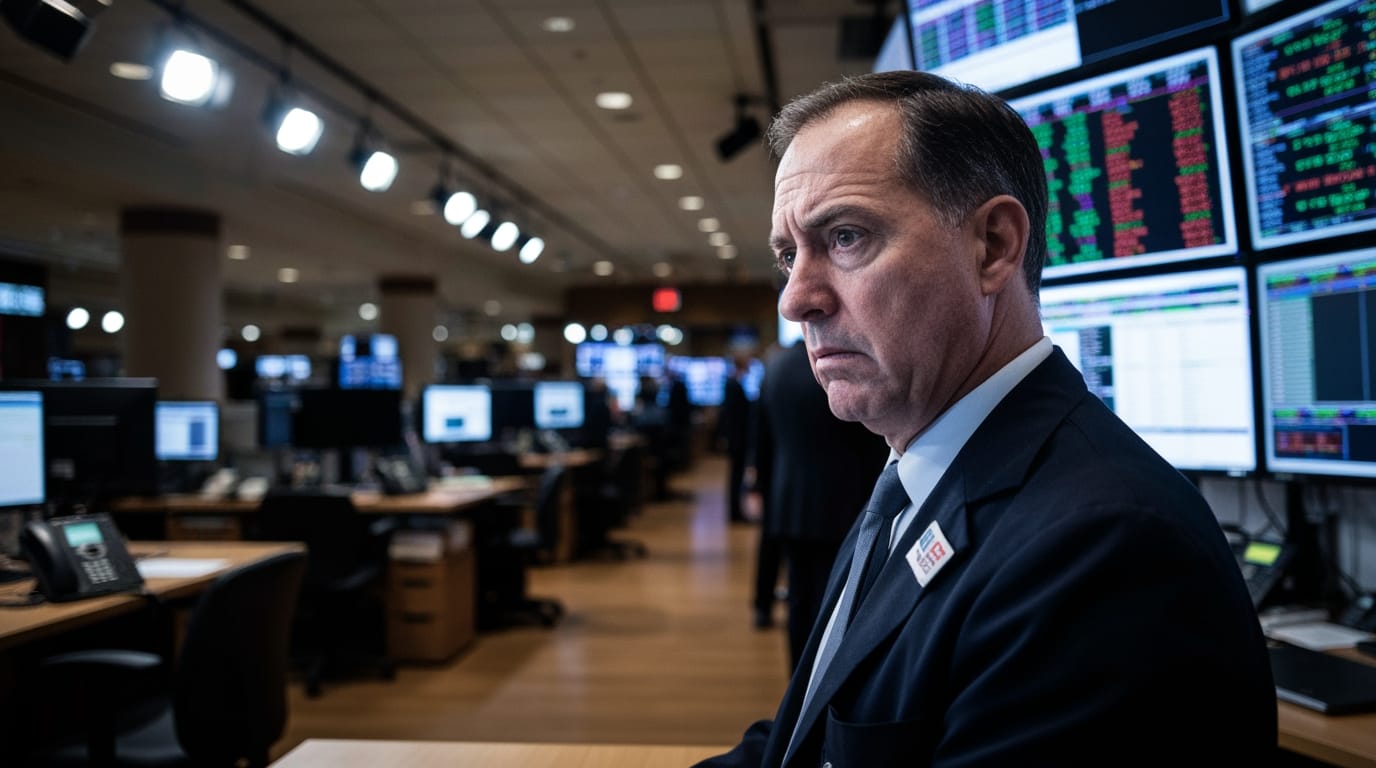
WASHINGTON D.C. – Global financial markets experienced another day of tumultuous trading this week as President Donald Trump announced an unexpected postponement of his ultimatum for Iran to reopen the vital Strait of Hormuz, a move that momentarily eased fears of immediate military confrontation but left investors grappling with lingering uncertainty. The decision, coming after an initial 48-hour deadline and threats of devastating strikes on Iranian energy infrastructure, triggered sharp fluctuations in stock indices and oil prices, underscoring the profound economic fragility inherent in the escalating conflict between Washington and Tehran.
The President's sudden pivot, communicated via social media and later confirmed by the White House, cited "good and productive conversations" and an alleged Iranian request for a grace period. This narrative, however, was swiftly contradicted by Tehran, which denied any direct talks and painted the delay as a sign of Washington backing down, further muddling an already volatile geopolitical landscape. The stakes remain exceptionally high, with the Strait of Hormuz serving as the world's most critical oil chokepoint, through which a significant portion of the globe's energy supplies transit daily.
The Crucible of Hormuz: A Strategic Lifeline Under Threat
The Strait of Hormuz, a narrow waterway situated between Iran and Oman, functions as the primary maritime artery connecting the Persian Gulf's vast oil and gas producers to international markets. Approximately 20% of the world's daily oil consumption, roughly 20 million barrels, along with a substantial portion of global liquefied natural gas (LNG) trade, navigates this constricted passage. Its strategic significance renders it a powerful geopolitical lever, with any threat of disruption capable of triggering immediate spikes in global oil prices and maritime insurance premiums.
Tensions between the United States and Iran have been steadily escalating since the Trump administration's withdrawal from the Joint Comprehensive Plan of Action (JCPOA), commonly known as the Iran nuclear deal, in 2018. This was followed by a "maximum pressure" campaign, imposing over 1,500 sanctions aimed at crippling Iran's economy, particularly its vital oil and shipping sectors. In response, Iran has consistently threatened to disrupt shipping in the Strait of Hormuz, using this leverage to pressure Western nations and alleviate sanctions.
The current crisis deepened dramatically when President Trump issued a stark warning, giving Iran 48 hours to ensure unimpeded passage through the Strait or face the "obliteration" of its energy plants. This ultimatum followed reports of Iran's "effective closure" of the Strait, exacerbating fears of a full-scale regional conflict that experts warn could have catastrophic global implications.
Rollercoaster on Wall Street: Markets React to Geopolitical Swings
The immediate aftermath of President Trump's initial threat sent shockwaves through global financial markets. Stocks experienced significant declines, and oil prices surged dramatically, with Brent crude nearing $120 per barrel and West Texas Intermediate (WTI) reaching $90.11 last week, marking increases of almost 50% and 40% respectively since the conflict began on February 28. Analysts pointed to the conflict's potential for a broader, longer-lasting supply shock as a primary driver of this volatility.
However, the President's announcement of a delayed deadline brought a measure of relief, albeit a fragile one. On Monday, the Dow Jones Industrial Average surged by more than 1,000 points in early trading, ultimately closing up 631 points. The S&P 500 and Nasdaq Composite also saw gains of 1.1% and 1.4%, respectively, as investors momentarily breathed easier at the prospect of de-escalation. Oil prices, mirroring this sentiment, retreated from their highs, with Brent crude falling sharply by more than 11% before paring losses to trade around 7-8% lower.
Yet, the respite proved short-lived. By Thursday, market nervousness returned, with U.S. stocks recording their biggest losses since the onset of the current phase of the conflict. The S&P 500 dipped 1.7%, the Dow dropped 1%, and the Nasdaq sank 2.4%, pushing it into correction territory. This "convulsing stock market" reflected deep skepticism among traders, some viewing the repeated deadline extensions as merely "rolling a losing position forward" rather than a genuine path to resolution. Singapore's Foreign Minister, Vivian Balakrishnan, articulated the broader concern, warning that the "Iran war" had effectively "taken the entire global economy hostage" and was particularly impacting Asian economies reliant on energy supplies transiting Hormuz.
A Labyrinth of Diplomacy and Denials
The President's rationale for extending the deadline hinged on the premise of ongoing and constructive negotiations. He posted on social media, "Talks are ongoing and, despite erroneous statements to the contrary by the Fake News Media, and others, they are going very well." He further claimed to be "pausing the period of Energy Plant destruction by 10 Days to Monday, April 6, 2026," at Iran's request. He even suggested Iran had allowed 10 oil tankers passage through the Strait of Hormuz as a "present" to demonstrate its seriousness about talks.
However, Iranian officials quickly countered these assertions. Iran's semi-official news agencies, Fars and Tasnim, portrayed Trump's move as a capitulation, while spokespersons explicitly denied that any peace talks had taken place, dismissing Trump's statements as "fake news" designed to manipulate oil markets. Iranian Foreign Minister Abbas Araghchi reiterated that Tehran's stance remained unchanged and ruled out any agreement based on Trump's public claims. Iran's conditions for de-escalation reportedly include demands for war reparations and respect for its "sovereignty" over the Strait of Hormuz. Pakistan has been identified as an intermediary in delivering a 15-point ceasefire proposal, which Tehran subsequently dismissed.
Adding to the complexity, reports emerged from the Wall Street Journal, citing Department of Defense officials, that the Pentagon was actively considering deploying as many as 10,000 additional ground troops to the Middle East, a stark contrast to the President's public pronouncements of diplomatic progress.
A World on Edge: International Reactions and Lingering Questions
The international community has reacted with a mixture of alarm and calls for restraint as the US-Iran conflict continues to unfold. UN Secretary-General António Guterres expressed that he was "gravely alarmed" by the escalating situation, urging de-escalation and adherence to international law. European nations, including France, Germany, and the UK, called for diplomatic solutions and a resumption of talks, emphasizing the need to protect civilian lives.
However, a clear consensus on the path forward remains elusive. Australia and Canada openly supported U.S. actions, while Russia and China voiced direct criticism. Oman, which has historically played a mediating role in US-Iran relations, condemned any US action that violated international law. The broader implications of the ongoing conflict are already stark, with thousands reported killed in Iran, Lebanon, and casualties among US and Israeli forces.
The repeated deferral of the Hormuz deadline underscores a precarious balance between coercive diplomacy and the very real threat of armed conflict. While each delay offers a temporary reprieve, it also prolongs a period of intense geopolitical and economic uncertainty. The conflicting signals emanating from Washington and Tehran, coupled with the critical importance of the Strait of Hormuz, ensure that global markets and policymakers will remain on edge, keenly watching for any development that could tip the region, and indeed the world, further towards an unpredictable future. The question remains whether this latest postponement represents a genuine window for dialogue or merely a strategic pause before another potential escalation.


