Global Order in "Rupture," Not Transition, Warns Canada's Carney at Davos
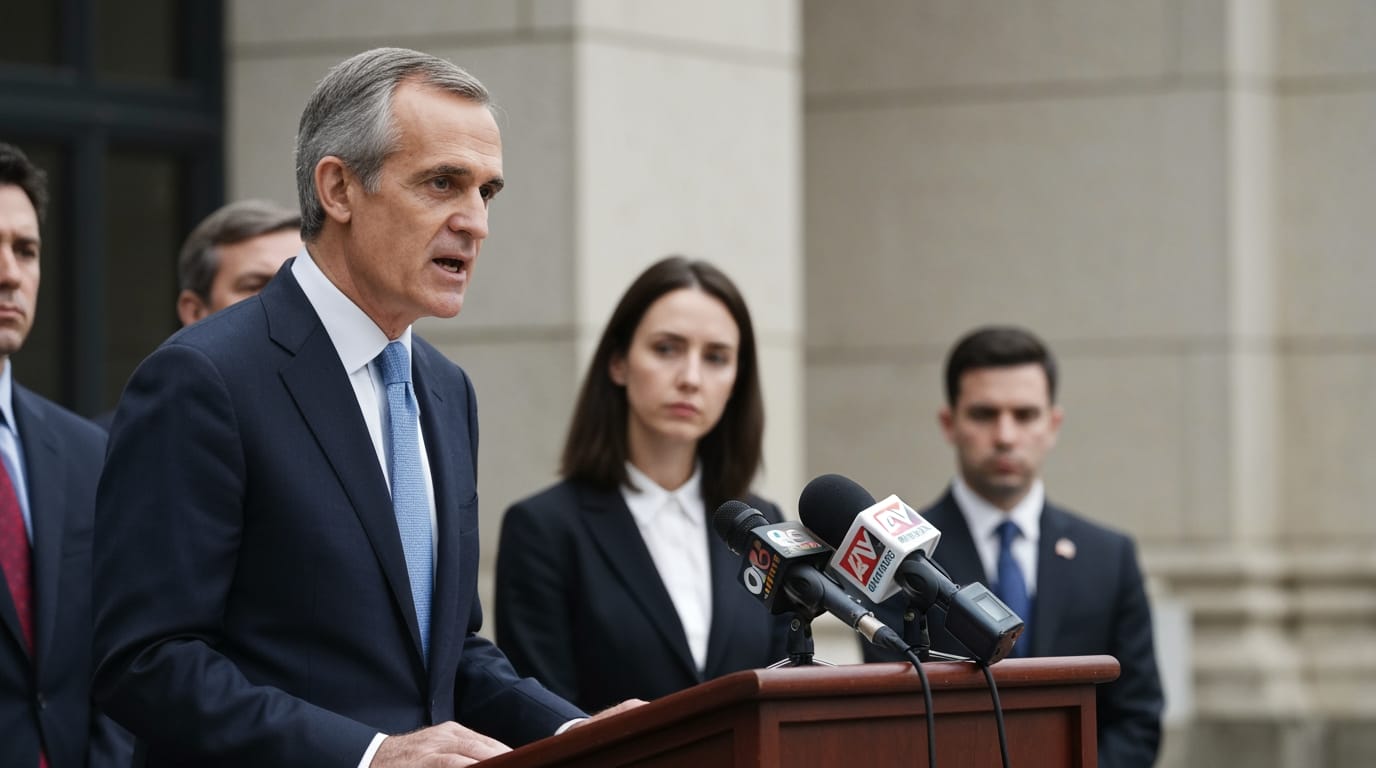
DAVOS, Switzerland — The international order, long understood as a stable, rules-based system, is not merely undergoing a transition but is in the "midst of a rupture," Canadian Prime Minister Mark Carney declared in a stark address to the World Economic Forum on Tuesday. Carney's blunt assessment, delivered before an assembly of global political and financial elites, challenged the prevailing narrative of gradual change, asserting instead a fundamental and irreversible shift driven by intensifying great power rivalry and the weaponization of economic tools.
The former central banker, now at the helm of Canadian politics, outlined a sobering reality where decades of "pleasant fiction" regarding the global order have crumbled, revealing a harsh landscape of unconstrained geopolitics. His remarks, widely interpreted as an implicit critique of American hegemony and its implications, underscored a growing consensus among some international observers that the post-Cold War era of globalized cooperation is definitively over.
The Unraveling of a "Pleasant Fiction"
Carney contended that the "rules-based international order" was always a "partially false" construct, a "fiction" that countries like Canada supported in exchange for access to vital goods, trade, and financial resources. For years, middle powers "participated in the rituals" and largely overlooked the discrepancies between rhetoric and reality, benefiting from what he described as American hegemony that provided public goods such as open sea lanes, financial stability, and collective security. However, this "bargain no longer works," Carney asserted, as great powers increasingly employ "economic integration as weapons."
This pivot, Carney argued, transforms trade rules into asymmetrical tools, financial infrastructure into coercive instruments, and supply chains into exploitable vulnerabilities. The Canadian leader emphasized that "you cannot live within the lie of mutual benefit through integration, when integration becomes the source of your subordination." This stark warning reflects a deep concern that the very mechanisms designed to foster global interdependence are now being leveraged for strategic advantage, eroding trust and stability.
Drivers of Disintegration: Geopolitics and Economic Coercion
The rupture, according to Carney, is fueled by an intensifying great power rivalry. While not explicitly naming the United States, his speech implicitly criticized the actions of the current US administration under President Donald Trump, whose protectionist policies and geopolitical ambitions have contributed significantly to global instability. Carney pointed to scenarios like US threats to impose tariffs on countries that do not support its bid to acquire Greenland as examples of economic coercion disrupting traditional alliances.
These actions have forced nations to consider developing greater "strategic autonomy" in critical sectors like energy, food, minerals, and finance. Carney's perspective suggests that the current geopolitical climate is characterized by major powers prioritizing their interests with little regard for established norms or international law. This environment leaves multilateral institutions, such as the World Trade Organization (WTO) and the United Nations (UN), "greatly diminished" and less capable of collective problem-solving.
A Call to Action for Middle Powers: Forging a "Third Path"
In the face of this unraveling order, Carney delivered a direct challenge to middle powers like Canada: "Middle powers must act together, because if we're not at the table, we're on the menu." He cautioned against the notion that "compliance will buy safety," arguing that such an approach merely leads to "the performance of sovereignty while accepting subordination" when negotiating bilaterally with hegemons.
Instead, Carney advocated for a "third path" rooted in enhanced strategic autonomy and diversified partnerships. For Canada, this means actively re-wiring its economy to reduce reliance on any single powerful actor and forging new strategic partnerships. Recent initiatives include newly concluded strategic partnerships with China and Qatar, and ongoing free trade negotiations with India, ASEAN, Thailand, the Philippines, and the Mercosur bloc. These efforts aim to build resilience, reduce fragmentation, and foster "positive-sum outcomes" through shared standards and complementary economic relationships.
Carney's Consistent Warnings: A History of Foresight
Carney's strong pronouncements at Davos are not an isolated event but rather a continuation of his long-standing focus on systemic risks. Even before entering Canadian politics, as Governor of the Bank of England, he famously warned about the "tragedy of the horizon" regarding climate change, stressing the existential threat it posed to the financial system if long-term risks were ignored. He consistently urged financial institutions to integrate climate risks into their decision-making, advocating for improved disclosure and the development of financial mechanisms to address these challenges.
This historical perspective underscores Carney's analytical approach to complex global challenges, where he often highlights the need for foresight and proactive adaptation. His current warnings about the global order resonate with his earlier messages, suggesting that a failure to adapt to emerging realities, whether environmental or geopolitical, carries profound and far-reaching consequences. The "rupture" he describes is, in many ways, an evolution of systemic vulnerabilities that have been building over the past two decades, now exacerbated by intensified geopolitical competition.
An Uncertain Future: Fortresses or Cooperation?
Carney’s assessment leaves the world at a critical juncture. The choice, he suggests, lies between retreating into isolated "fortresses" or pursuing more ambitious cooperative frameworks. He warns that a world of fortresses "will be poorer, more fragile and less sustainable," underscoring the necessity of collective action despite the increasing fragmentation. The Canadian Prime Minister’s speech serves as a clarion call for nations, particularly middle powers, to recognize the profound shift underway and to actively shape their destinies rather than passively react to the dictates of a fractured world. The challenge remains whether the international community can forge a new path of shared sovereignty and resilience in an era where the old order is definitively "not coming back."


