Global Peacekeeping Under Threat: A Perfect Storm of Cuts and Tensions Jeopardizes Stability
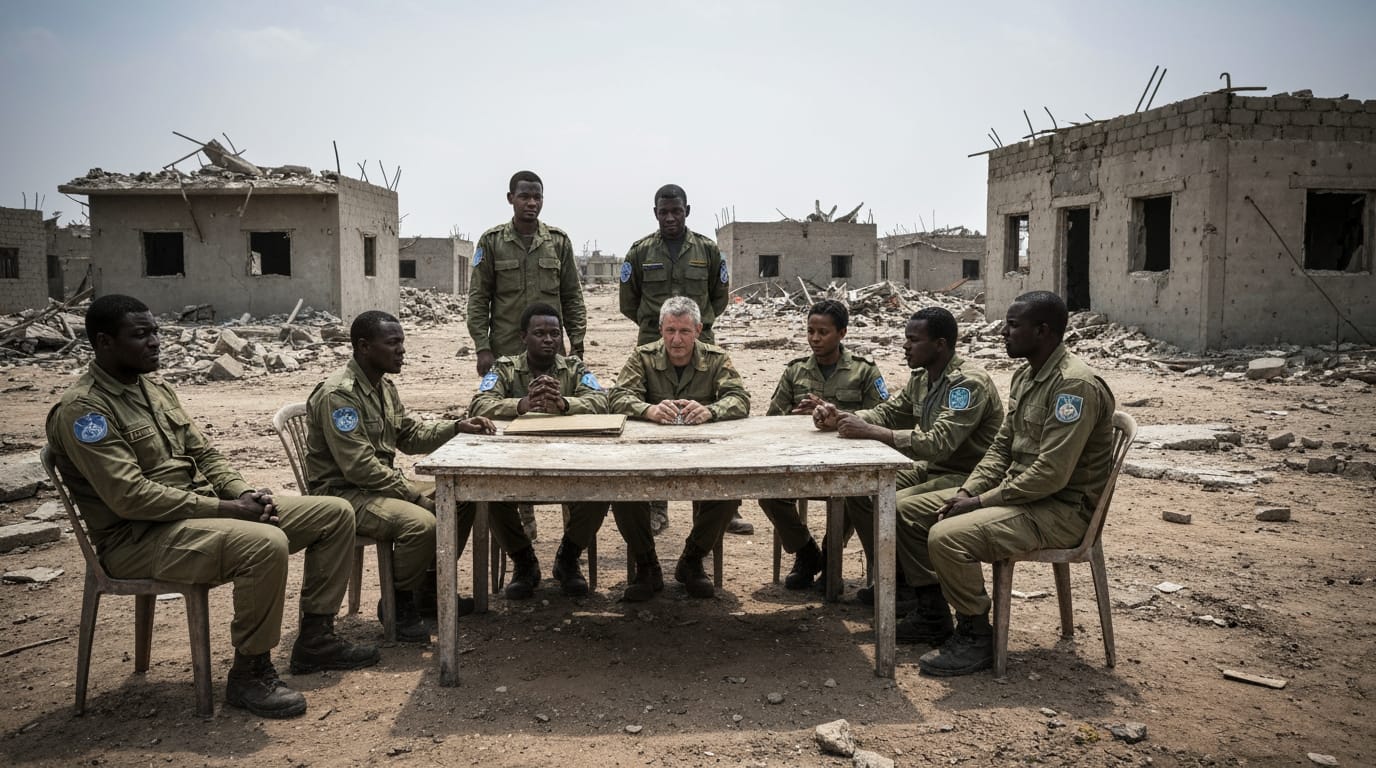
United Nations peacekeeping operations, a cornerstone of international stability for decades, face an unprecedented crisis driven by severe funding shortfalls and escalating geopolitical tensions. A recent report from the Stockholm International Peace Research Institute (SIPRI) highlights a dramatic decline in deployed peacekeepers, reaching the lowest numbers in at least 25 years, signaling a potential weakening of multilateral conflict management. This perfect storm of financial, political, and operational challenges threatens to unravel decades of progress, leaving vulnerable populations exposed and global security increasingly precarious.
The implications of this crisis are far-reaching, extending from the halls of the Security Council to the volatile conflict zones where peacekeepers strive to protect civilians and maintain fragile truces. The UN Secretary-General has mandated deep cuts across missions, forcing reductions in personnel and critical resources. Coupled with a fragmented geopolitical landscape, where major powers increasingly struggle to find common ground, the very future of these essential missions hangs in the balance.
The Budgetary Black Hole: Funding Shortfalls Cripple Operations
The most immediate threat to peacekeeping operations stems from a severe and growing funding crisis. The UN Secretary-General has directed all missions to identify expenditure reductions equivalent to 15 percent of their annual budgets, a measure that translates to an approximate 25 percent decrease in uniformed and civilian personnel. This directive alone will lead to the repatriation of an estimated 13,000 to 14,000 troops and police from the field, impacting every facet of peacekeeping work, from patrols and protection duties to logistics and air operations.
The root of this crisis lies in delayed and unpaid assessed contributions from Member States, leading to a substantial budget shortfall. While the General Assembly approved a $5.38 billion peacekeeping budget for 2025-26 – a slight decrease from the previous year's $5.6 billion – it faces a staggering $2 billion deficit due to these outstanding payments. This is not merely routine fiscal adjustment; it represents a profound liquidity crisis for the UN, with broader cuts also affecting the organization's regular budget, staff positions, and special political missions.
On the ground, these financial constraints are creating "blind spots" as missions are forced to close bases and reduce air support, impairing situational awareness, early warning capabilities, and the timely deployment of resources to hotspots. Missions in conflict-ridden regions like the Democratic Republic of Congo (MONUSCO), South Sudan (UNMISS), and the Central African Republic (MINUSCA) are among the hardest hit. For instance, UNMISS in South Sudan is compelled to pull back nearly half of its field presence at a time when the country faces a potential recurrence of civil war. The long-term impact of these cuts includes fewer patrols to monitor ceasefires, diminished protection for civilians, and reduced support for humanitarian aid efforts, potentially leading to a more reactive, emergency-driven approach rather than proactive conflict prevention.
Geopolitical Friction: Undermining Multilateral Action
Beyond financial woes, a complex web of geopolitical tensions and shifting international dynamics is further eroding the effectiveness and legitimacy of peacekeeping missions. The intensifying competition among major powers and a growing distrust among key permanent UN Security Council members are leading to a weakening of consensus and an erosion of the norms that underpin international cooperation. The Security Council, once the stabilizing core of the post-war international order, now often mirrors the very fragmentation it was designed to manage, with strategic rivalries and vetoes obstructing even routine mandate renewals.
The nature of conflict itself has also evolved, presenting new challenges for traditional peacekeeping models. Missions increasingly operate within states rather than between them, contending with numerous armed groups, including terrorist organizations, that often disregard international law and display hostility toward UN forces. These conflicts are more asymmetrical, protracted, and feature blurred frontlines, making the peacekeepers' task inherently more complex and dangerous. Host countries occasionally challenge the authority of peace operations, restricting movement, limiting access, or engaging in propaganda campaigns that undermine trust and local support. The case of Mali, where the government demanded the withdrawal of peacekeepers, illustrates the vulnerability of such missions when host-state consent erodes. New threats, such as drone warfare, further complicate the operational environment, demanding technological adaptation that current budget cuts may not allow.
Operational Retreat: Risks to Civilians and Peacekeepers Alike
The combined effect of budget cuts and geopolitical friction is a significant operational retreat, with profound consequences for both the peacekeepers themselves and the civilian populations they are mandated to protect. The total number of international personnel deployed in peacekeeping operations stood at just under 79,000 at the end of 2025, marking a 17 percent drop from the previous year and a 49 percent decrease since 2016. This reduction translates directly into diminished capacity to fulfill core mandates.
The consequences are particularly acute in Sub-Saharan Africa, which hosts the majority of UN peacekeeping missions and is experiencing the steepest reductions in deployed forces. Peacekeepers are withdrawing not because stability has been achieved, but because maintaining long-term international deployments has become financially burdensome and politically inconvenient for contributing states. This creates a vacuum, often filled not by peace but by fragmented alternatives like ad hoc coalitions and bilateral security arrangements driven by narrow national interests rather than universal mandates and accountability.
The gap between ambitious mandates and limited resources, and the perennial challenge of effectively protecting civilians, are recurring issues that are only exacerbated by the current crisis. Reduced aviation hours, for instance, force greater reliance on ground movements in high-risk areas, increasing peacekeepers' exposure to security threats. When missions are forced to draw down without proper transition planning, as seen in South Sudan, countries are left vulnerable, and the crucial protections and support previously provided by the UN disappear.
A Call for Adaptation and Renewed Commitment
In response to these escalating challenges, there are growing calls for comprehensive reform and renewed global commitment to peacekeeping. UN Secretary-General António Guterres's 2023 New Agenda for Peace advocates for a critical reflection on the limits and future of peacekeeping, pushing for more realistic mandates and nimble operations. The 2024 Pact for the Future, agreed upon by Member States, affirmed the importance of peace operations while emphasizing the need for adaptation to complex environments, closer links to political solutions, and sustained financing. The UN Peacekeeping Ministerial in Berlin, held in May 2025, focused specifically on "The Future of Peacekeeping," aiming to inform new strategies.
Experts emphasize the need for increased efficiency, transparency, and accountability in missions' fiduciary responsibilities to restore confidence among financial contributors. Furthermore, there is a growing interest in peace operations led by regional and subregional organizations, prompting discussions about new funding modalities and priorities. Adapting to new technological threats, including developing cyber-defense capabilities and protection against drone attacks, is also deemed essential.
Ultimately, the future viability of UN peacekeeping hinges on a renewed global political alignment, adequate and predictable financing, and adaptive operational strategies. Without a concerted international effort to address these profound challenges, the world risks a dramatic weakening of multilateral conflict management, leading to more conflicts and graver impacts on civilians as established norms are abandoned. The crisis facing peacekeeping is a crisis for global security, demanding urgent attention and collective will to safeguard this vital tool for peace.


