Goethe-Institut Marks 75 Years as Germany's Enduring Global Cultural Voice
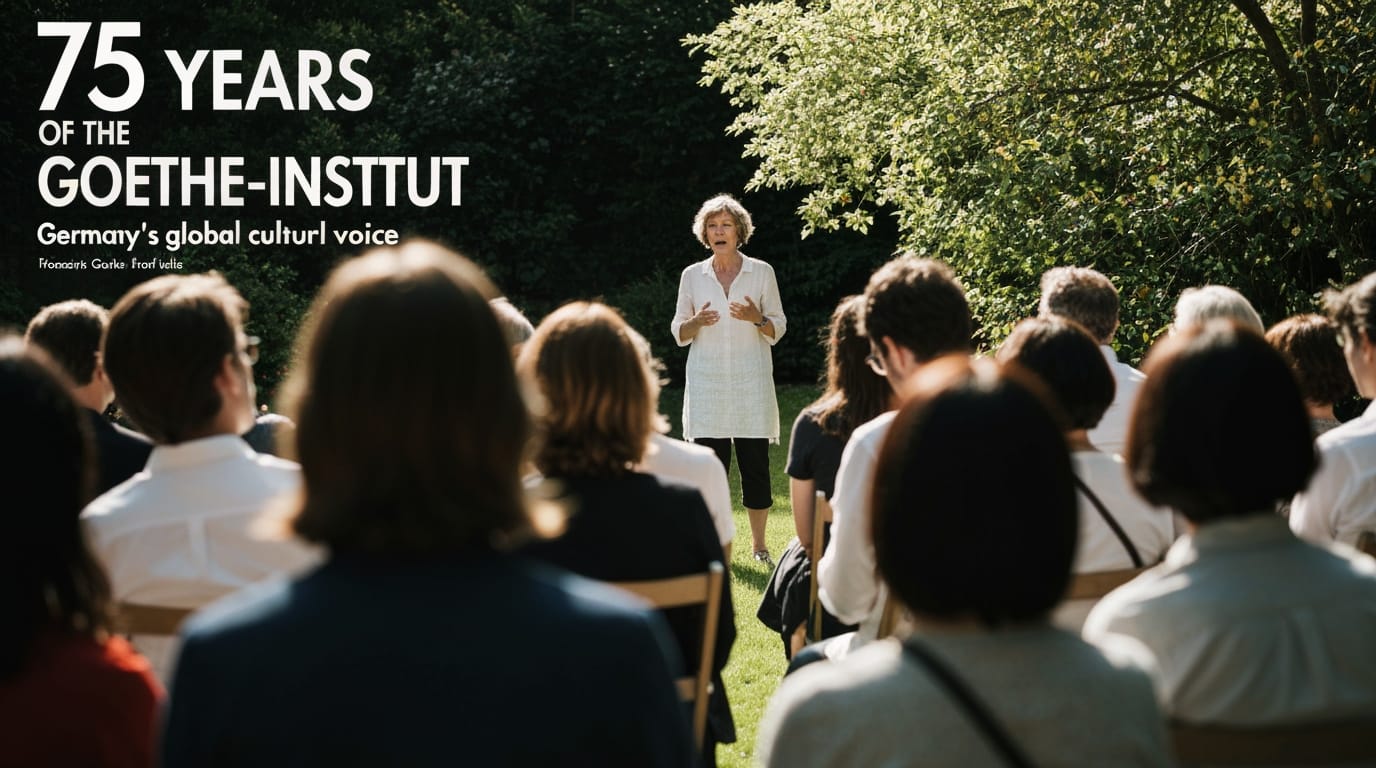
Munich, Germany – In 2026, the Goethe-Institut, Germany's premier cultural organization, celebrates its 75th anniversary, marking three-quarters of a century dedicated to fostering international understanding through language, culture, and dialogue. Since its inception in the aftermath of World War II, the institution has evolved from a language teacher training center into a globally recognized network of cultural centers, embodying Germany's commitment to cultural diplomacy and open exchange across continents. This significant milestone prompts a reflection on its profound impact and its continuous adaptation to an ever-changing world.
From Post-War Revival to a Worldwide Network
The Goethe-Institut was established on August 9, 1951, in Munich, emerging from the former Deutsche Akademie, which had been disbanded after World War II due to its associations with the Nazi regime. Its initial mission was crucial for West Germany: to promote the German language abroad and to contribute to the rehabilitation of the nation's international reputation through cultural outreach. The first Goethe-Institut opened its doors in Athens, Greece, in 1952, quickly followed by a rapid expansion of branches globally. By 1959 and 1960, the institution had gradually assumed responsibility for all existing German cultural institutes overseas, solidifying its position as the central pillar of Germany's foreign cultural policy.
The 1960s marked a pivotal shift in the institute's mission, expanding beyond language instruction to embrace a broader scope of cultural work and engage with socio-political topics, partly influenced by the student movements of the era. This evolution was further enshrined in 1970 when German politician Ralf Dahrendorf's "guiding principles for foreign cultural policy" declared cultural work involving dialogue and partnership as the "third pillar" of German foreign policy. A general agreement signed with the Foreign Office in 1976 formally recognized the Goethe-Institut as an independent cultural organization, a non-profit entity that maintains political independence while supported by the Federal Foreign Office.
Pillars of Engagement: Language, Education, and Arts
At its core, the Goethe-Institut remains dedicated to the promotion of the German language. Annually, approximately 246,000 to 250,000 individuals enroll in German language courses, and over 750,000 people take German examinations at Goethe-Instituts or their partner institutions worldwide. The institute actively works to integrate German into educational systems globally, providing training and qualification programs for German language teachers in over 100,000 schools. These efforts range from general language courses to specialized programs designed for skilled workers and students planning to move to Germany.
Beyond language, the Goethe-Institut serves as a vibrant platform for cultural exchange. It hosts an extensive array of cultural events—around 25,000 annually—reaching approximately 6.6 million participants worldwide. These events encompass diverse art forms, including German films, music, theater, literature, and visual arts exhibitions. The institute's libraries and reading rooms, along with digital resources such as the "Onleihe" platform, offer broad access to German culture and information, with hundreds of thousands of items borrowed digitally each year. The Goethe-Institut also recognizes outstanding contributions to German language and international cultural relations through the prestigious Goethe Medal, an official decoration of the Federal Republic of Germany, established in 1954.
The institute's global footprint includes more than 150 cultural centers across 99 or 100 countries, complemented by numerous partner institutions. This extensive network allows for close collaboration with local cultural organizations, civil society, and artists, fostering tailored programs that resonate with host communities. While primarily funded by the German Federal Foreign Office, the Goethe-Institut generates roughly one-third of its budget through its language courses and examinations, underscoring its operational independence. Initiatives like the PASCH ("Schools: Partners for the Future") program, which supports a global network of over 2,000 schools prioritizing German, and artist residency programs such as Villa Kamogawa in Japan, exemplify its far-reaching influence.
Adapting to New Realities: Digitalization, Sustainability, and Global Dialogue
As it enters its 75th year, the Goethe-Institut continues to navigate a world undergoing rapid transformation, addressing contemporary global challenges through its cultural work. The institute has embraced digitalization, offering online courses and digital resources that expand its reach and accessibility. This digital transformation allows it to cover diverse topics and promote international dialogue across borders.
A key focus for the future is sustainability and climate change. The Goethe-Institut integrates these issues into its programs, fostering discussions and initiatives aimed at promoting environmentally sustainable practices. It actively explores the social, political, and economic dimensions of sustainability, emphasizing the role of art, culture, and education in inspiring change. Furthermore, the institute remains committed to promoting democratic values and open societies, engaging with complex socio-political issues such as digital rights, disinformation, and the implications of artificial intelligence. Events commemorating the anniversary year, such as special performances by Sasha Waltz & Guests at the Haus der Berliner Festspiele, highlight the institution's ongoing commitment to artistic expression as a universal ambassador for peaceful coexistence.
The events of September 11, 2001, highlighted the critical importance of intercultural dialogue, prompting the Goethe-Institut to further emphasize its role in fostering understanding and mutual trust in a complex geopolitical landscape. Its "Vision and Strategy 2026" outlines a continued commitment to diversity, common understanding, and trust as foundational principles for positive coexistence globally.
A Legacy of Bridge-Building
As the Goethe-Institut commemorates its 75th anniversary in 2026, it stands as a testament to the enduring power of cultural diplomacy. From its origins in post-war reconstruction to its current role as a dynamic global networker, the institution has consistently adapted its approach, moving from a primary focus on exporting culture to fostering genuine dialogue and collaboration. Its dedication to promoting the German language, sharing cultural insights, and engaging with pressing global issues solidifies its position as a vital bridge-builder in an increasingly interconnected world. The Goethe-Institut's journey reflects a continuous commitment to cultivating understanding, fostering trust, and contributing to a more open and diverse global society for generations to come.