Google Awaits Landmark EU Top Court Decision on €4.1 Billion Antitrust Fine
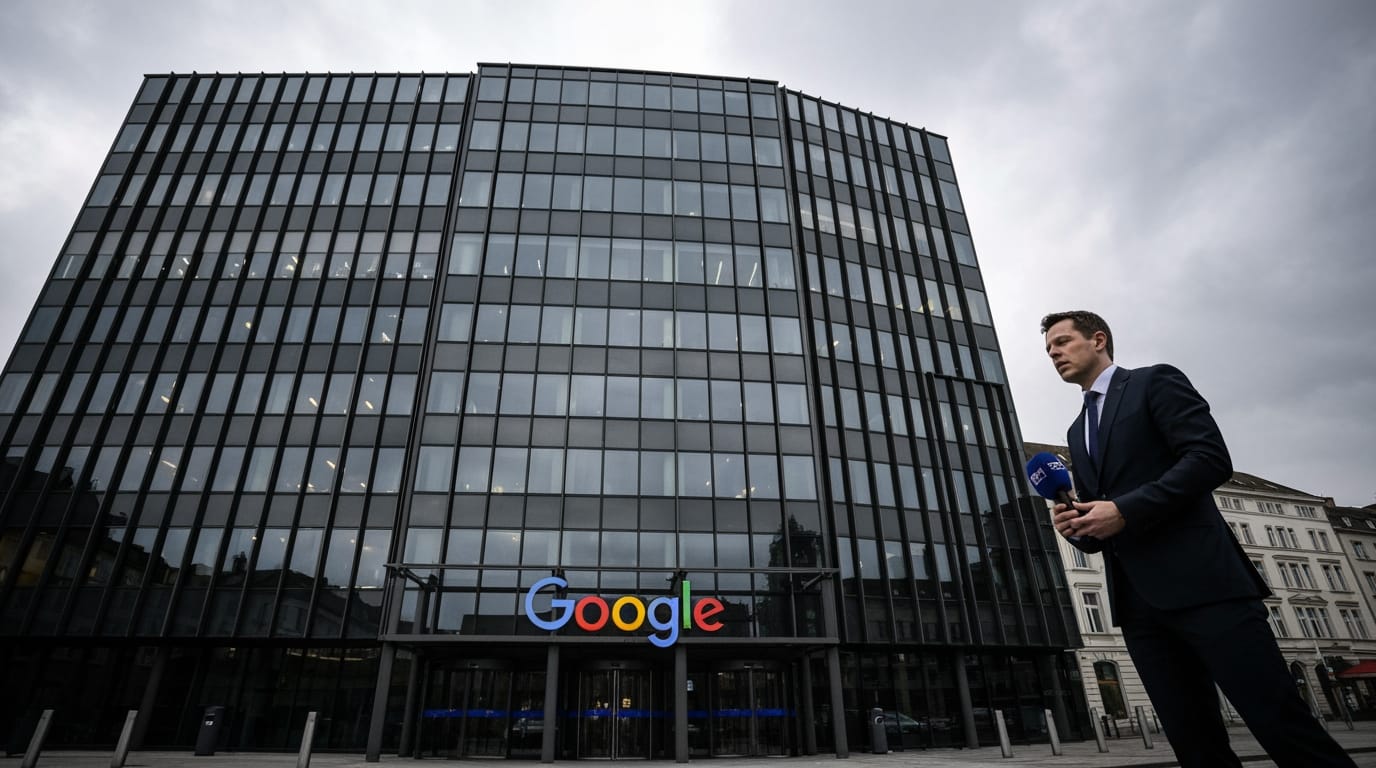
LUXEMBOURG – Google faces a pivotal moment today as the European Union's highest court, the European Court of Justice (CJEU), prepares to issue its final ruling on a record €4.1 billion antitrust fine. The decision, stemming from a 2018 European Commission ruling, could cement one of the largest competition penalties ever imposed by the EU and set a significant precedent for regulating the power of technology giants. The case centers on allegations that Google leveraged its dominant Android mobile operating system to stifle competition, a claim Google vehemently denies, arguing its practices foster innovation and consumer choice.
The Genesis of the Fine: Android's Dominance Under Scrutiny
The roots of this protracted legal battle stretch back to 2015 when the European Commission initiated a formal antitrust proceeding against Google concerning its Android operating system. Following a comprehensive investigation, the Commission, in July 2018, imposed a monumental fine of €4.34 billion on Google for breaching EU antitrust rules. The Commission asserted that Google had engaged in three distinct anti-competitive practices since 2011 to solidify its search engine's dominance at a time when mobile internet use was rapidly expanding.
Specifically, the European Commission found that Google:
- Required device manufacturers to pre-install the Google Search app and Chrome browser as a condition for licensing the Google Play Store. This "tying" arrangement made it difficult for competing search engines and browsers to gain market share.
- Made payments to certain large manufacturers and mobile network operators on the condition that they exclusively pre-installed the Google Search app on their devices. These revenue-sharing agreements were deemed to restrict competition.
- Prevented manufacturers wishing to pre-install Google apps from selling even a single smart mobile device running on alternative, non-Google-approved versions of Android (known as "Android forks"). The Commission argued this anti-fragmentation measure stifled innovation and consumer choice.
The Commission concluded that these actions formed an overarching strategy by Google to cement its dominant position in general internet search, preventing rivals from innovating and competing on their merits, and denying European consumers the benefits of effective competition in the crucial mobile sphere.
The Legal Marathon: From Commission to General Court
Google quickly challenged the European Commission's decision, initiating a lengthy appeals process. In October 2018, Google filed an appeal with the General Court of the European Union, the EU's second-highest court. After nearly four years, the General Court delivered its judgment on September 14, 2022. The court largely upheld the European Commission's findings, agreeing that Google had abused its dominant position in relation to the Android mobile operating system platform to expand its web search position.
While affirming the core of the Commission's decision, the General Court did annul the finding related to Google's revenue-sharing agreements (RSAs) and, as a result, slightly reduced the fine from €4.34 billion to €4.125 billion. The court found that Google's practices regarding the tying of its apps and the restrictions on Android forks were indeed anti-competitive and not necessary for its business model. This reduction, though minor, reflected a nuanced view on specific aspects of the Commission's original argumentation, yet the overwhelming conclusion remained that Google had engaged in unlawful behavior.
Google's Final Stand and the Advocate General's Influence
Undeterred by the General Court's ruling, Google, along with its parent company Alphabet Inc., escalated the case to the European Court of Justice (CJEU) in late 2022, seeking a complete reversal of the penalty. Google's appeal to the CJEU is based on several grounds, including arguments that the Commission and lower court misinterpreted its business practices and their impact on competition. The tech giant contended that the fine stifles innovation and pointed to similar practices by other companies, such as Apple, which gives preference to its own services like Safari on iPhones. Furthermore, Google argued that customers were in no way forced to use its products on Android, and that downloading competing apps was "just a tap away".
A significant development occurred in June 2025 when Advocate General Juliane Kokott, an advisor to the CJEU, issued a non-binding opinion recommending that the court uphold the fine. Kokott rejected Google's innovation defense, describing its arguments as "ineffective". She stated that it was not realistic to compare Google's situation with that of a hypothetical "as-efficient competitor," given Google's dominant position and the network effects within the Android ecosystem that steered users toward Google Search. While the Advocate General's opinion is not legally binding, CJEU judges frequently follow such recommendations in a majority of cases, lending considerable weight to the prospect of the fine being upheld.
Wider Implications for the Digital Landscape
The impending ruling from the CJEU is more than just a verdict on a single fine; it represents a critical juncture in the European Union's ongoing efforts to rein in the market power of large technology companies. This case is one of several antitrust actions the EU has pursued against Google, which has faced over €8 billion in fines between 2017 and 2019 for various antitrust violations, including in Google Shopping and AdSense cases.
Beyond direct fines, an affirmation of the General Court's decision could pave the way for increased private civil claims for damages across Europe. Companies that believe they were harmed by Google's anti-competitive practices could leverage the court's ruling to pursue their own lawsuits, shifting regulatory pressure beyond administrative fines to direct compensation for lost business profits. This creates an additional layer of legal risk for big tech, increasing uncertainty around their operations in the European market.
Furthermore, the ruling will underscore the EU's assertive stance on digital regulation, complementing new legislative tools like the Digital Markets Act (DMA). The DMA aims to foster fairer competition by setting clear rules for large online platforms, designating them as "gatekeepers" and imposing obligations to prevent anti-competitive behavior proactively. The outcome of Google's appeal will signal the judiciary's support for the Commission's enforcement powers and its vision for a more open digital economy in Europe.
Conclusion: A Defining Moment for Digital Antitrust
Today's decision by the European Court of Justice carries immense weight for Google, its competitors, and the future of digital competition in Europe. A confirmation of the €4.1 billion fine would not only be a significant financial blow to Google but would also reaffirm the EU's resolve to curb perceived abuses of market dominance by tech giants. It would serve as a powerful endorsement of the European Commission's robust antitrust enforcement, potentially emboldening regulators in future investigations and reinforcing the principles enshrined in new legislation like the Digital Markets Act. Regardless of the specific outcome, this landmark ruling will undoubtedly shape the regulatory landscape for technology companies operating in one of the world's largest digital markets for years to come.


